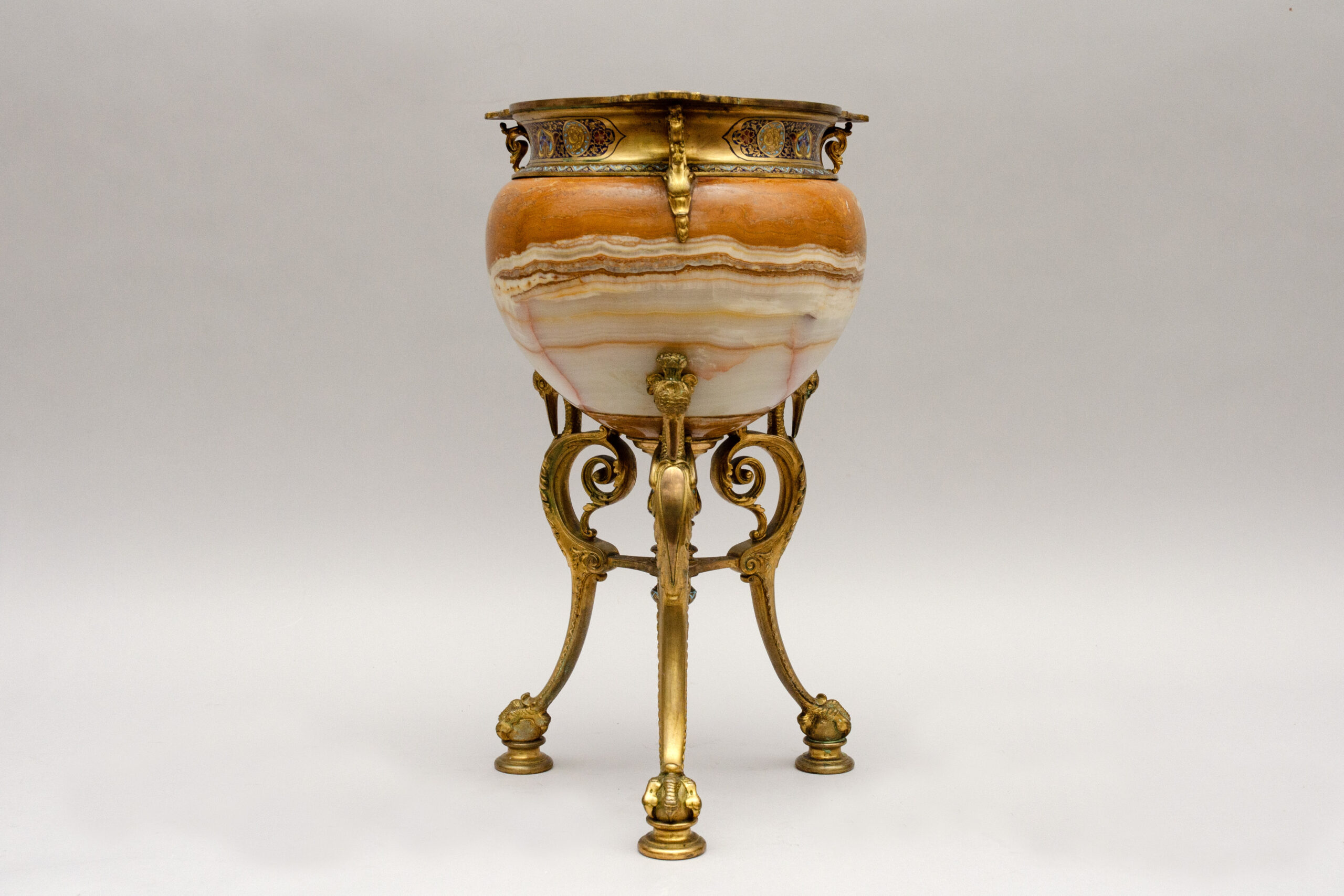
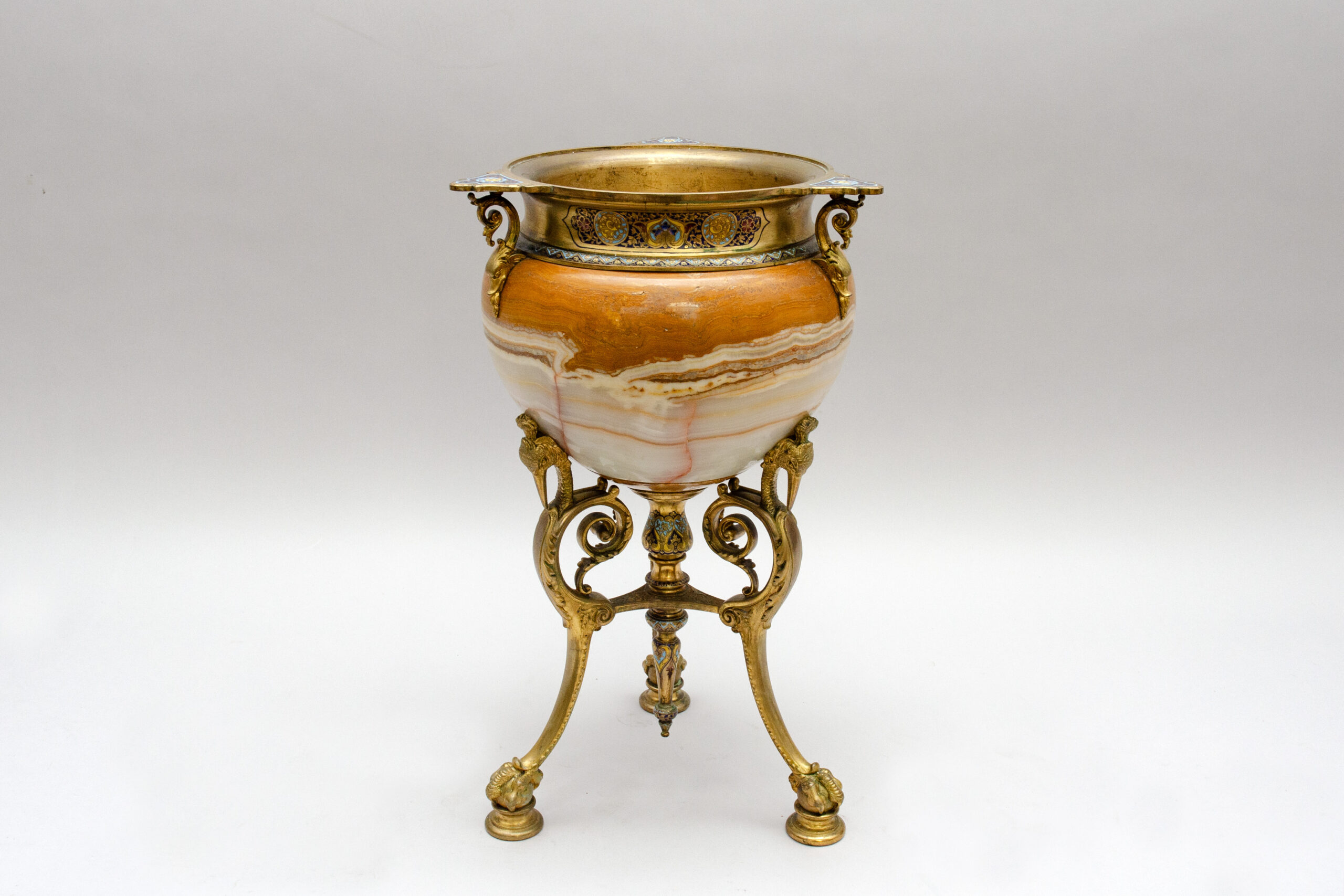
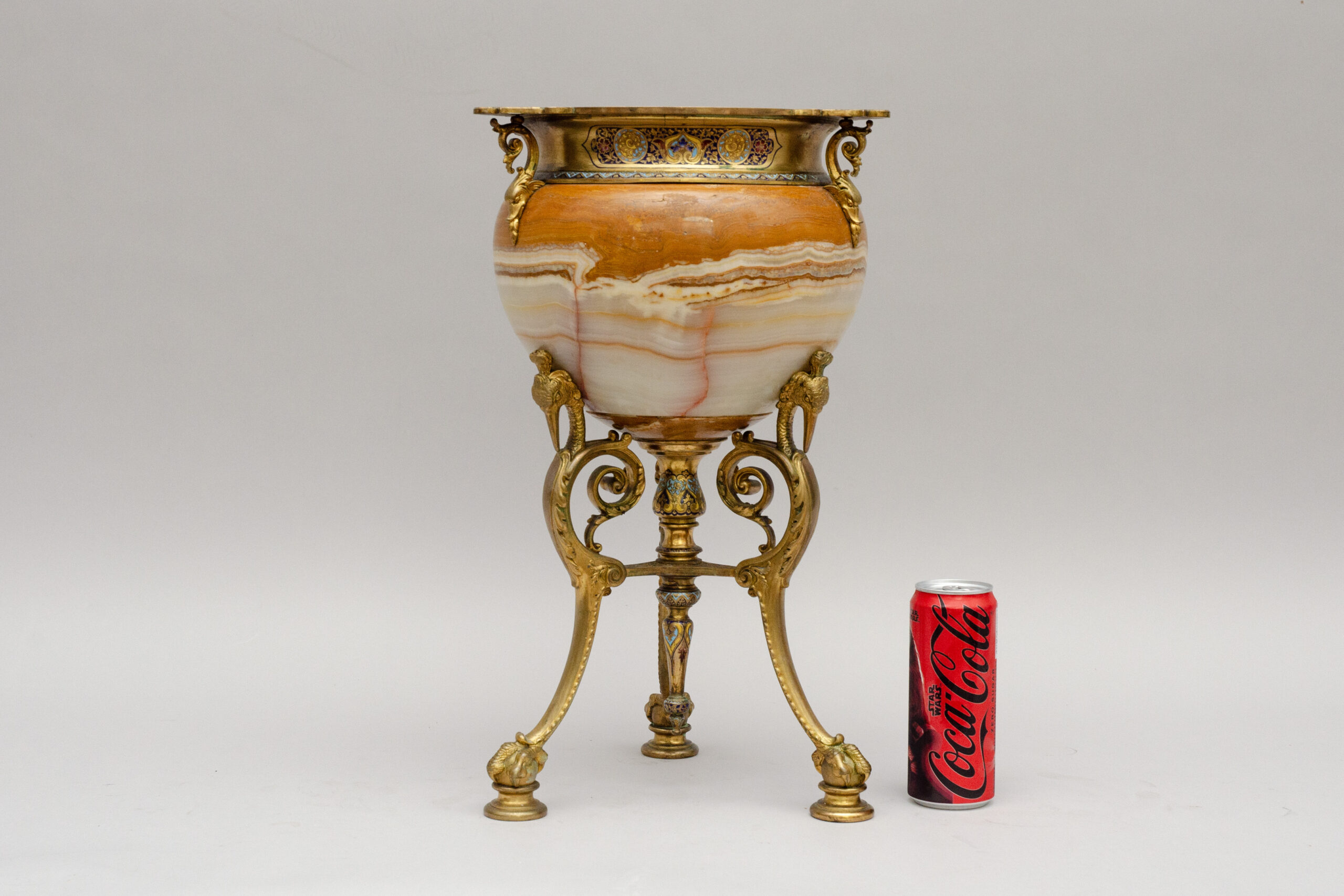
Large urn in onyx and gild bronze, attrib. to Eugène Cornu
Prix sur demande
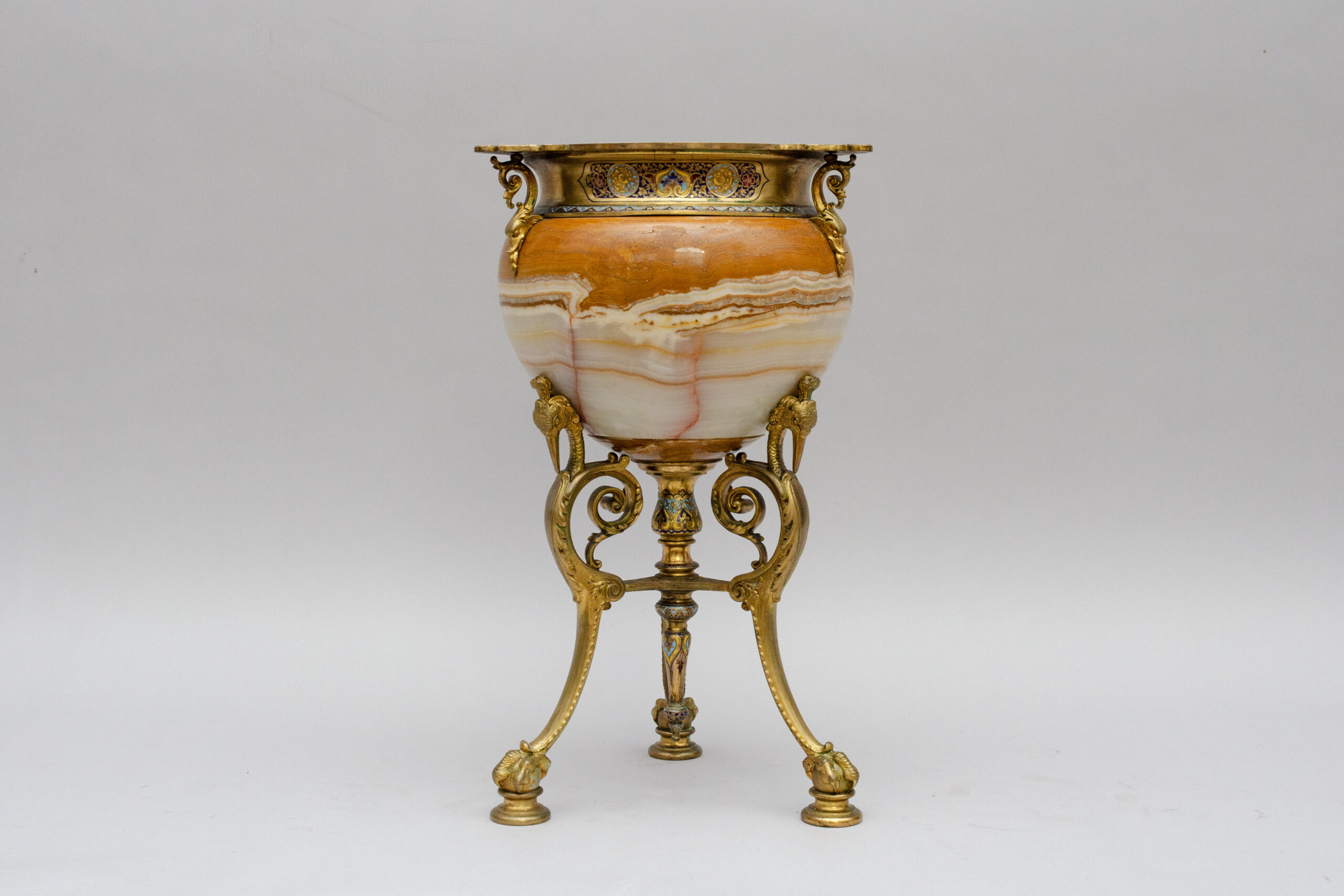
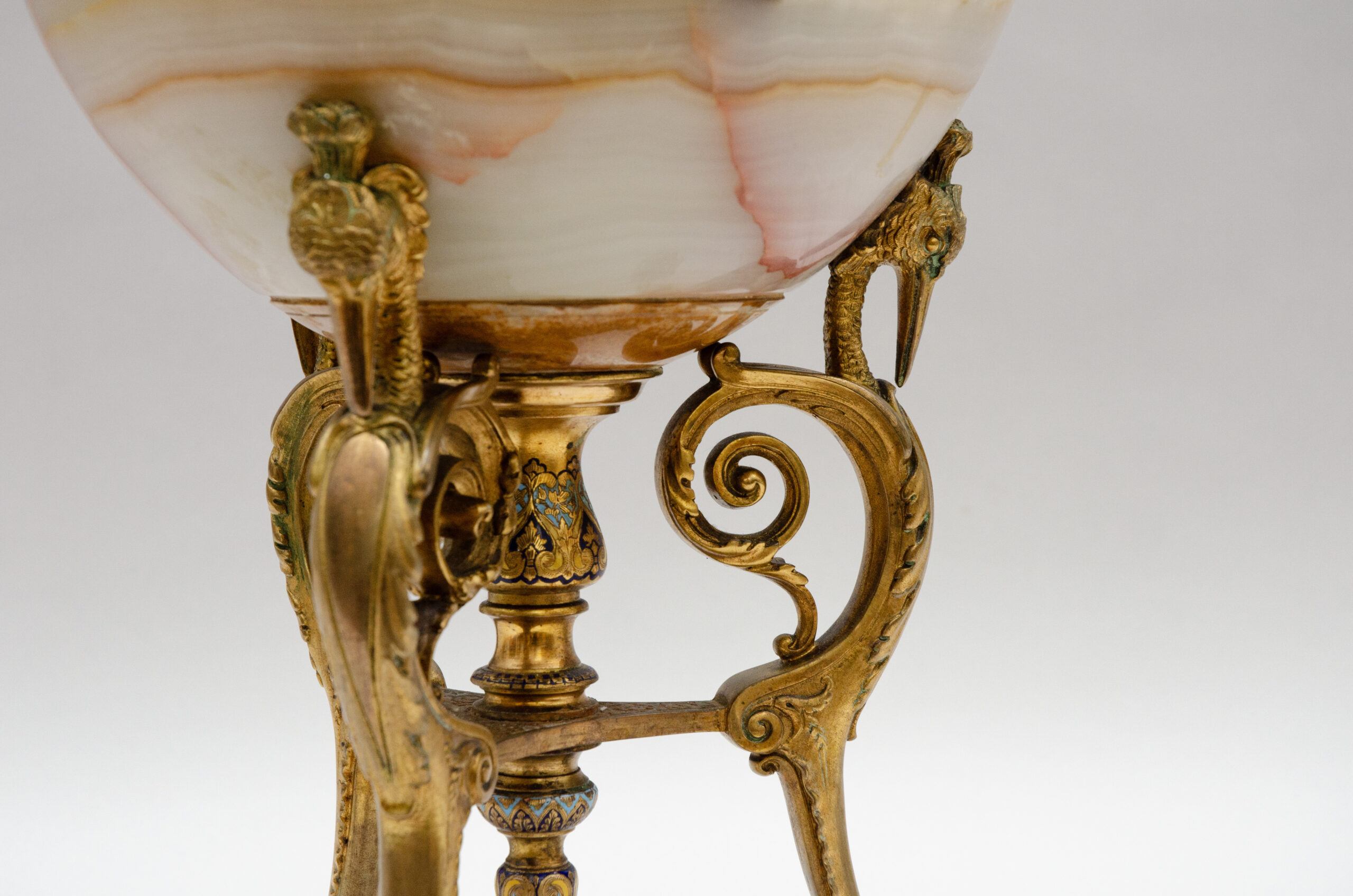
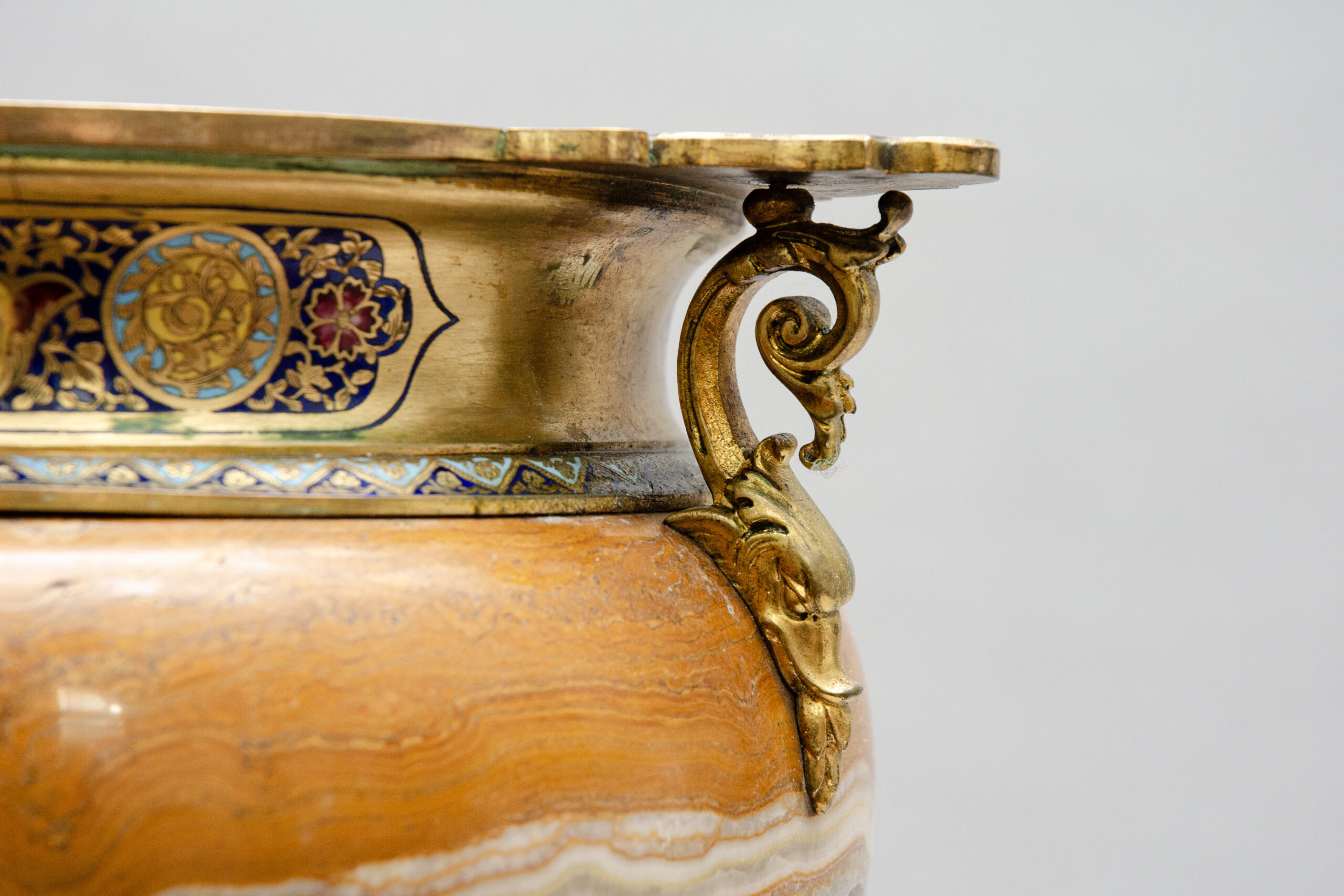
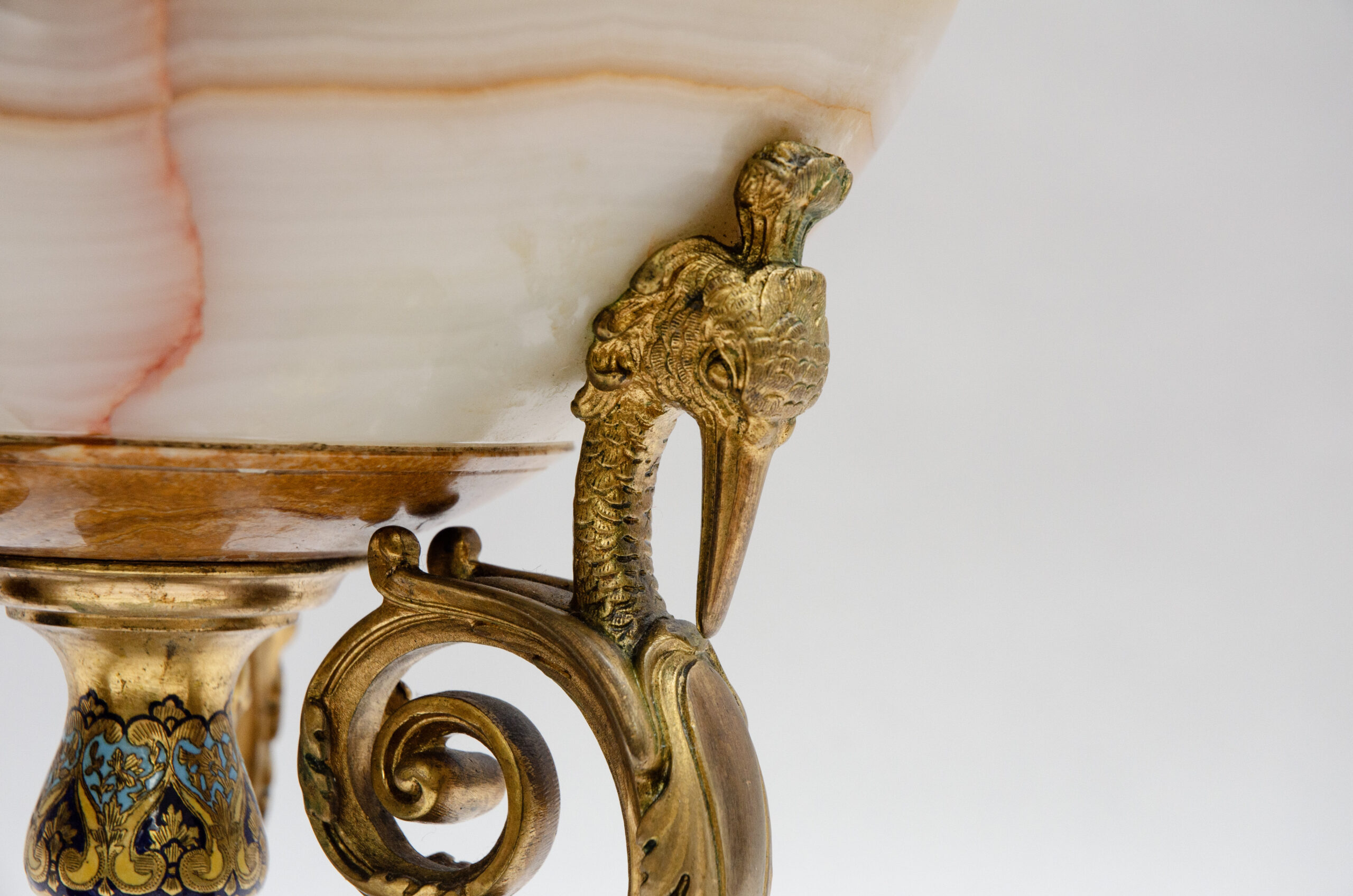
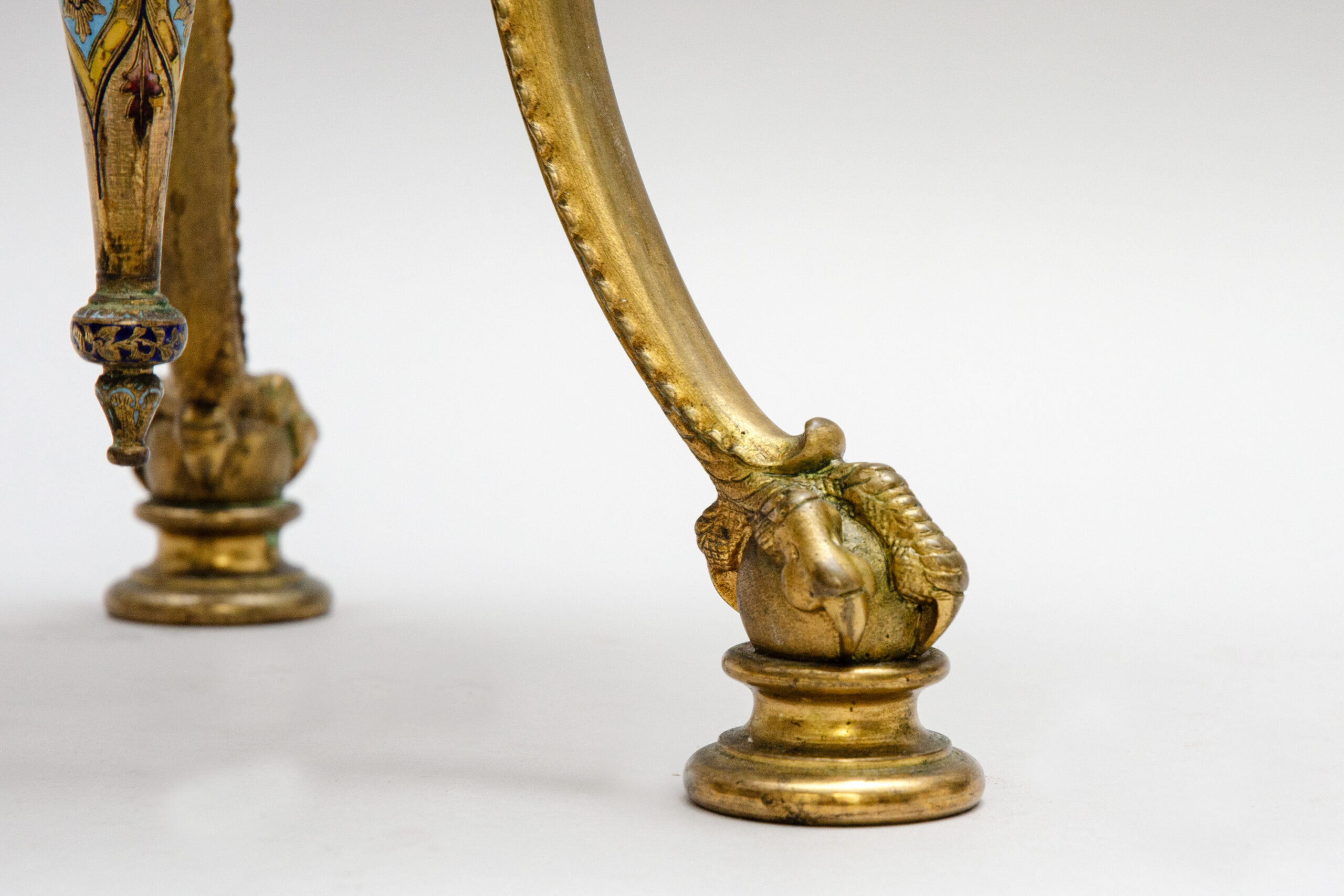
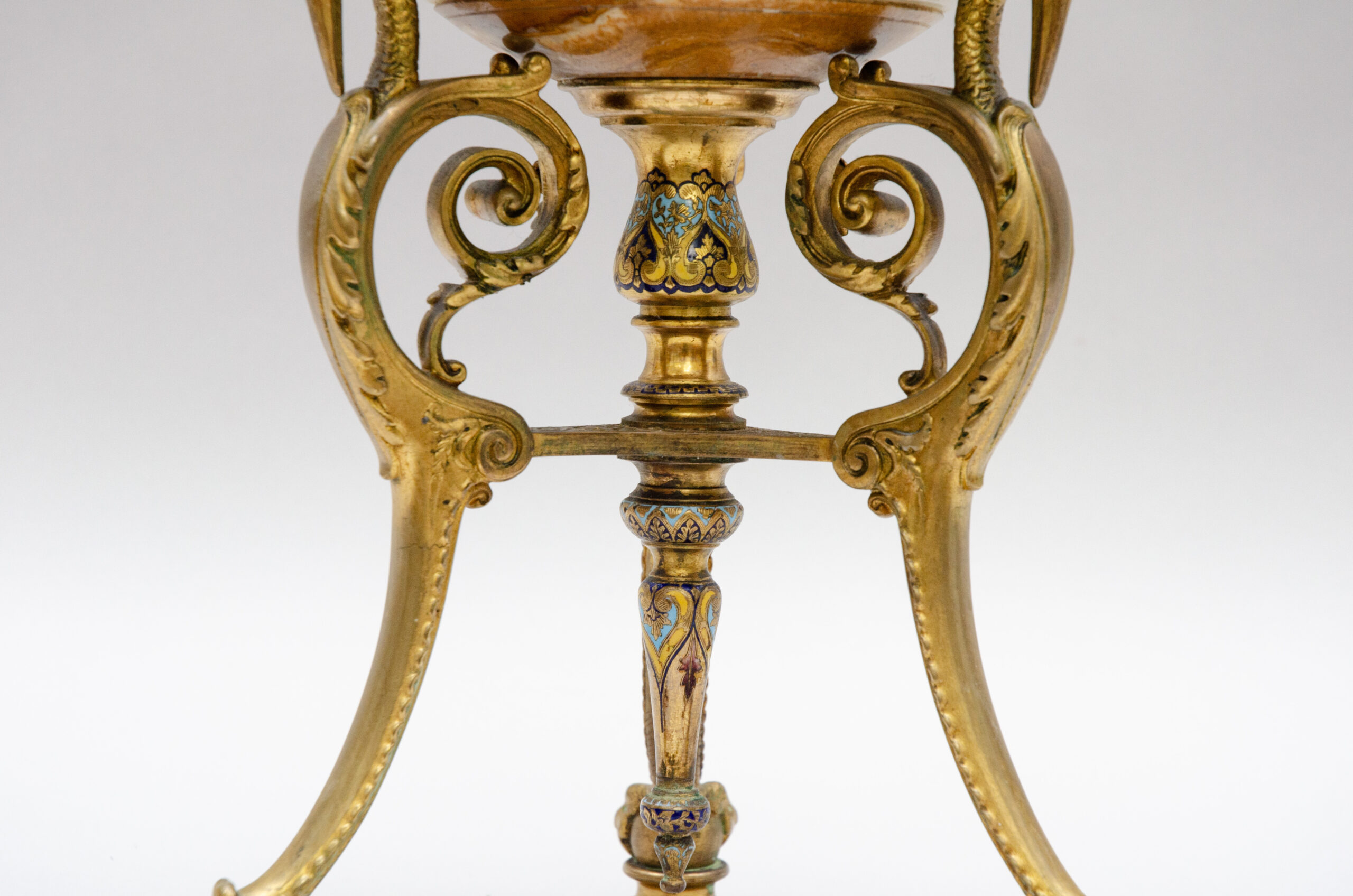
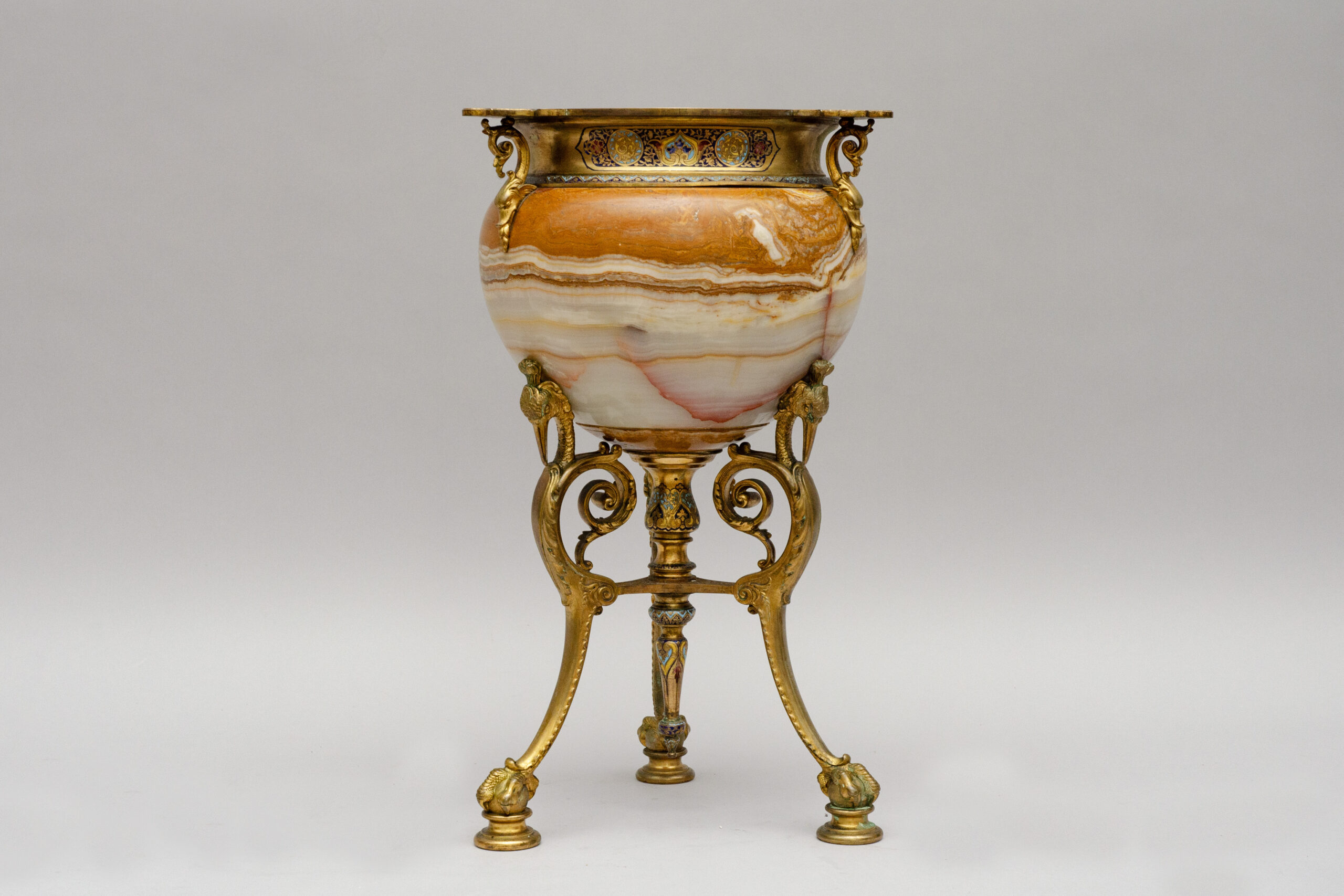
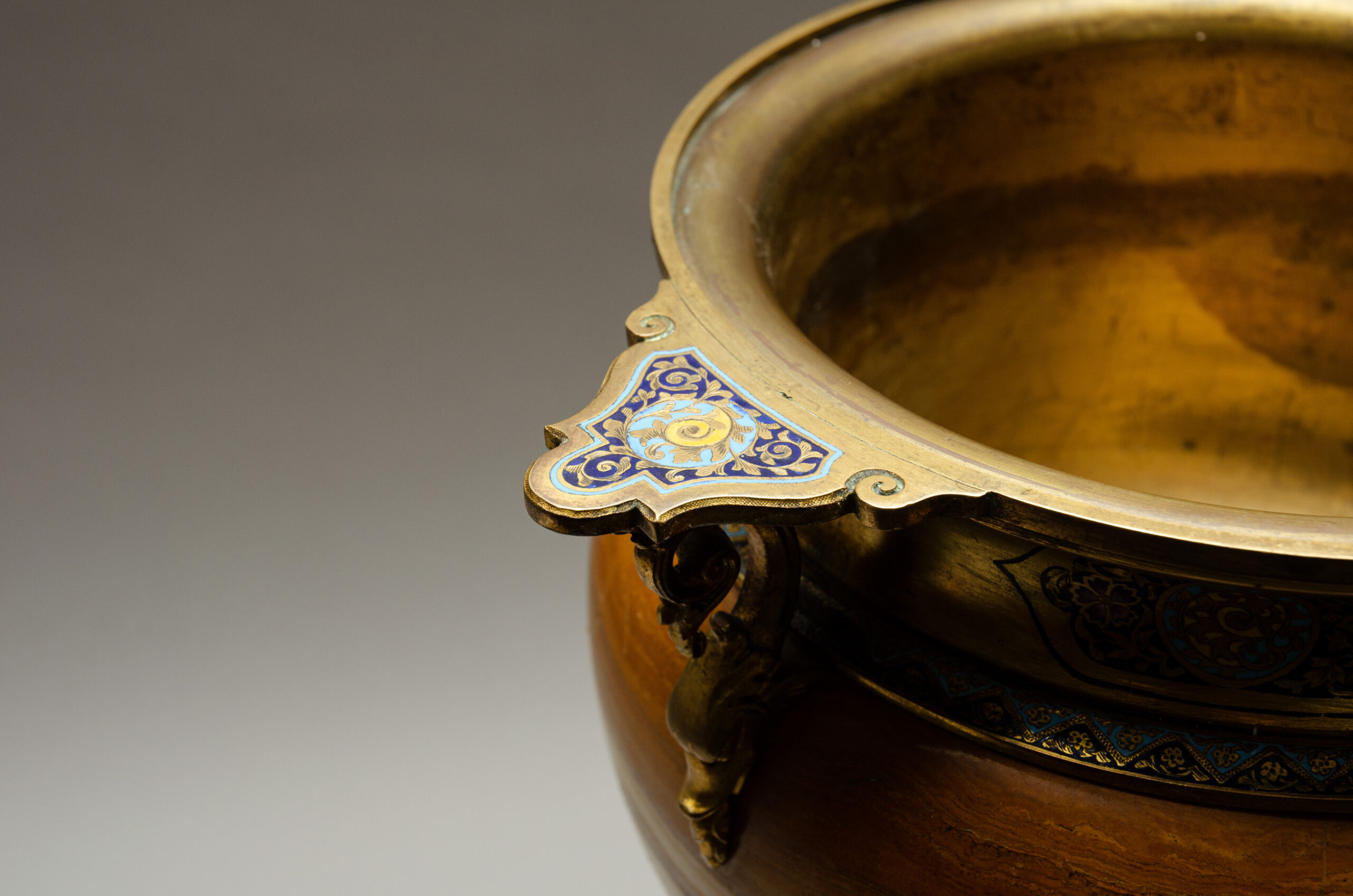
Nous contacterGorgeous urn or flowerpot in onyx mounted on gilt bronze adorned with enamel “champlevé”. Three feet ending in bird claws surmounted by large bird heads. Styled dolphins. The onyx from Algeria used is of high quality, its type is also interesting as it is an “Eyed” onyx, characterized by bands that form a beautiful circle of colour around a dark circular spot. It’s a very decorative piece attributed to the sculptor Eugène Cornu.
Size: H 46 cm – W 27 cm – diameter on top 21 cm
France, second part of the 19th century.
Lit: Louis-François-Eugène Cornu (1827–1899) was a designer and bronze castor. Based at 29 Rue Popincourt in Paris, he initially worked as a designer and construction manager for the Tahan firm. In 1858, after working for the Tahan firm, he became the designer and director of the Compagnie des Marbres et Onyx d’Algérie, first under the management of A. Pallu & Co, then under that of his successor, G. Viot. This firm specialized in the manufacture of luxury items combining bronze, Algerian marble-onyx, and champlevé enamel. Onyx, although known since antiquity, was rediscovered only in 1849 in Algeria by Delmonte, then truly exploited by Alphonse Pallu in the late 1850s. It was in this context that Cornu developed a highly recognizable decorative style, combining these precious materials with great mastery.
Cornu’s creations were exhibited at the World’s Fairs in London in 1862, 1871, and 1872, and in Paris in 1867, where he received a gold medal for a significant pair of vases made of onyx, bronze, and enamel. Around 1873, Eugène Cornu became the director of the company, which then took the name Société des Onyx d’Algérie E. Cornu et Cie. The company was subsequently led by H. Journet in 1878, who gave it his name, and continued until the early 20th century.
Cornu’s works exemplify the Neo-Greek style that developed in France during the 19th century. Drawing inspiration from Greek antiquity, this style drew upon a comprehensive decorative repertoire, reinterpreted in the spirit of the age. He also exhibited at the 1874 Salon.