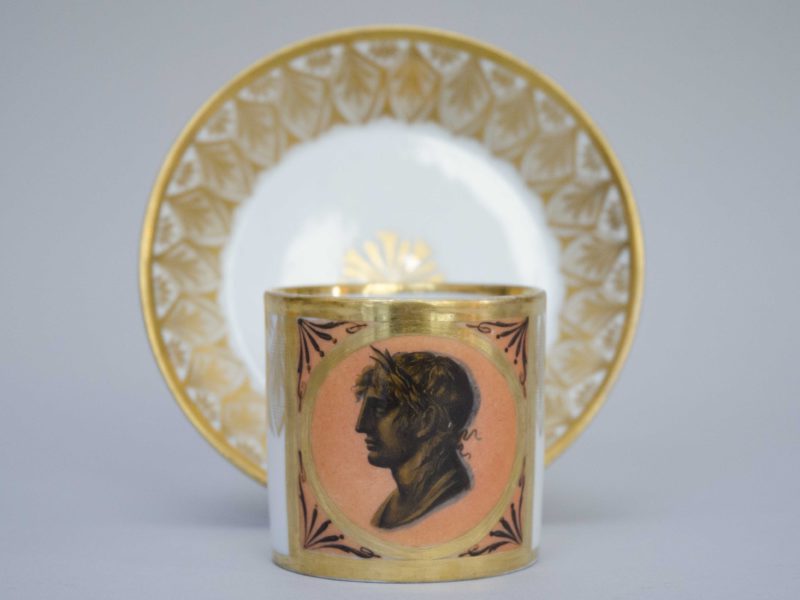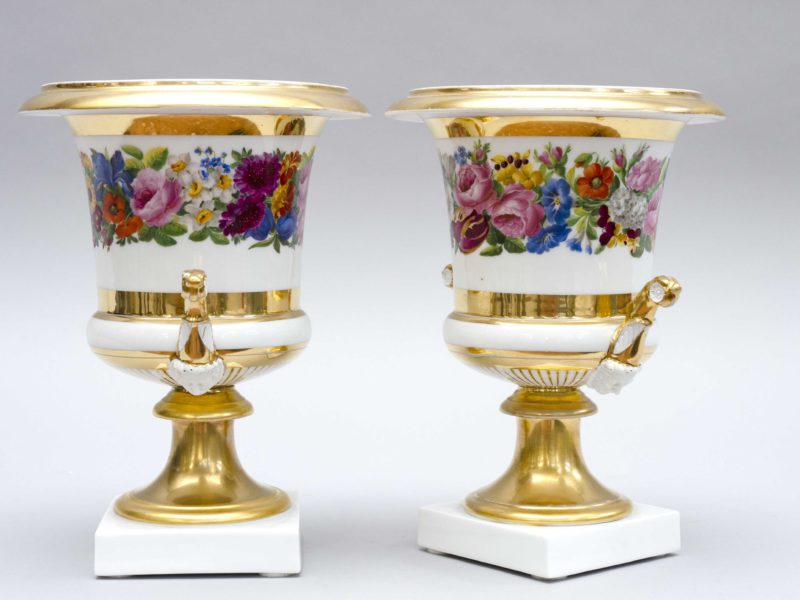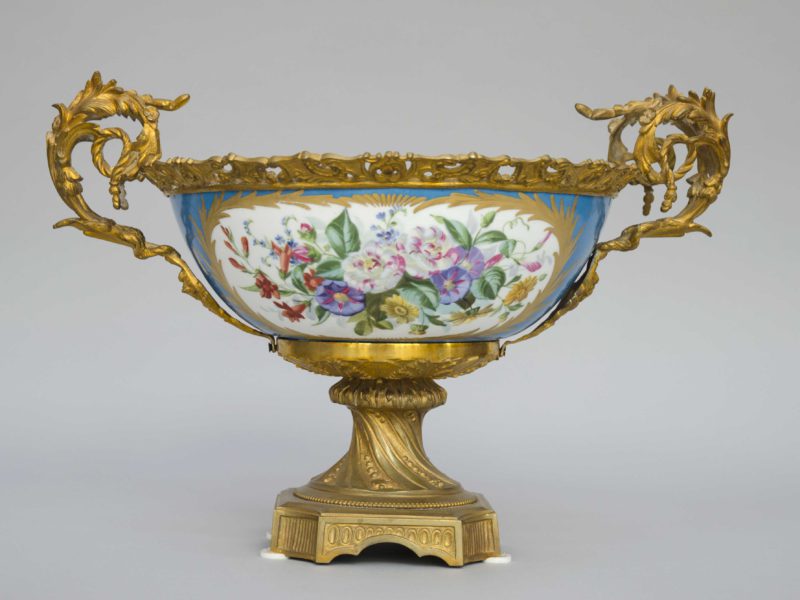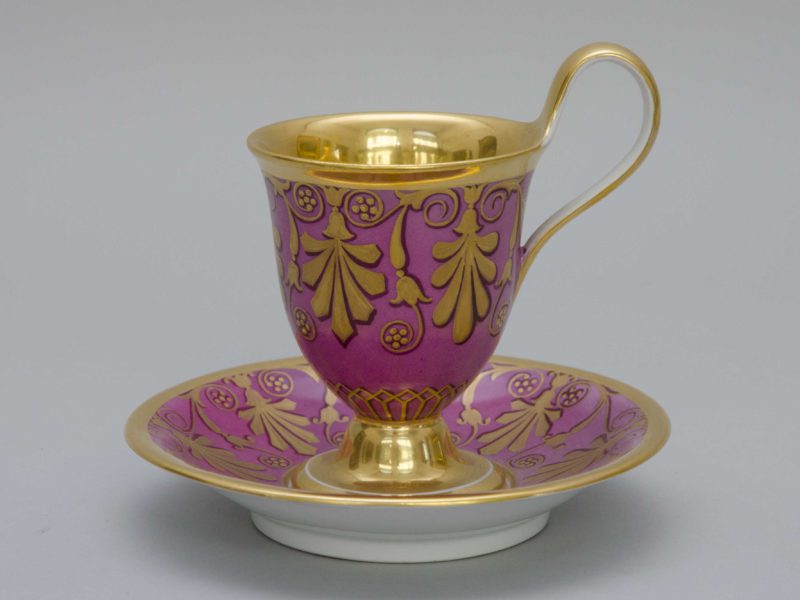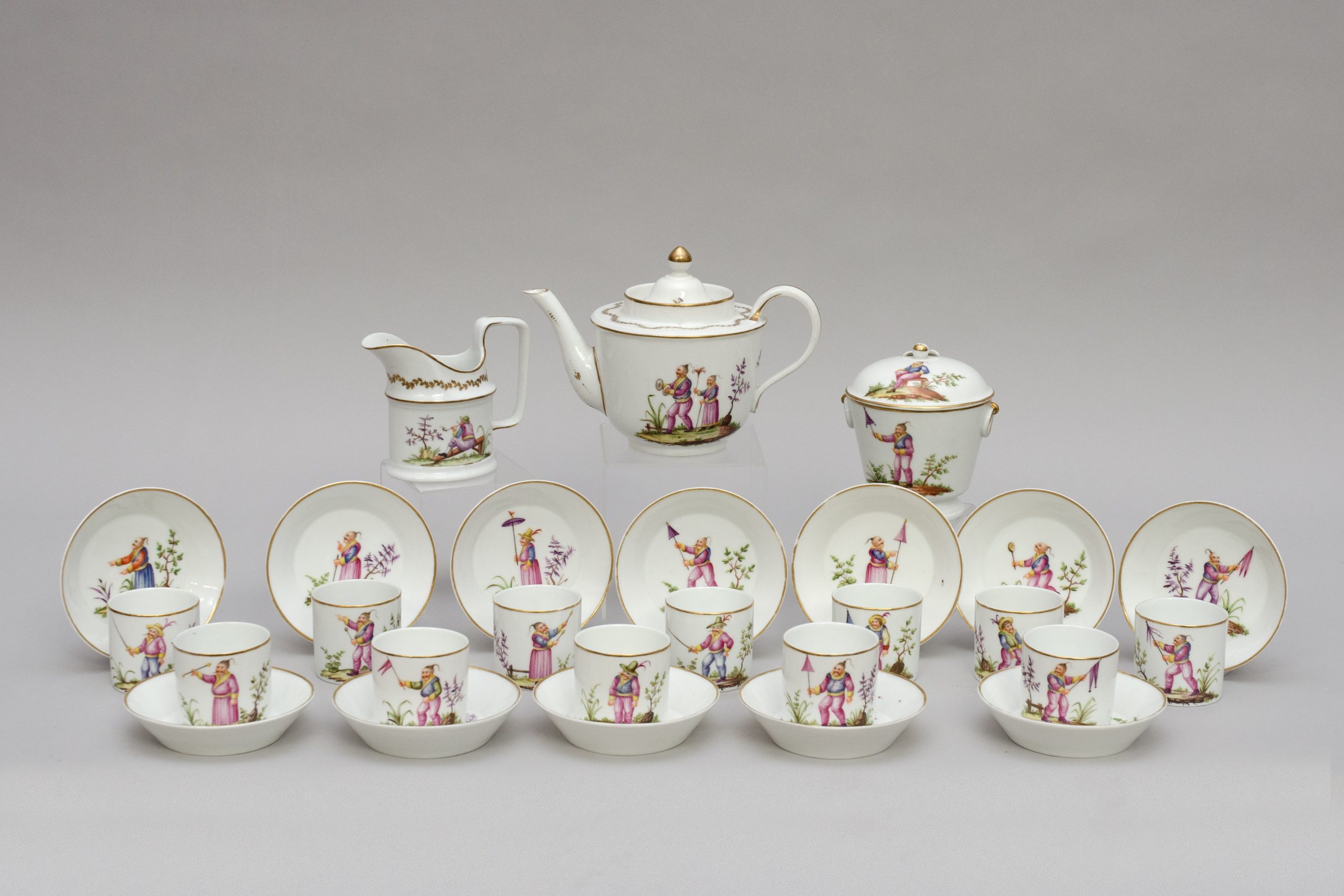
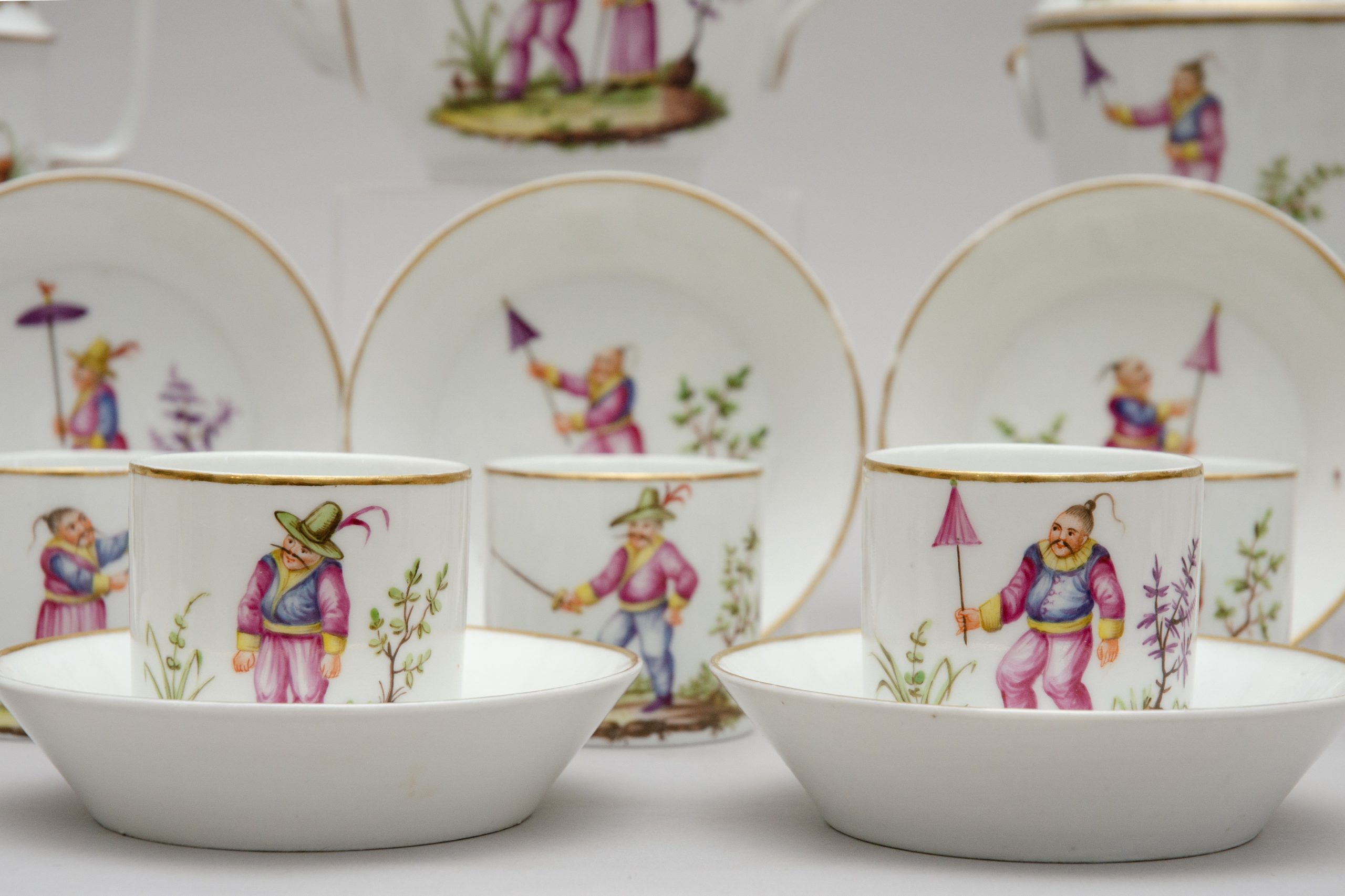
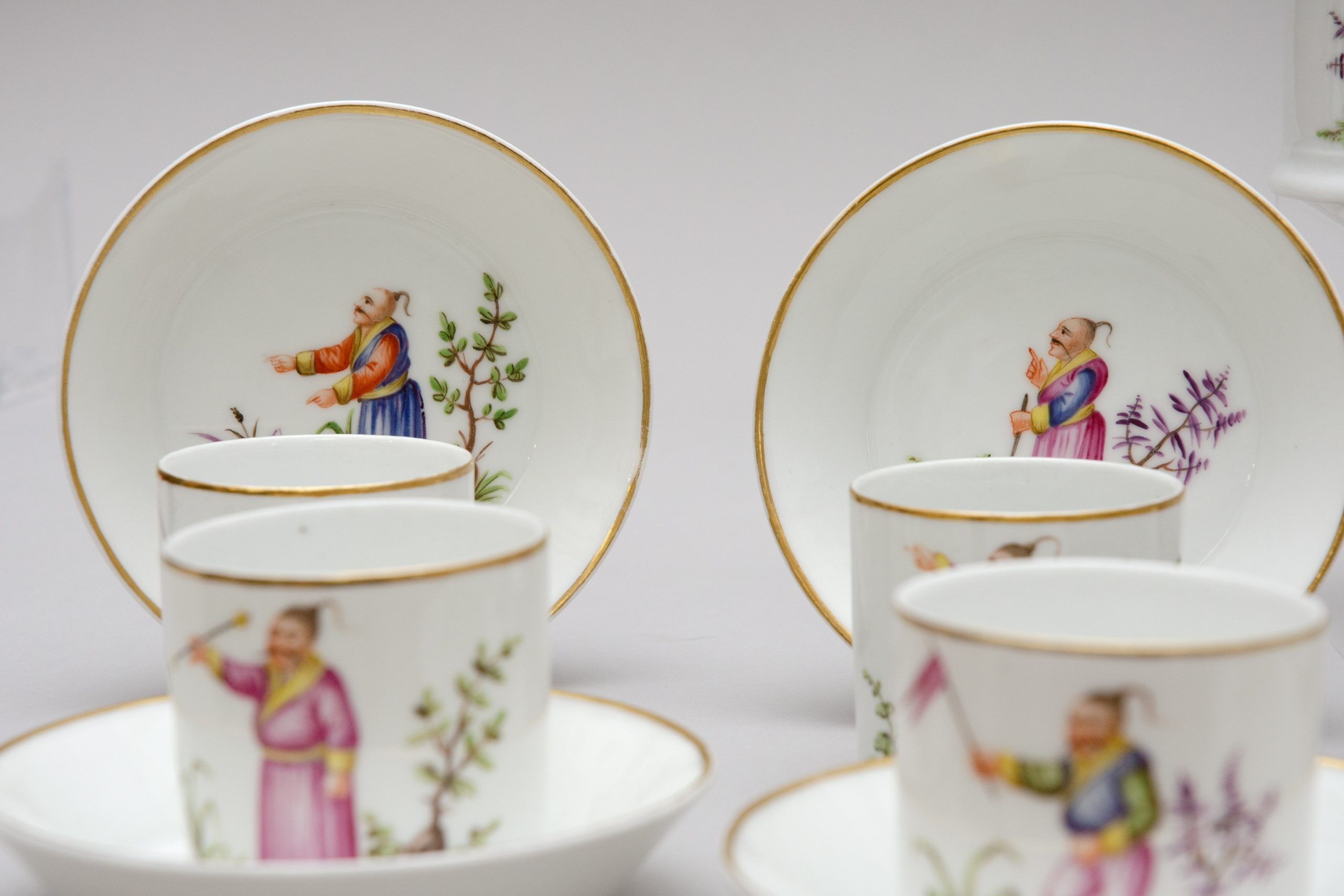
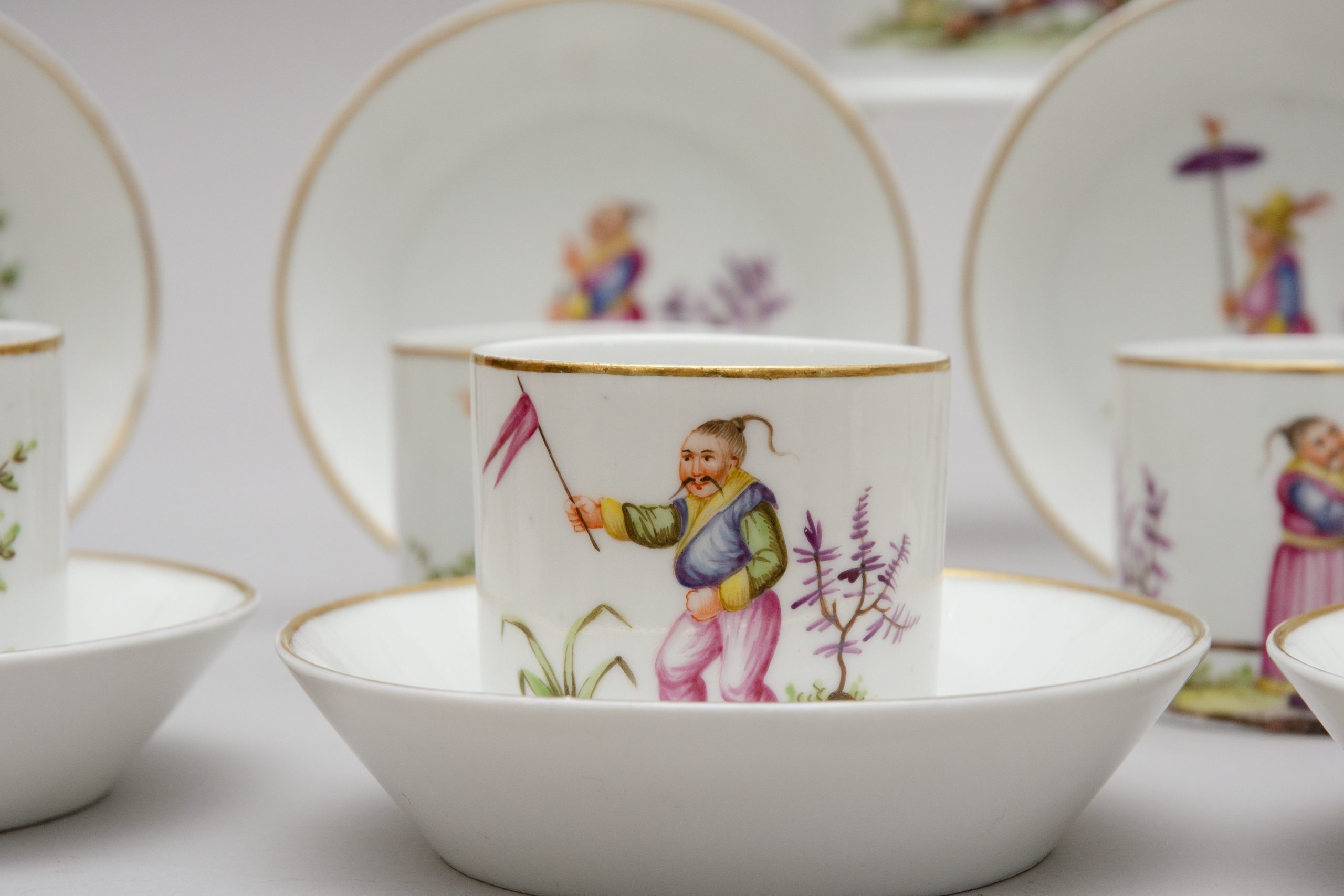
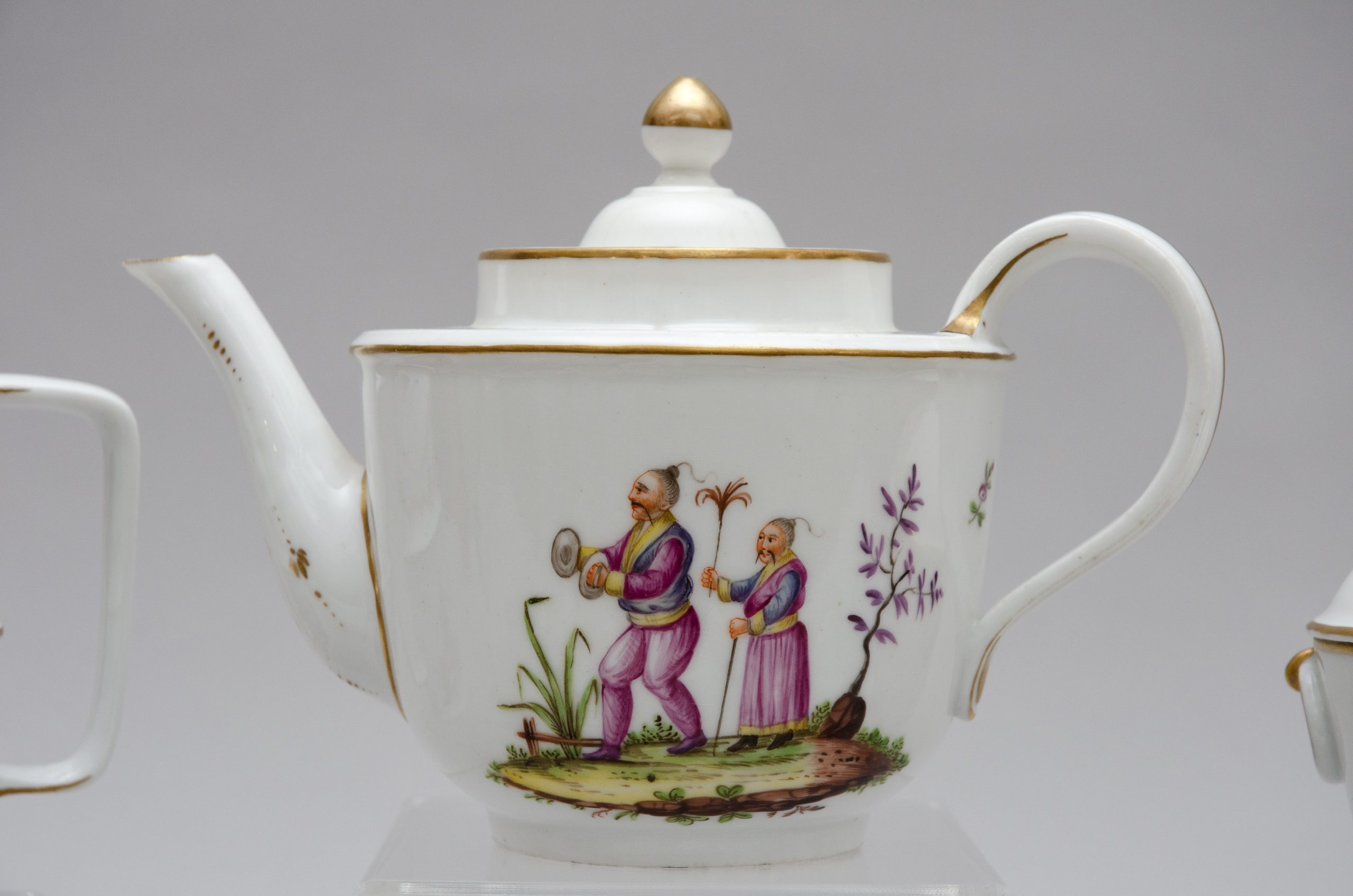
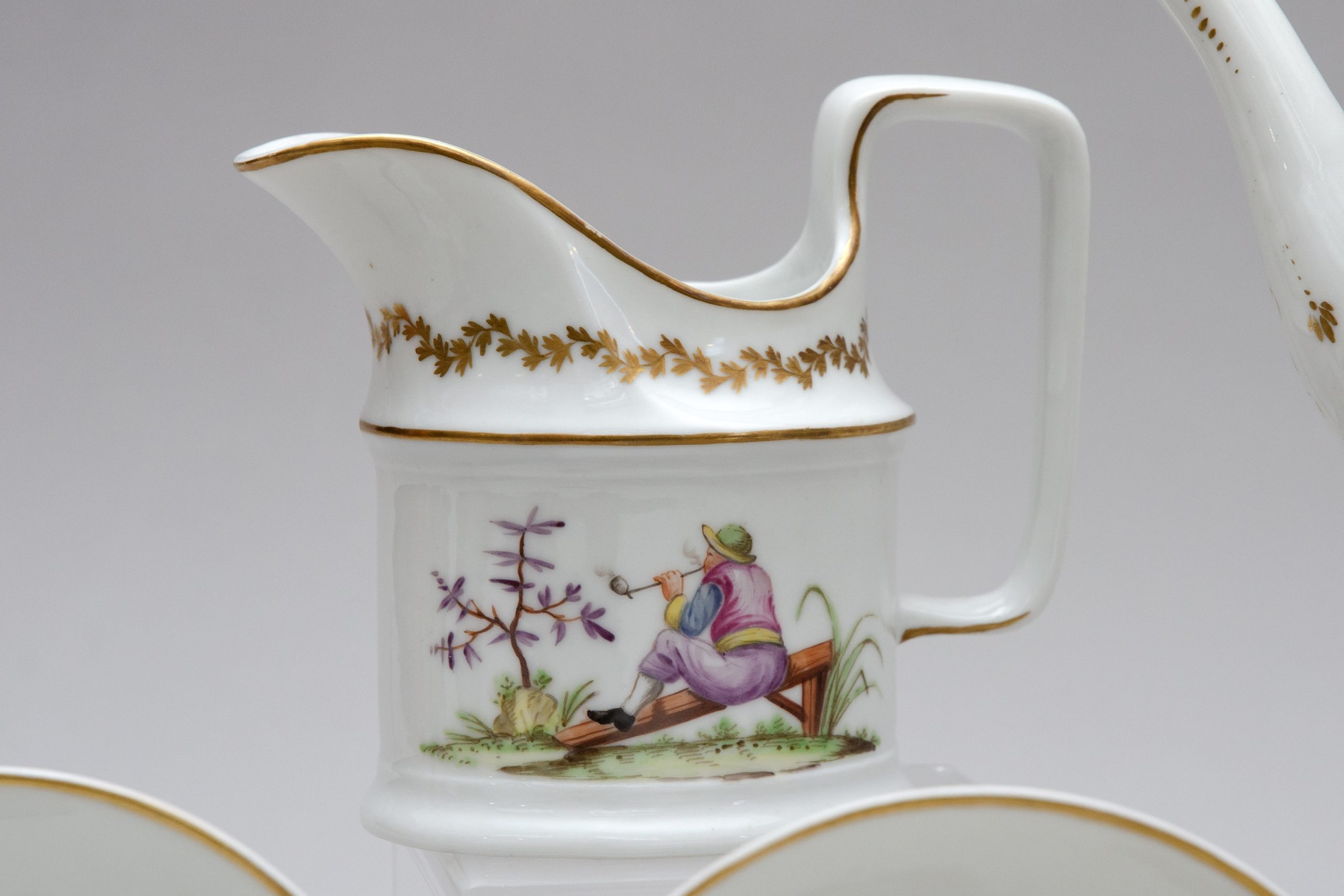
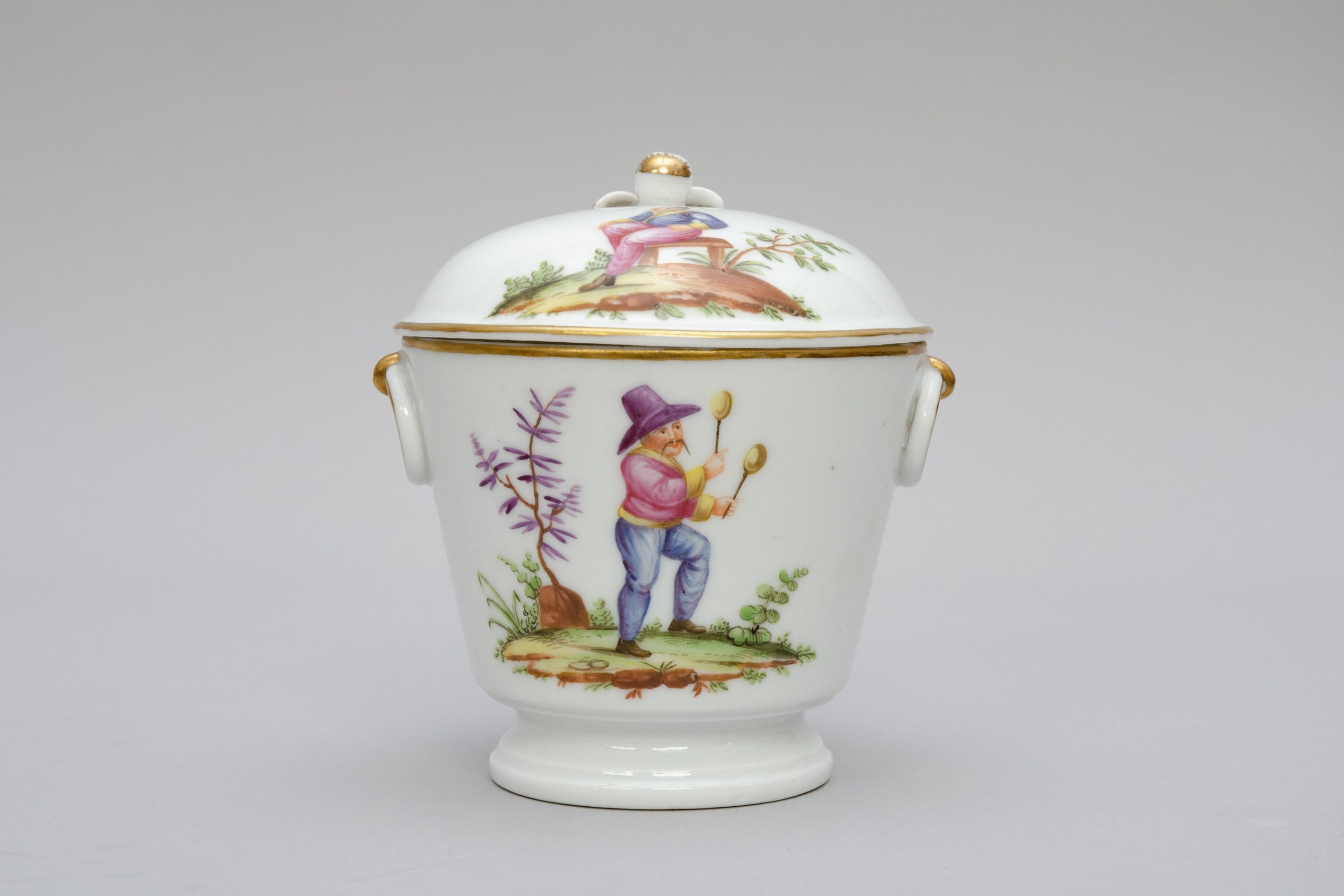
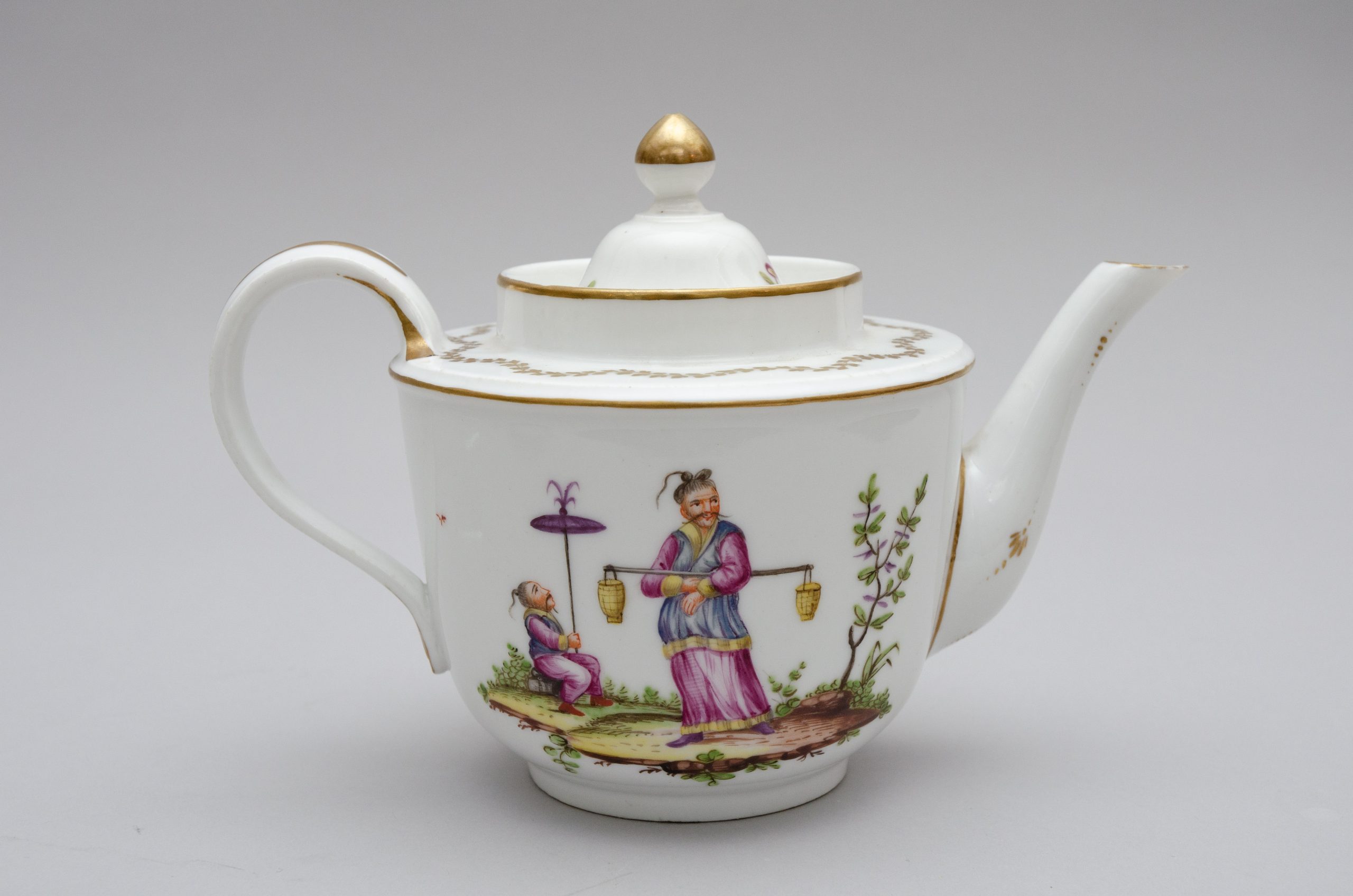
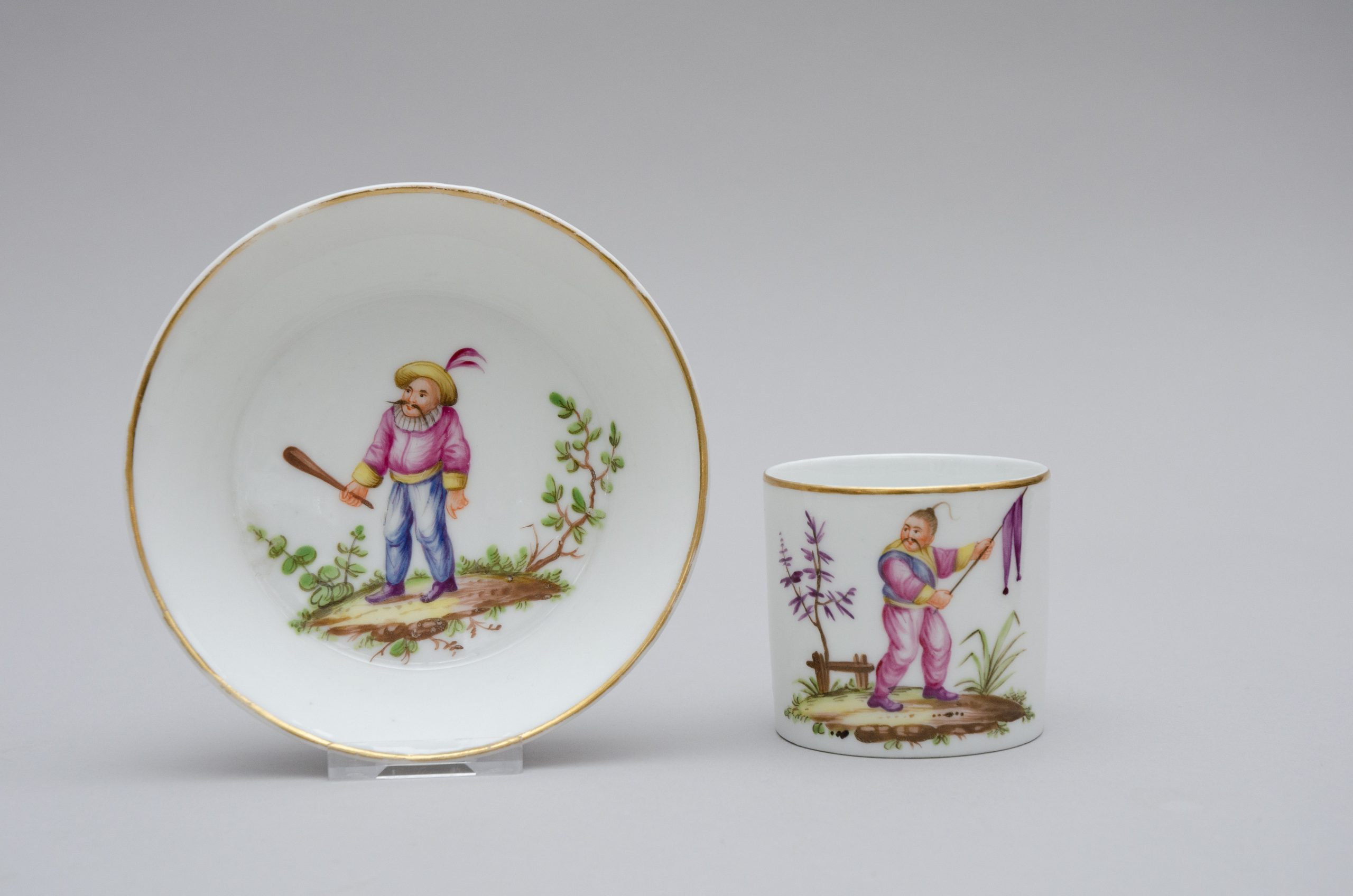
Rare porcelain set “Chinoiserie”, Louis Cretté in Brussels
Prijs op aanvraag
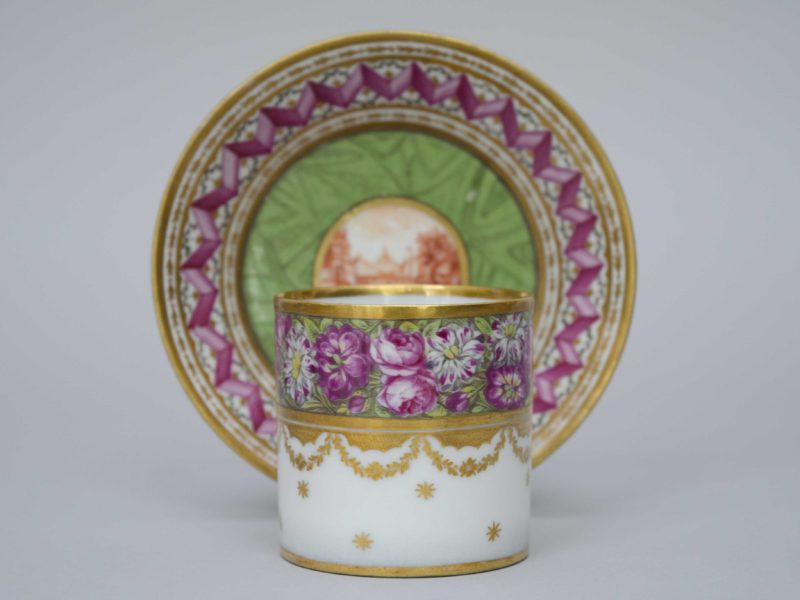
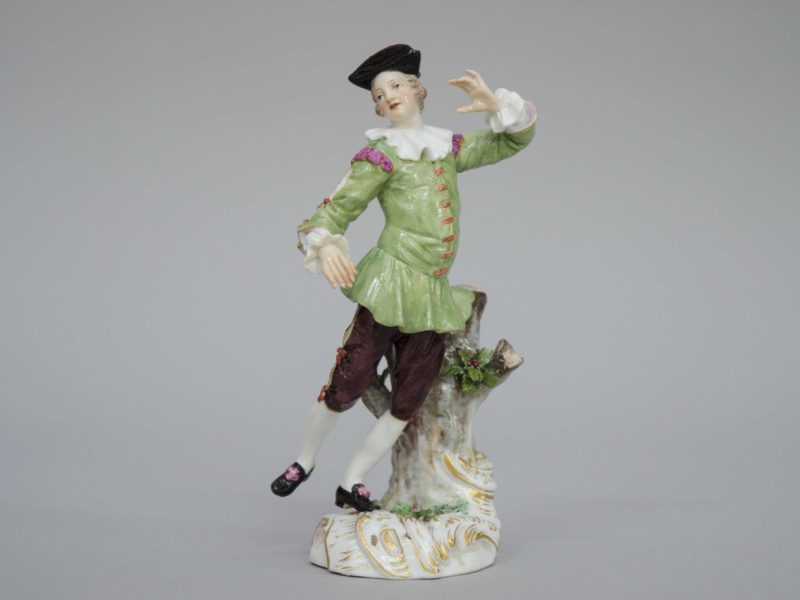
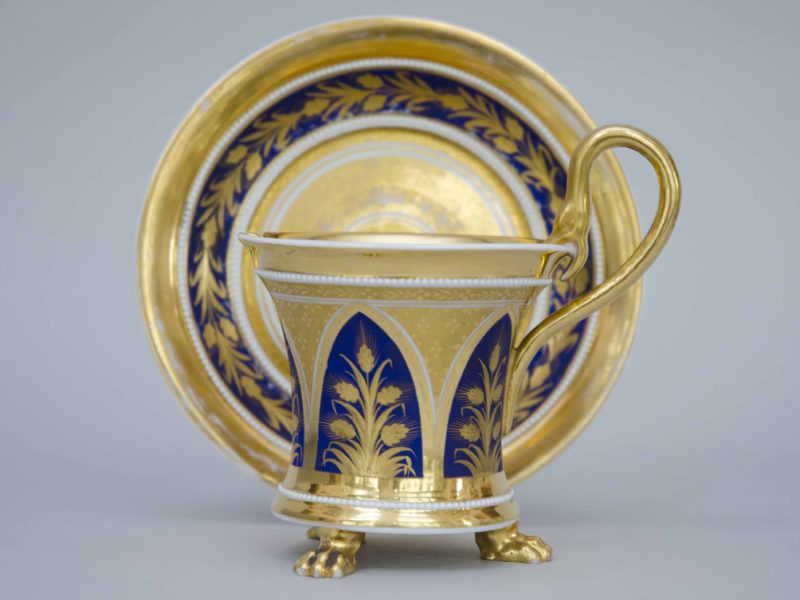
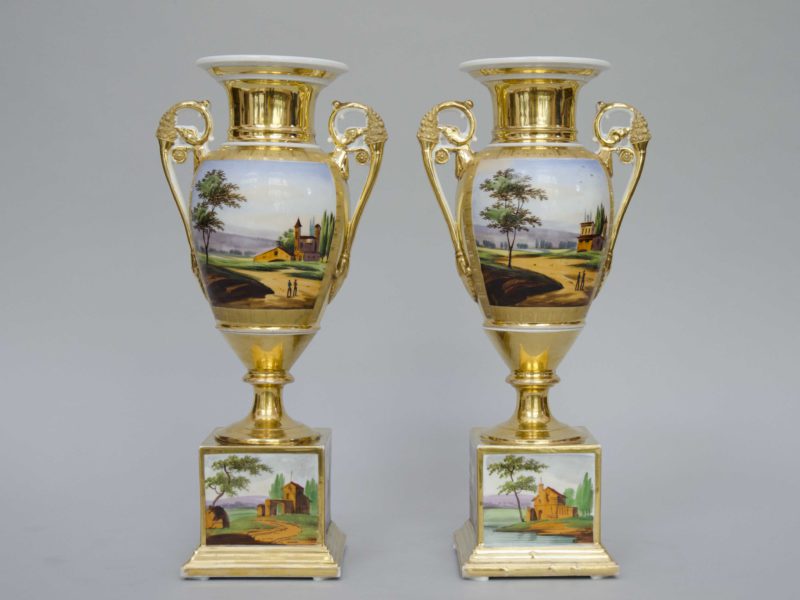
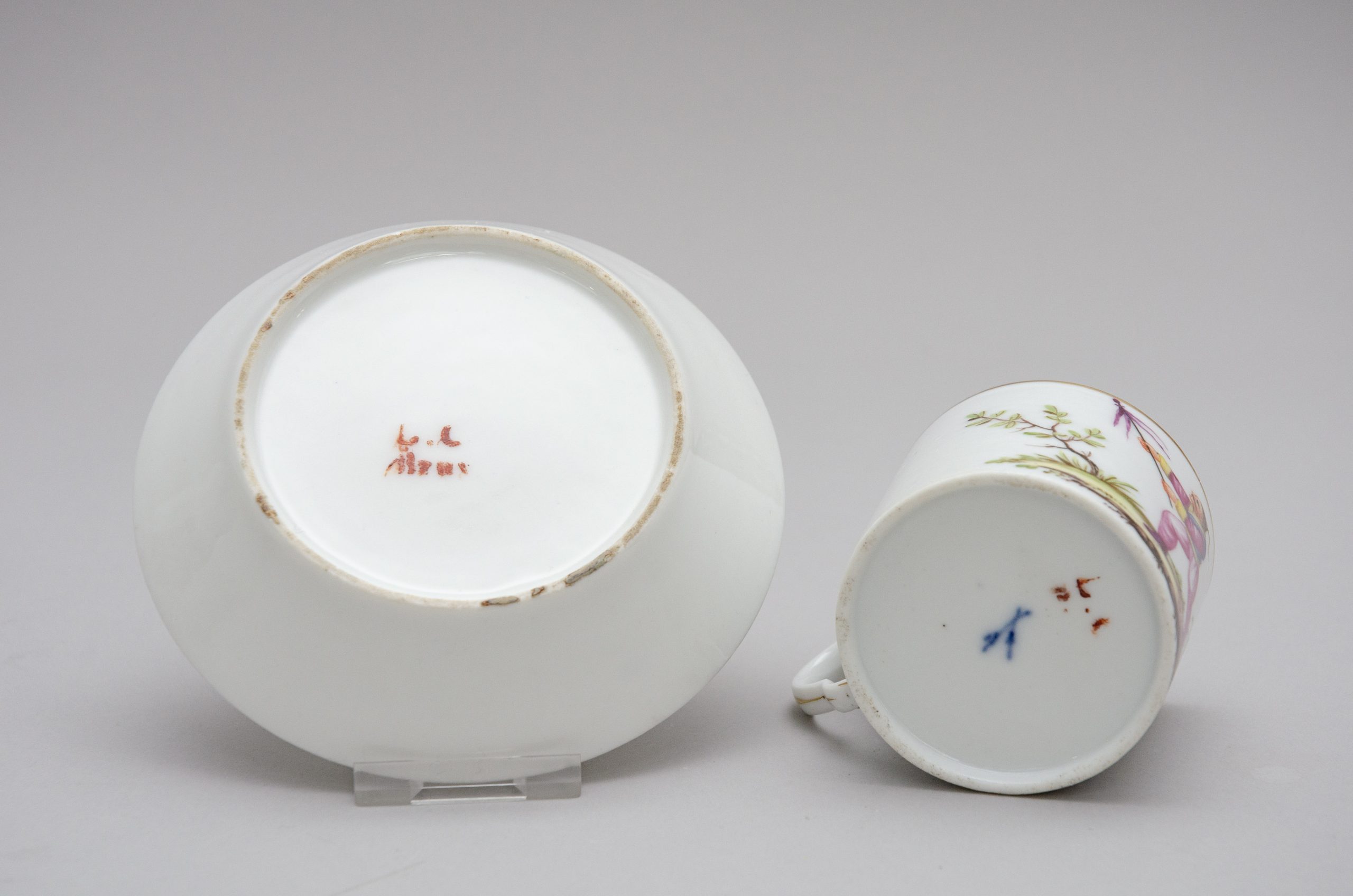
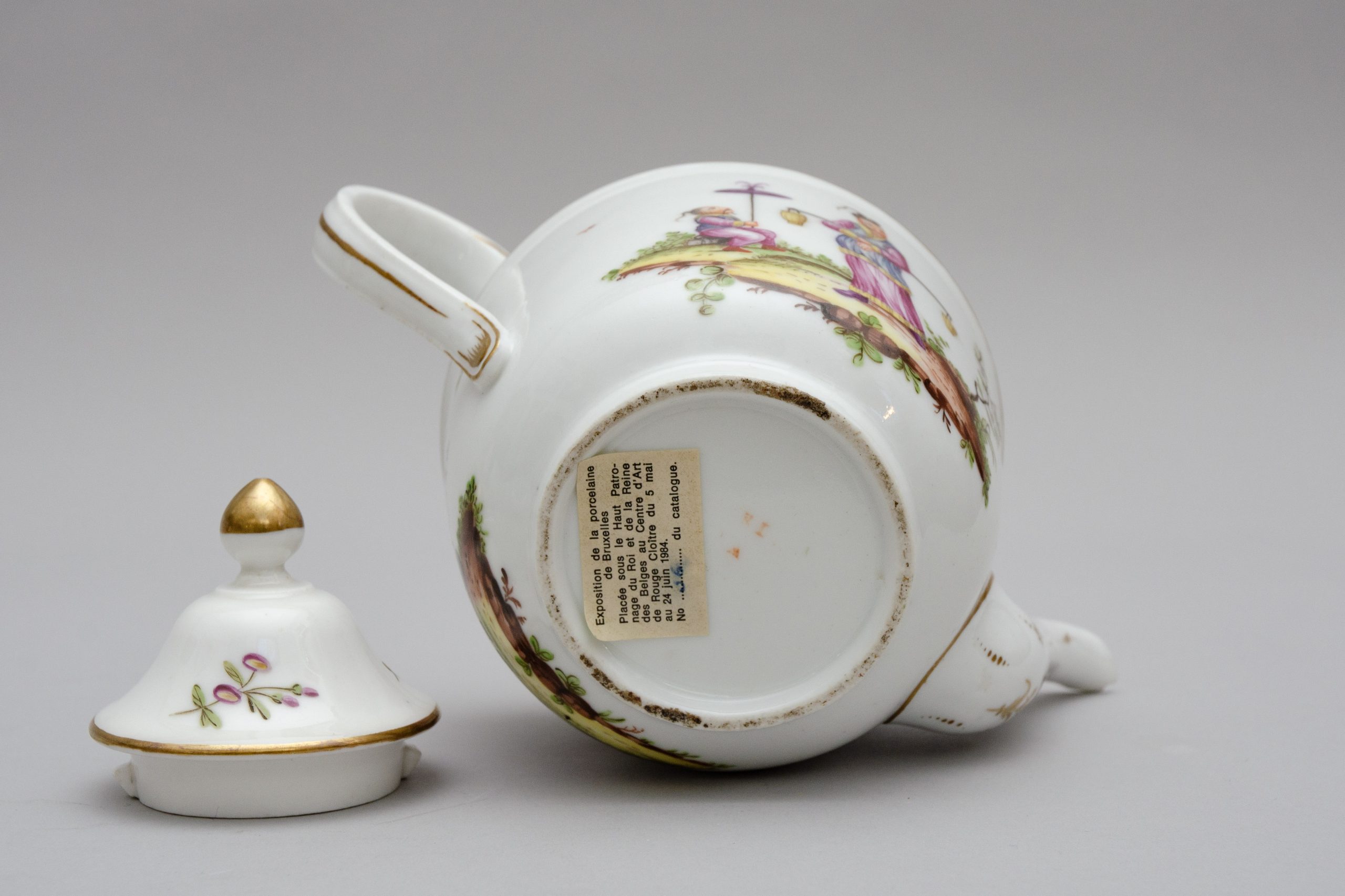
Contacteer onsRare set by Louis Cretté in Brussels. This makes it extra interesting: on the bottoms you find both marks of Cretté AND Locré in Paris, as Cretté bought his whites in Paris. This set was also part of an important exhibition in 1986. Great condition.
Size:
Louis Cretté, 1788-1800.
The museum of Brussels on the Grand-Place has a few pieces decorated in the same matter but signed Etterbeek.
Lit: Louis Cretté was a charming and tenacious figure in the world of porcelain art, whose career spanned France and the Austrian Netherlands—now Belgium—during a pivotal era marked by the upheavals of the Revolution and the rise of the Neoclassical style.
His career began in 1772 at the Bourg-la-Reine factory in the Paris region. It was a demanding school, where he honed his eye and his hand in the French tradition of porcelain decoration. He then worked in the prestigious factories of the Count of Artois and the Duke of Angoulême, run by Dihl, where he met his future colleagues: Claude Bommer, a turner, and Jacques Müller, a kiln operator. LegideLegide
Together, the three men helped establish factories in Lille and Valenciennes, before being called to Brussels to contribute to the creation, in 1786, of the Montplaisir factory, and then, in 1787, of the Etterbeek factory. The venture, however, was short-lived: Cretté and Bommer, though directors, were both ousted from the project by the financiers, triggering a legal battle that would last ten years for Cretté. LegideLegide
During this long legal interlude, far from letting himself be discouraged, he demonstrated remarkable resilience. Unable to produce porcelain, he devoted himself to decoration: he set up shop on Rue d’Arenberg, bought his unglazed porcelain in Paris—notably from Locré—and painted it himself. Legide
In 1799, buoyed by his legal victory, he finally established his own factory in the Sablon district, on Rue de l’Étoile (now Rue Ernest Allard), and partnered with Mortelèque, who had trained in Tournai. Together, they produced mainly superb tableware sets in which painting played a predominant role, in a resolutely Louis XVI and neoclassical style: landscapes, flowers, animals, and rural scenes, rendered with great finesse. Legide
Cretté’s most ambitious work is undoubtedly the exceptional “Buffon’s Birds” service created in 1803—highly accurate copies based on the illustrations in Buffon’s Natural History of Birds—which he hoped to sell to Napoleon Bonaparte, then First Consul. The sale never took place, and the service was dispersed; part of it is now preserved at the City of Brussels Museum on the Grand-Place. Legide
Louis Cretté died in 1813. Mortelèque survived him, moving to Ixelles where he continued his work for some time. Cretté left behind a body of work scattered across European public and private collections—from the Victoria & Albert Museum in London to the Brussels Museum—a testament to a life devoted, with determination and talent, to the delicate art of painted porcelain.