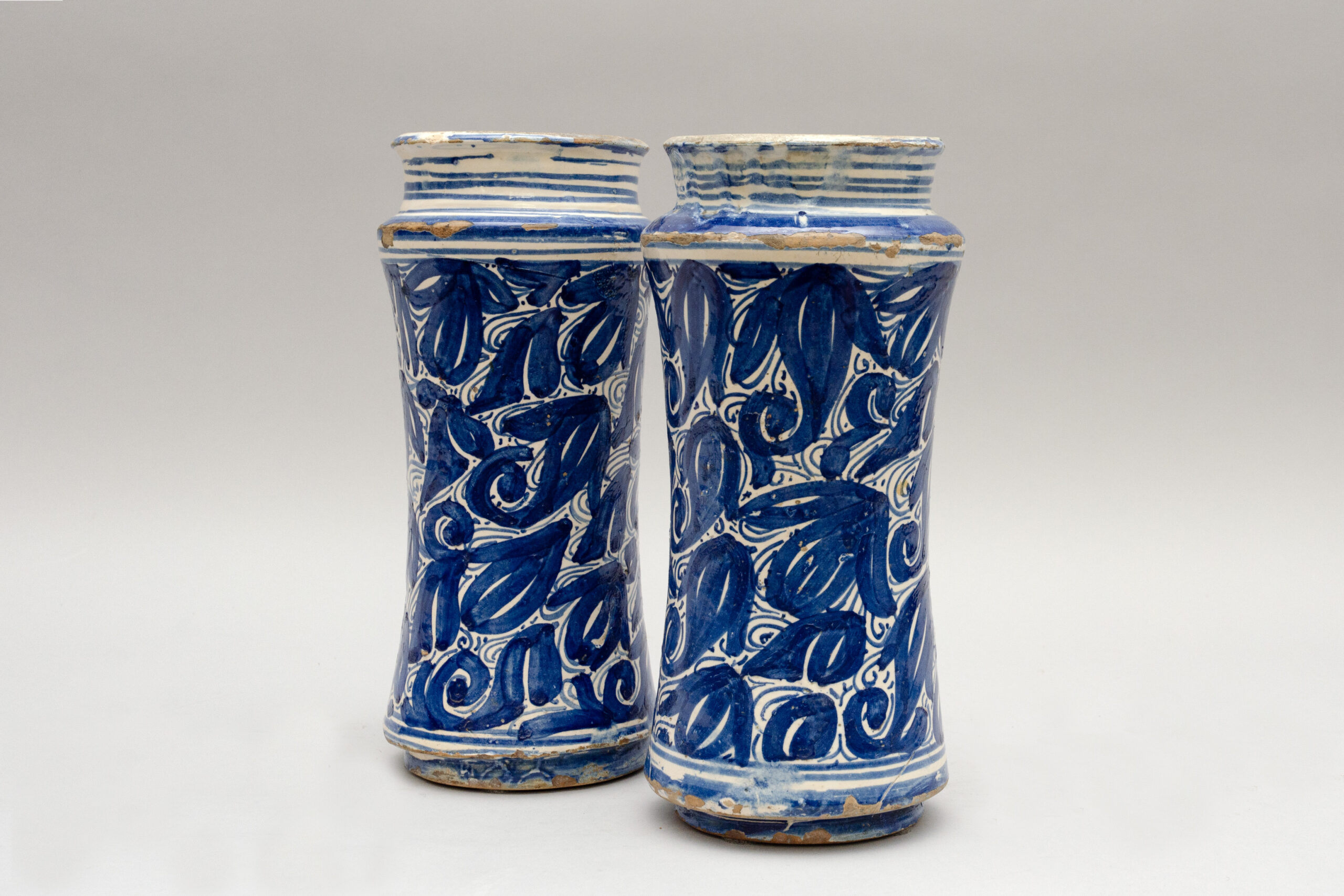
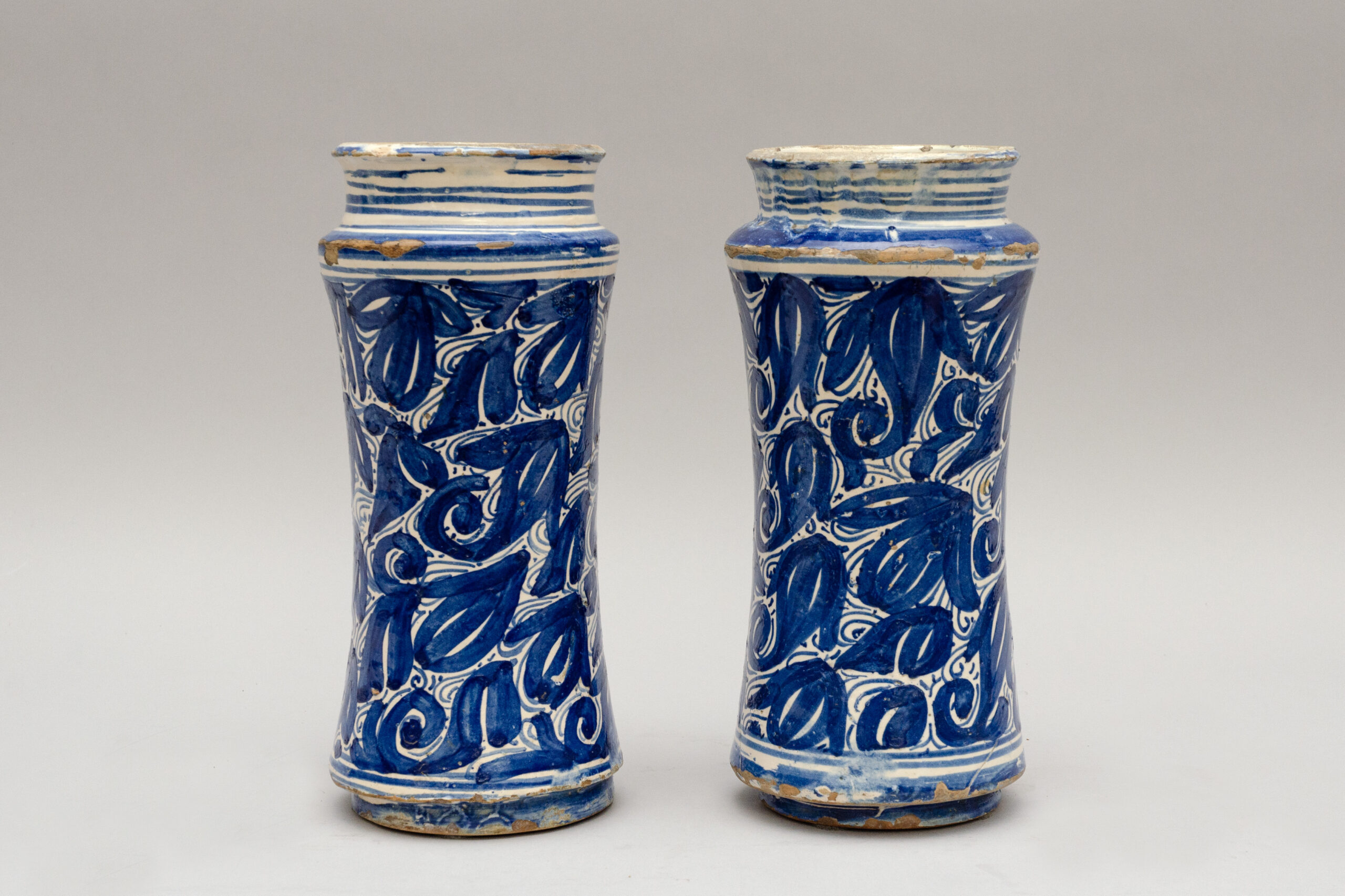
Rare pair of “Albarelli” jars, North-Italy
3.900€
In stock
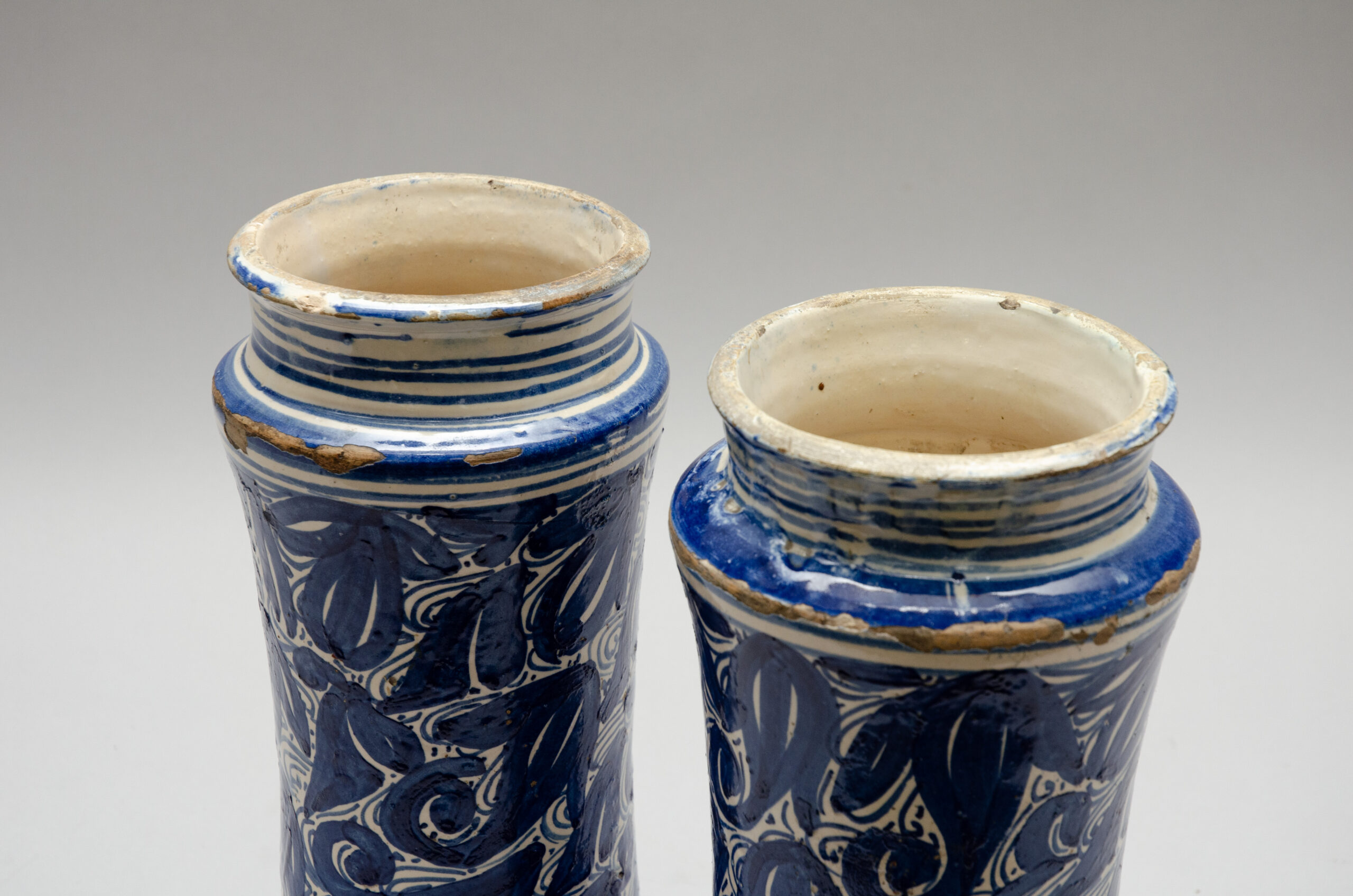
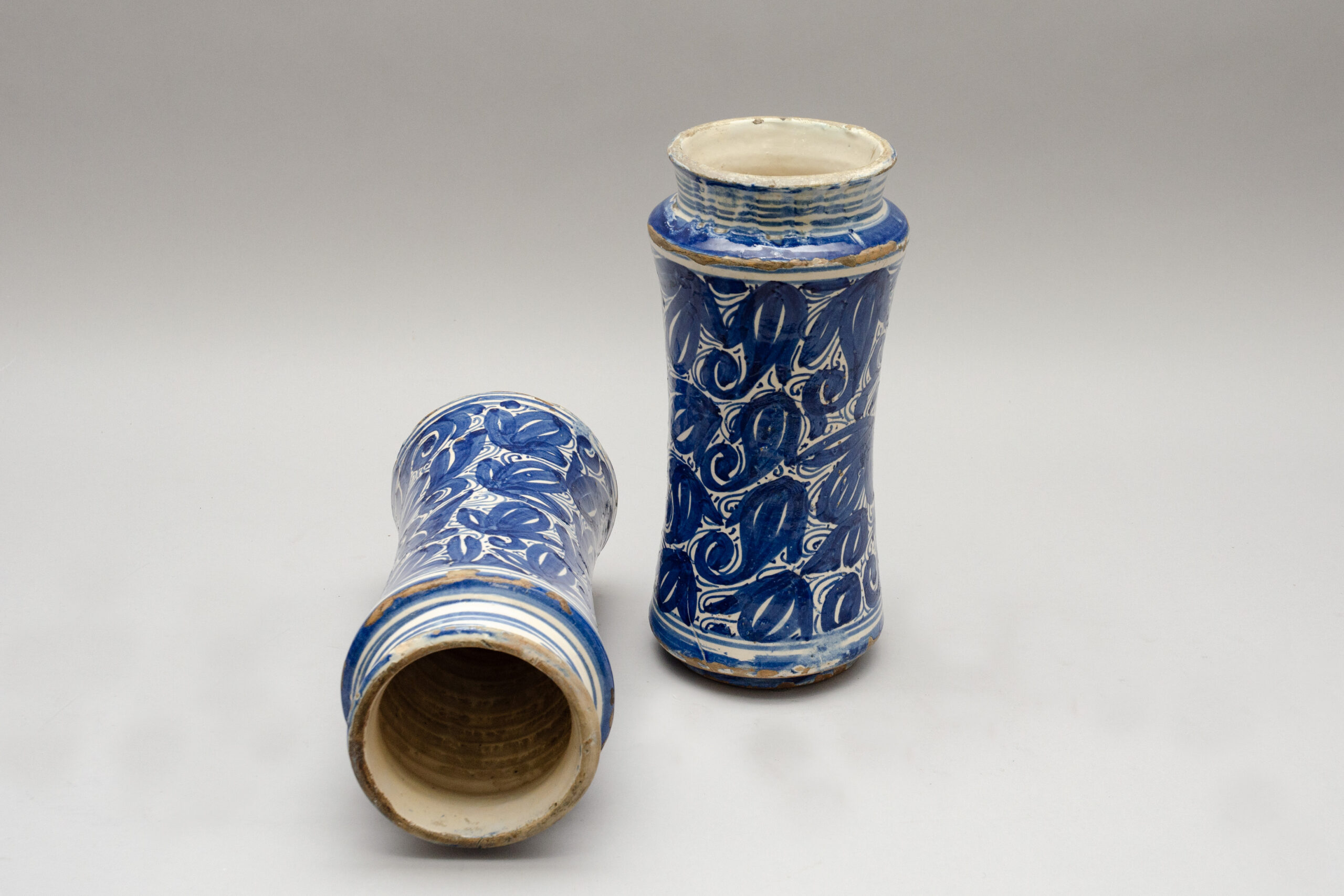
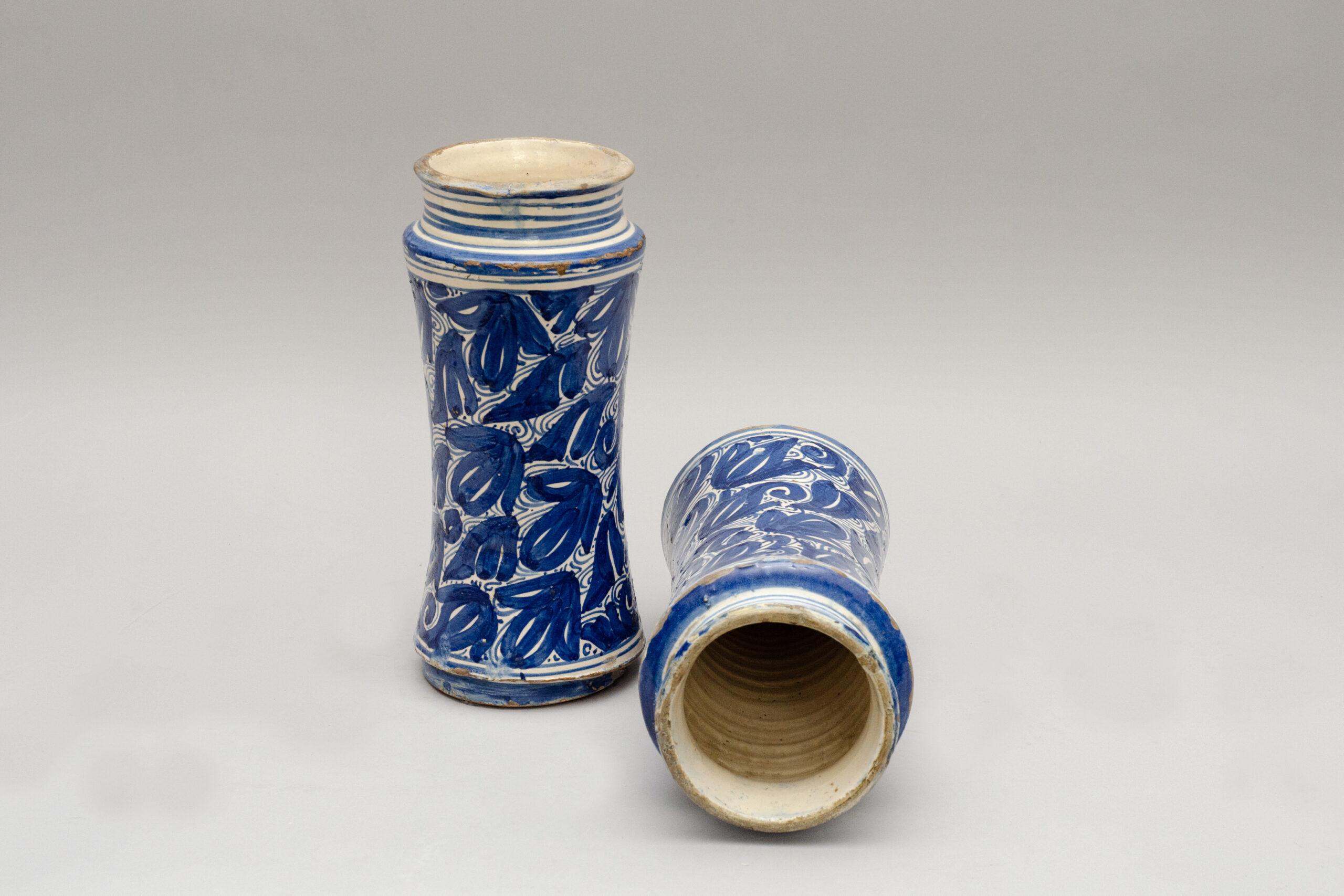
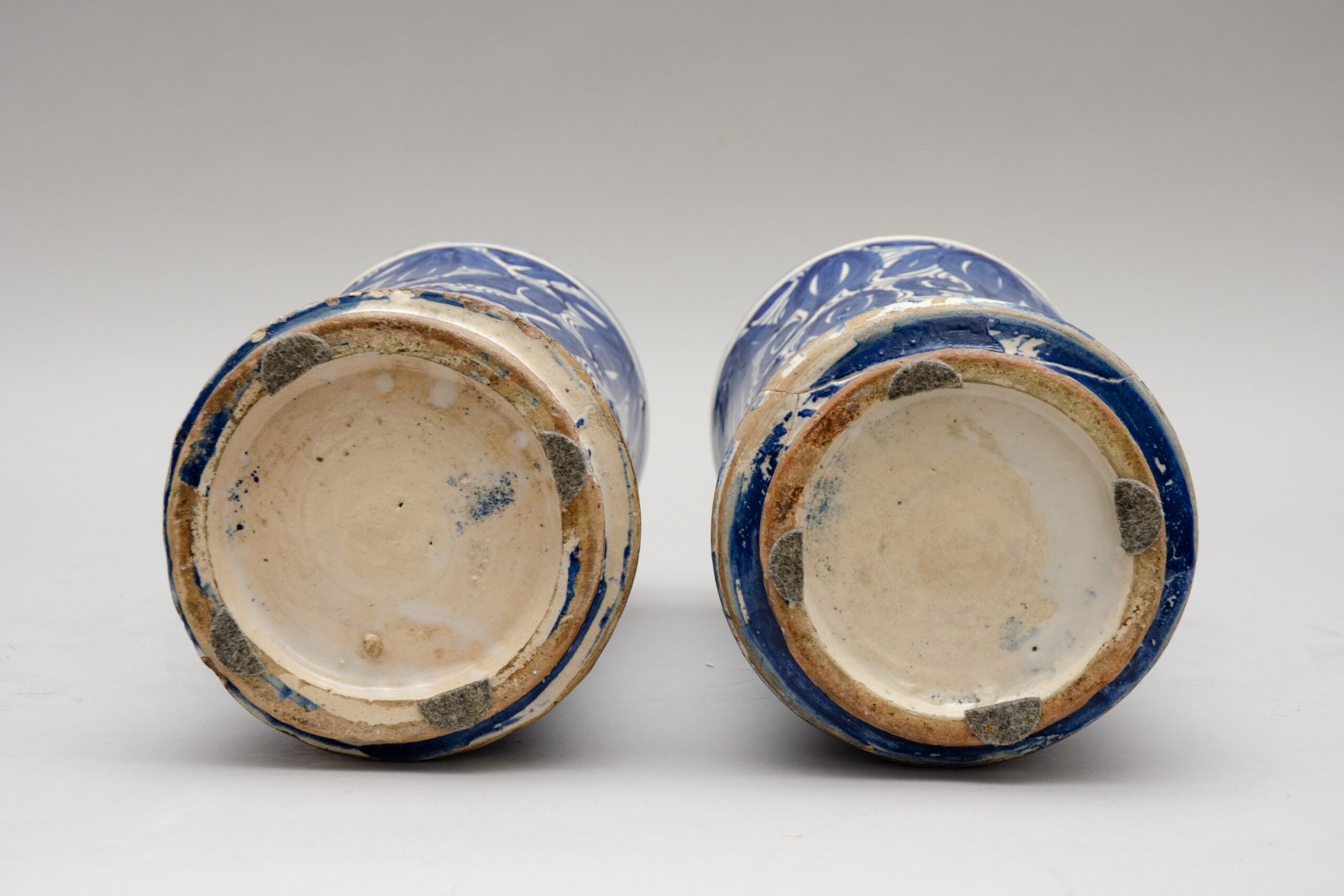
Rare pair of “Albarelli” apothecary jars in earthenware with blue painted decoration on white ground. Good condition for historical pieces.
Size: H 28.5 cm – diameter of 15 cm
Northern Italy, 17th century.
Note: An albarello is a type of earthenware apothecary jar, originally designed to hold apothecary ointments and dried medicinal plants. It has a distinctive shape: cylindrical, slightly concave in the centre, which made it easy to grip between the fingers and tie a leather or parchment cord around it to seal it. The development of this type of pot has its roots in the Near and Middle East, during the era of the Islamic conquests, notably through the pharmacies of Baghdad, Cairo and Fez. Albarelli were introduced to Italy in the 13th century by Spanish Moorish traders. Until the 15th century, they were manufactured in Spain or the Near East, notably in Damascus, renowned for its blue and white ceramics.
Italian production of albarelli flourished mainly in the central-northern part of the peninsula. From the 15th century onwards in Italy, around Faenza and Florence, majolica albarelli began to appear, a type of earthenware known as ‘high-fired decoration on raw glaze’. It was largely pharmacists who enabled Italy to develop this art: by ordering large quantities of medicinal jars, they contributed to the rise of what became one of the country’s symbols, faience, named after the city of Faenza. Each centre developed its own style: Faenza is distinguished by its radiant yellow and blue a quartieri designs, Deruta by its bust portraits, and Venice by its blue designs on a white background alla porcellana, influenced by the Chinese porcelain arriving through its ports.
Once highly renowned, Italian majolica is now of great value and highly sought after by collectors. The inherent fragility of the ceramic, the destruction caused by epidemics — during the plague of 1657, many pots were destroyed as they were considered contaminated — as well as their intensive daily use have considerably reduced the number of surviving pieces. One must also be wary of forgeries produced in the 19th century. Authentic antique albarelli are therefore rare items today.
In stock