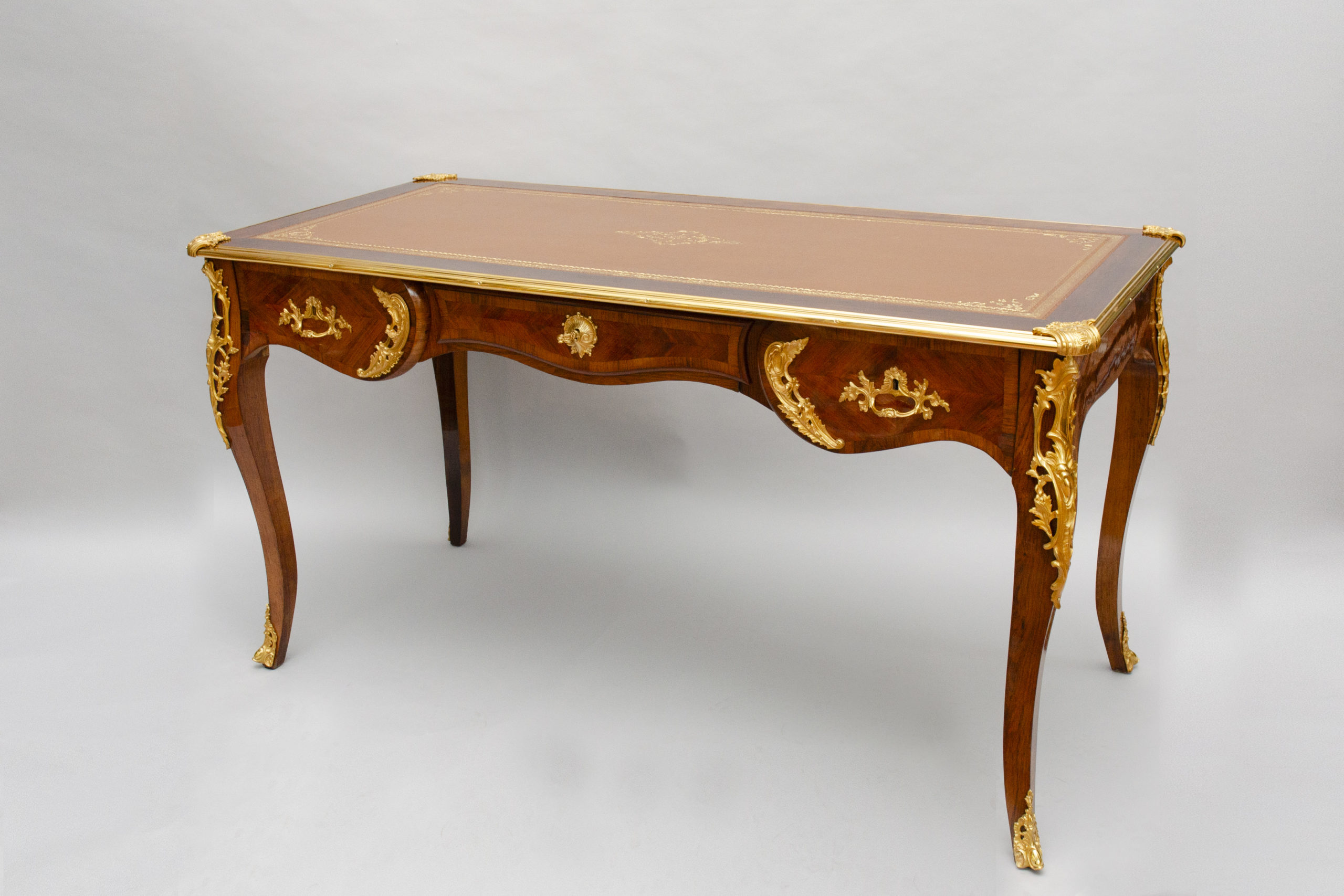
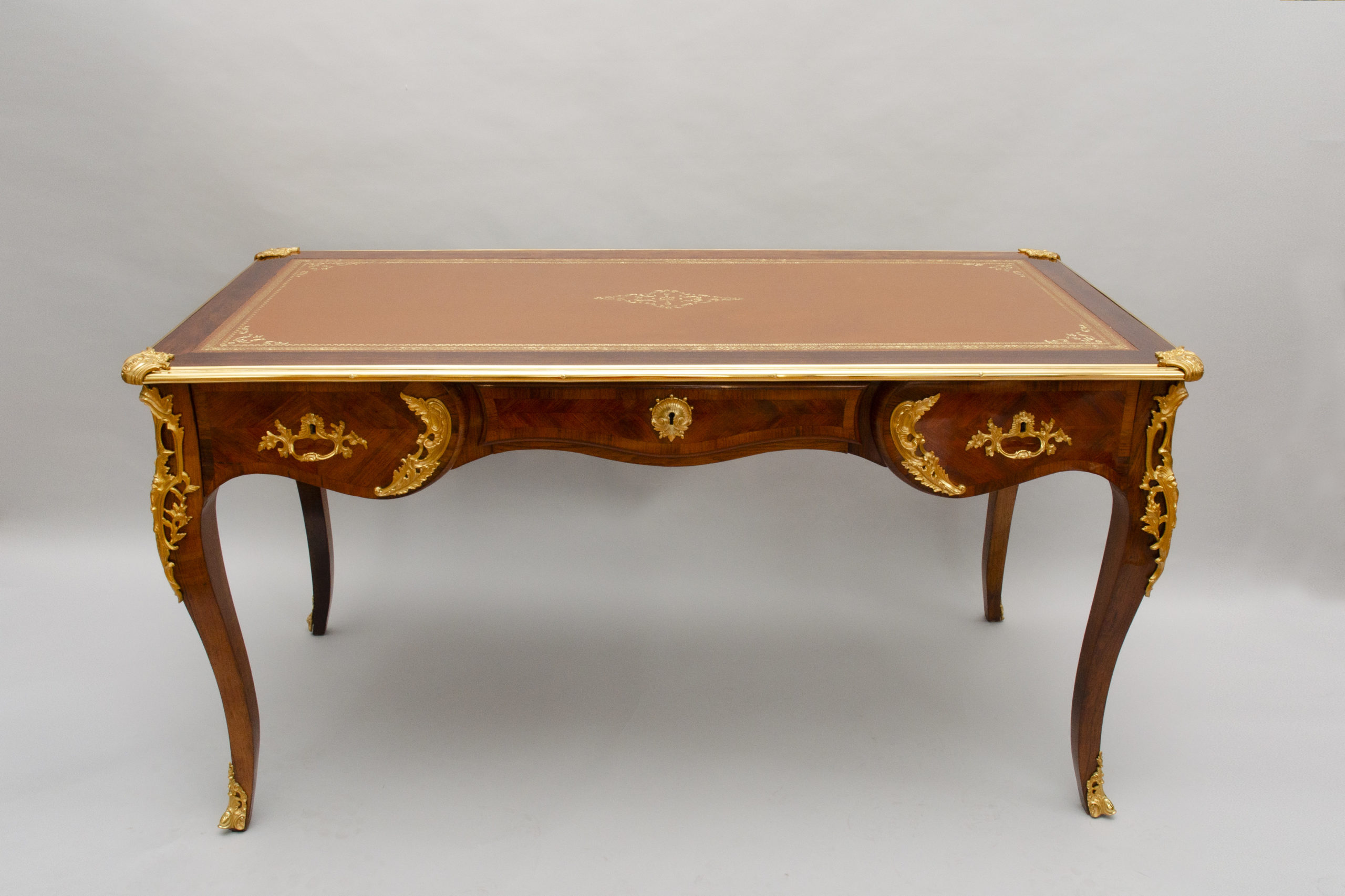
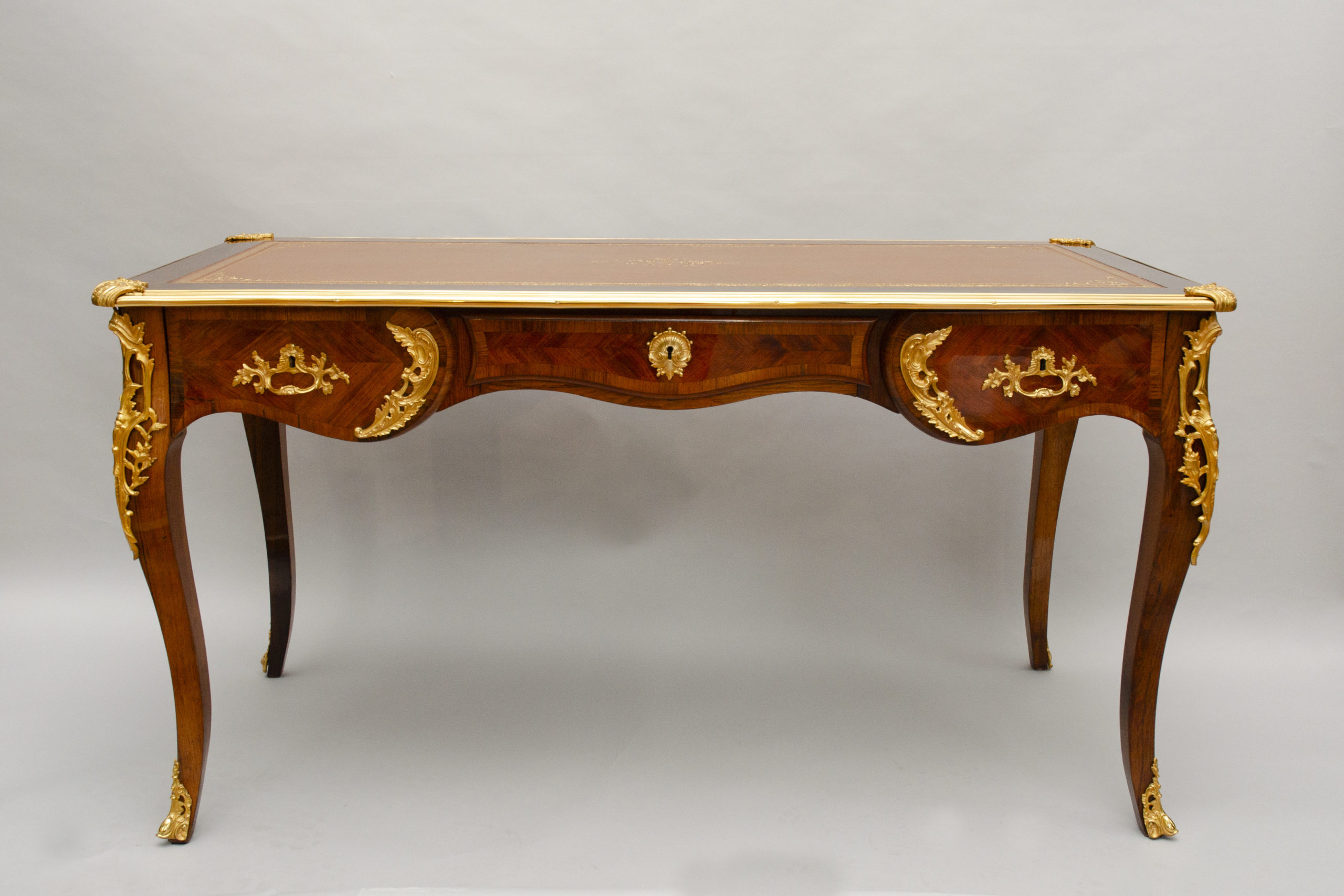
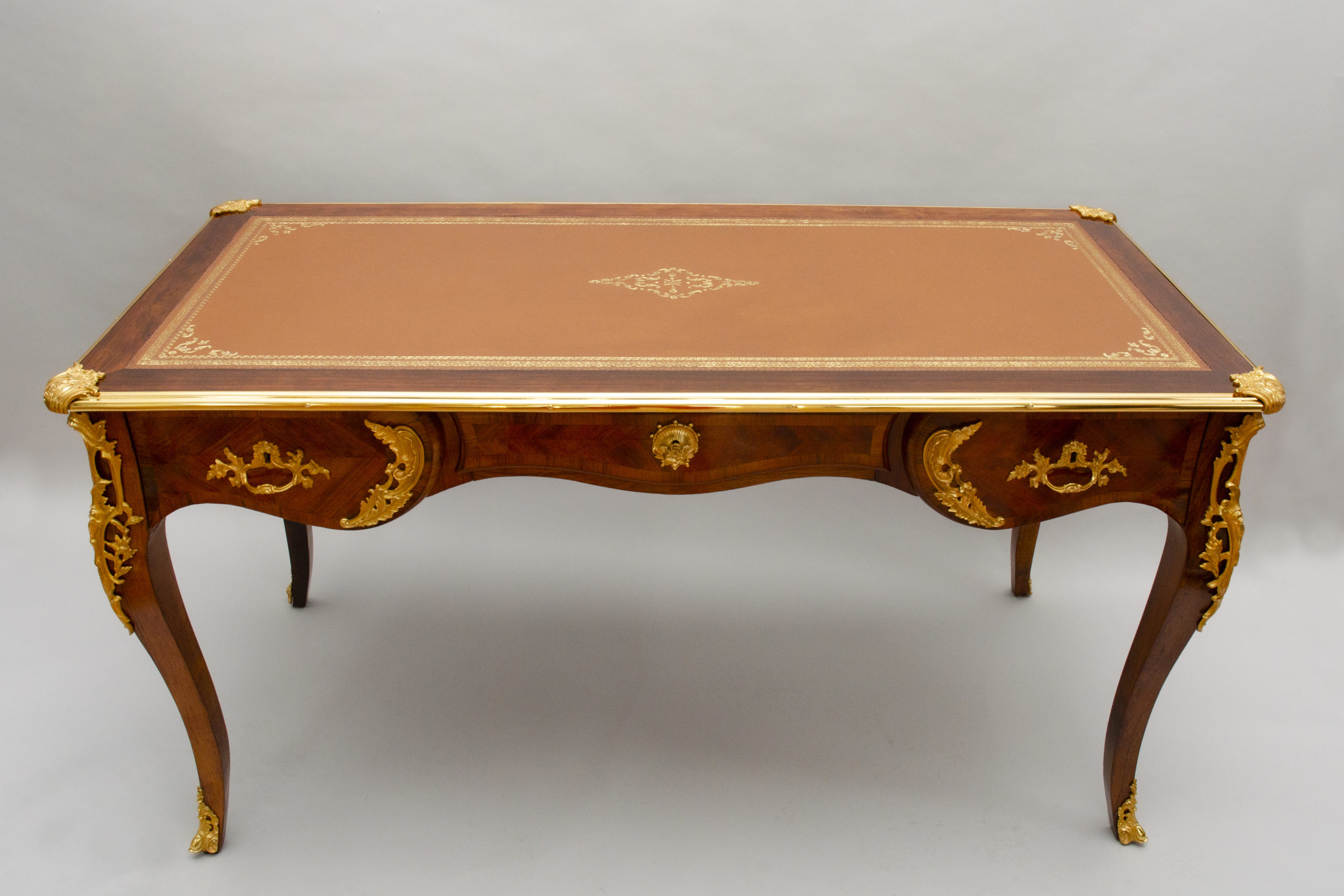
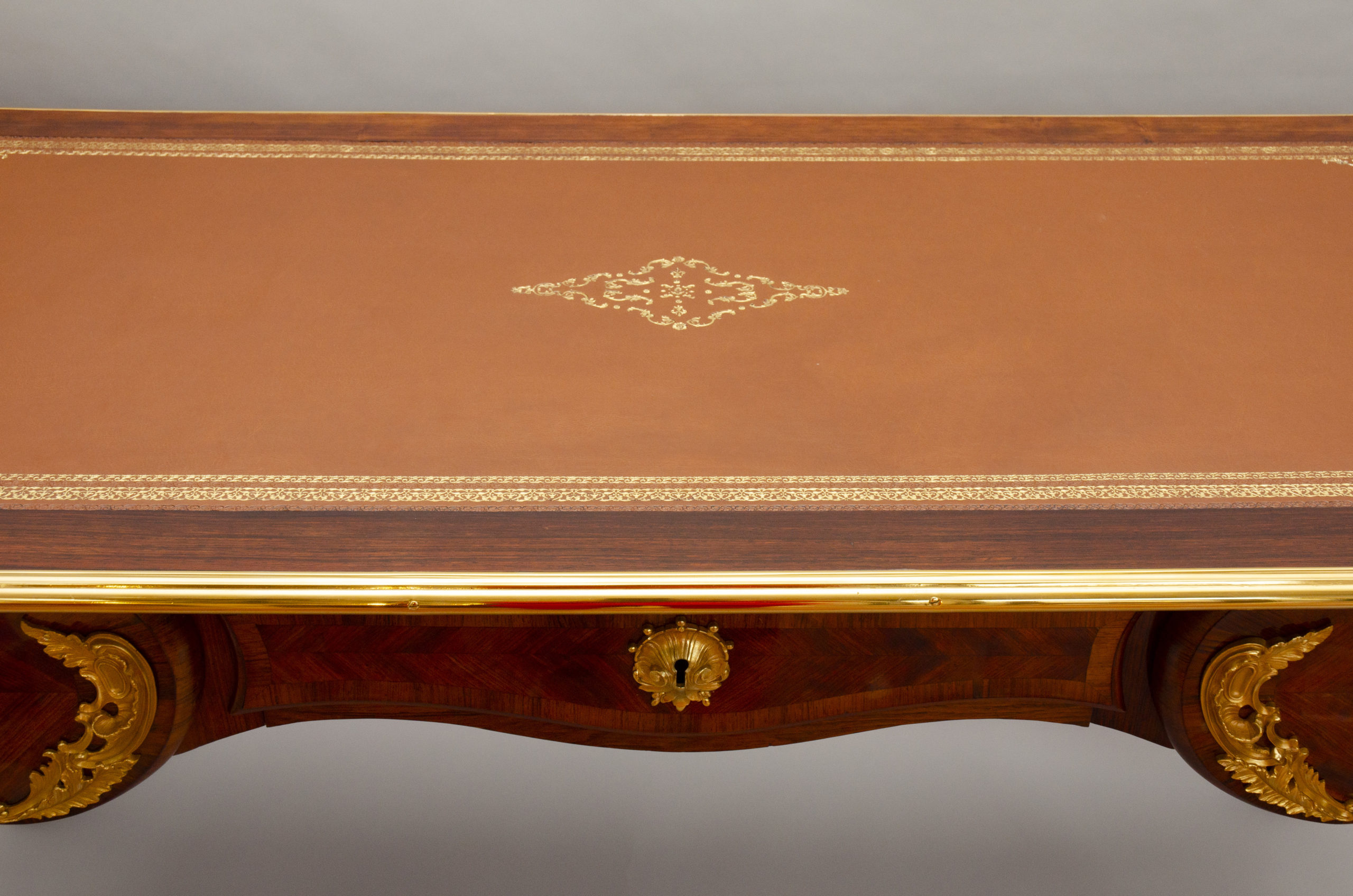
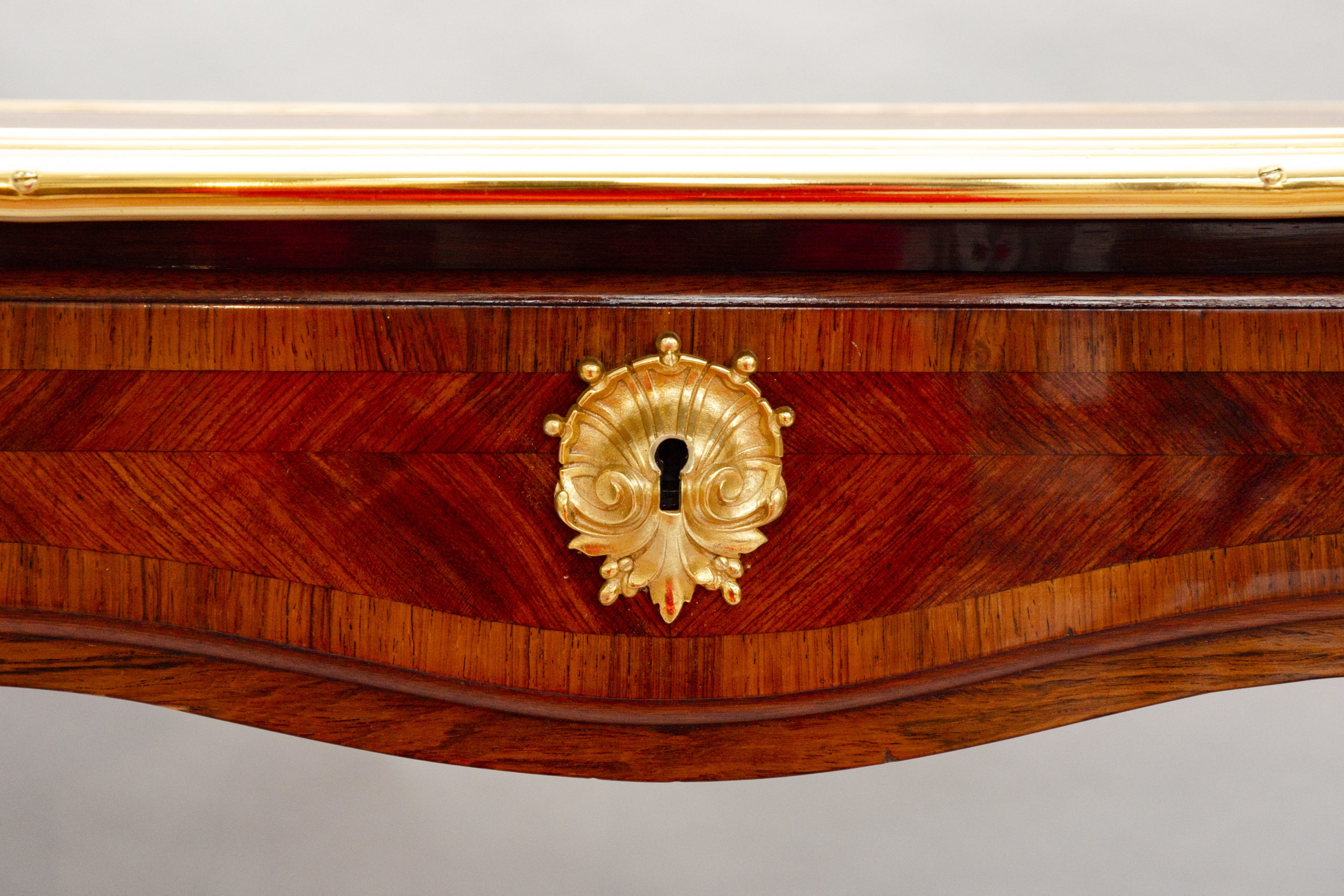
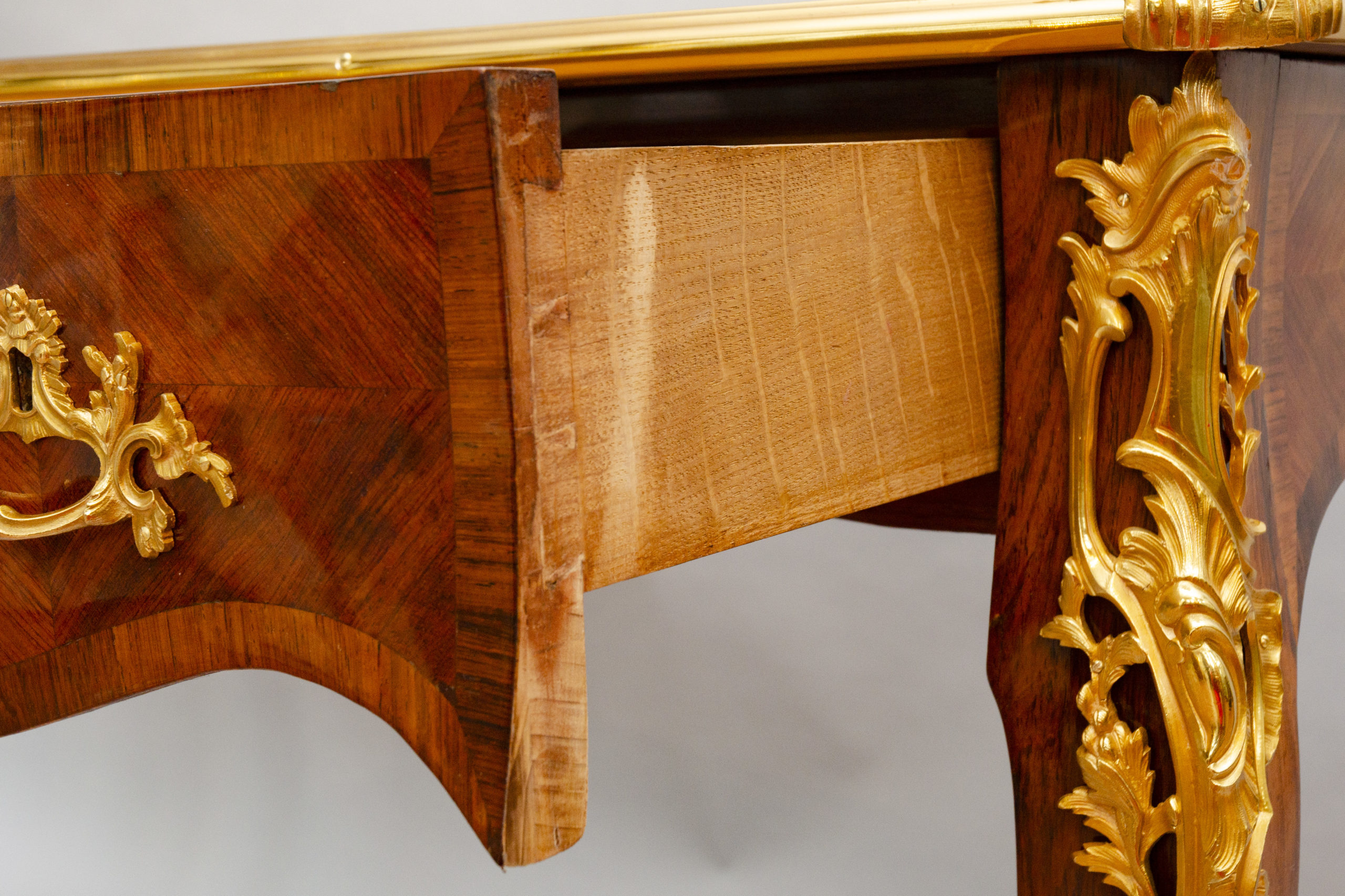
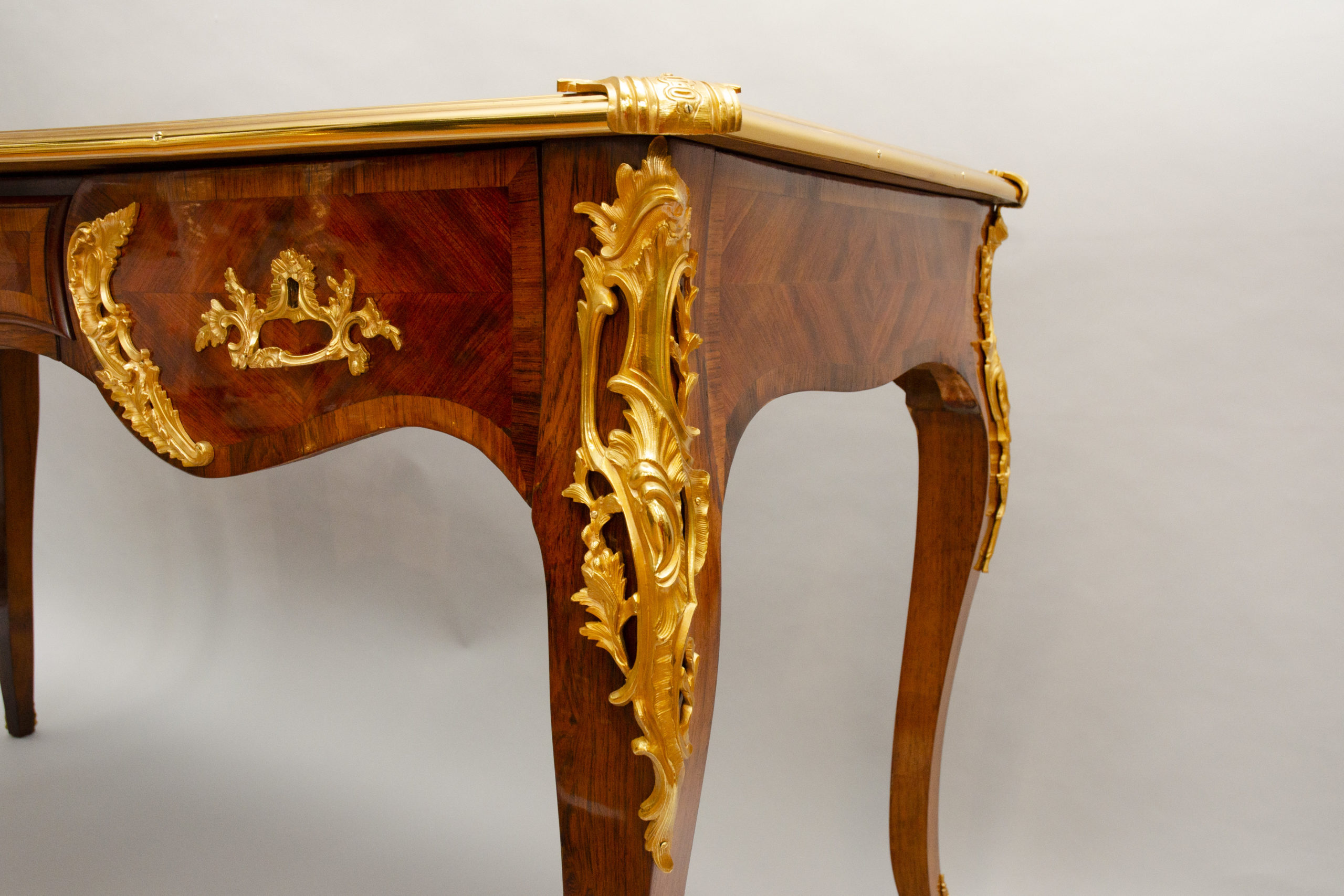
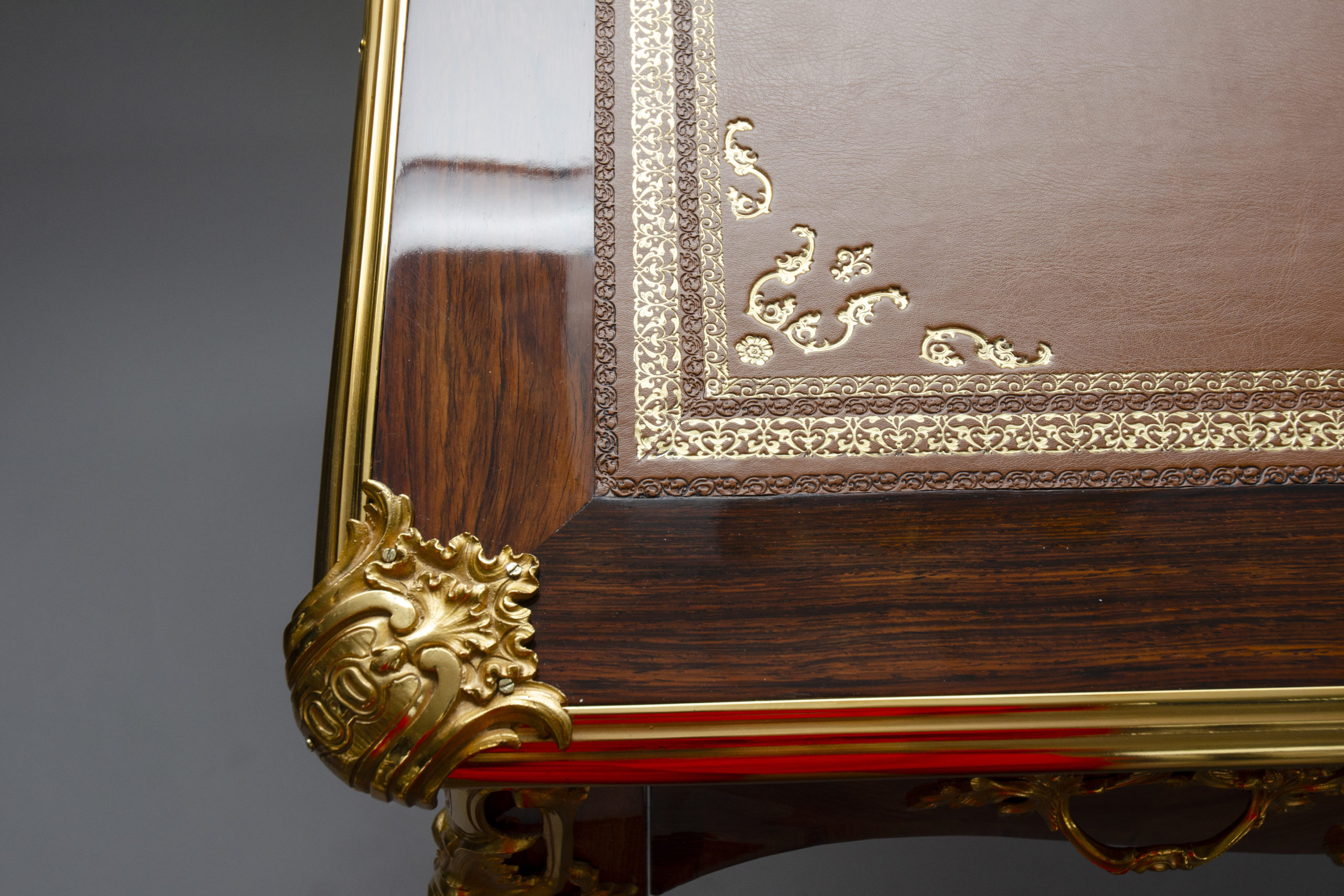
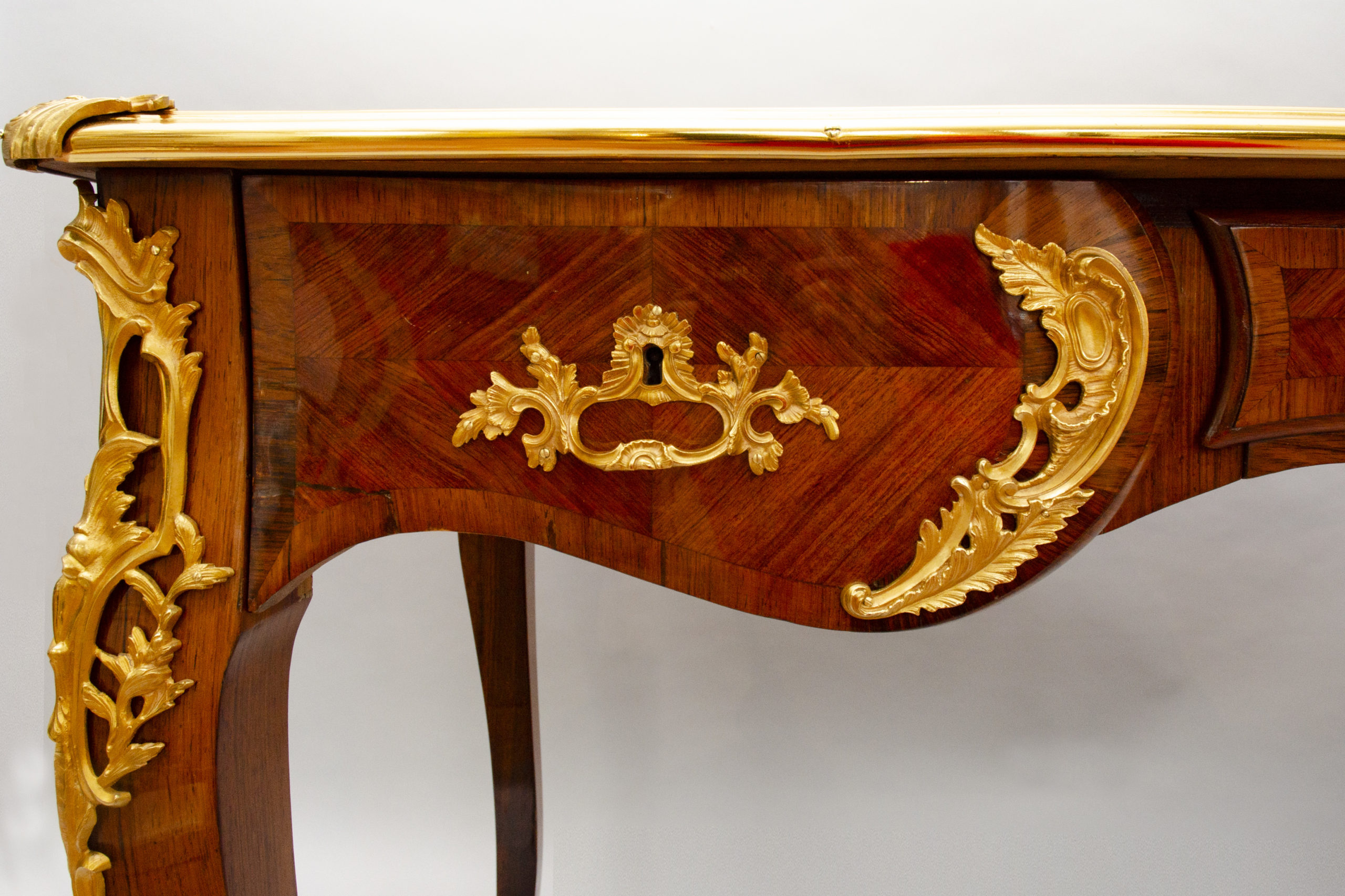
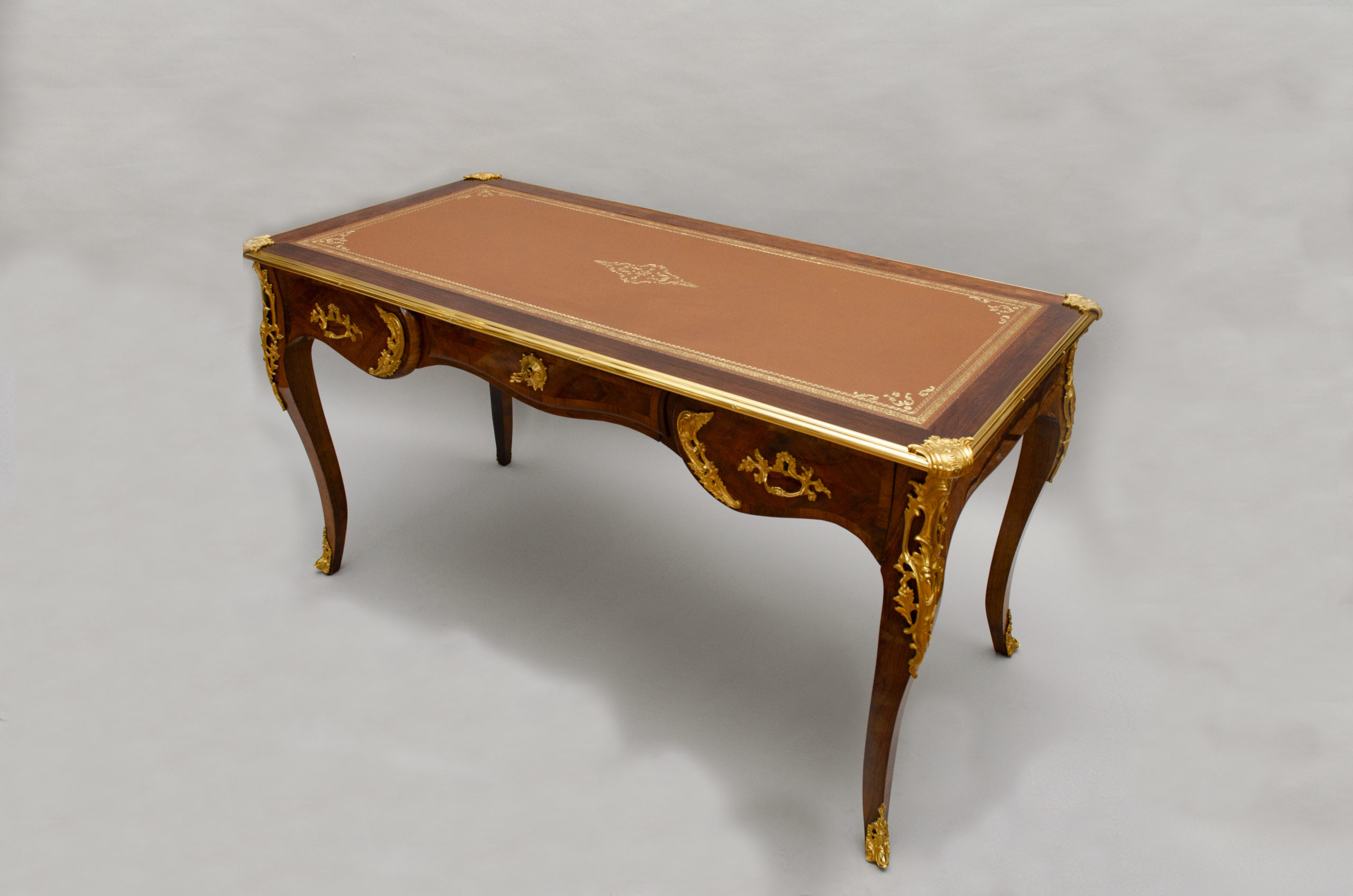
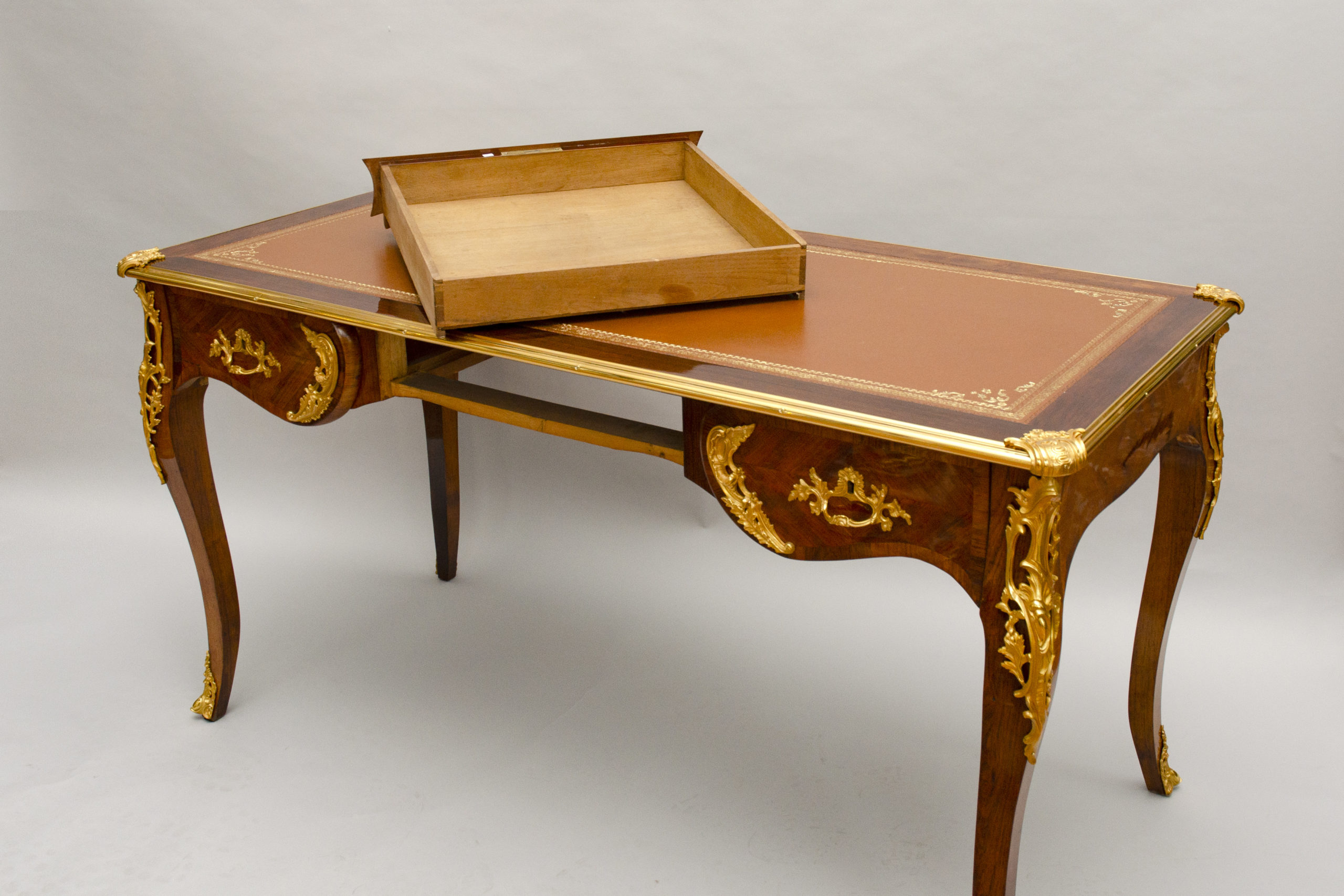
Beautiful rosewood “bureau plat” desk
7.500€
In stock
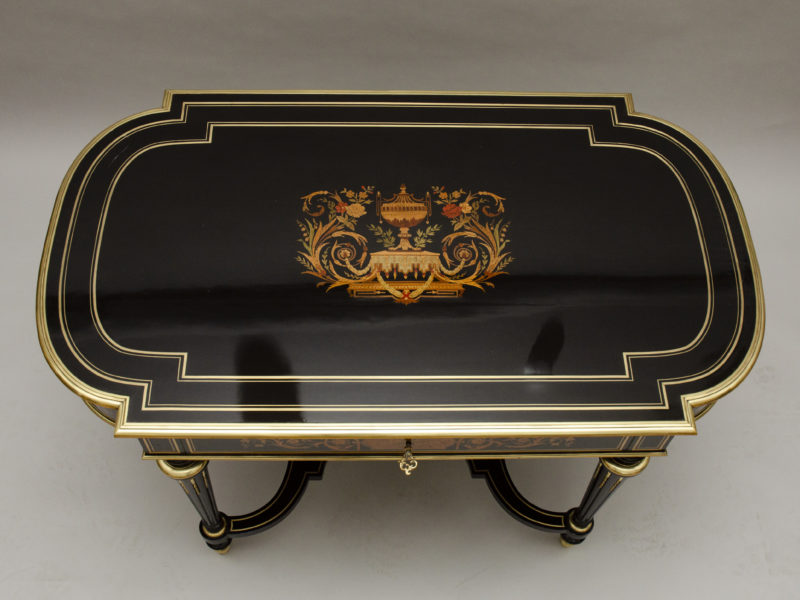
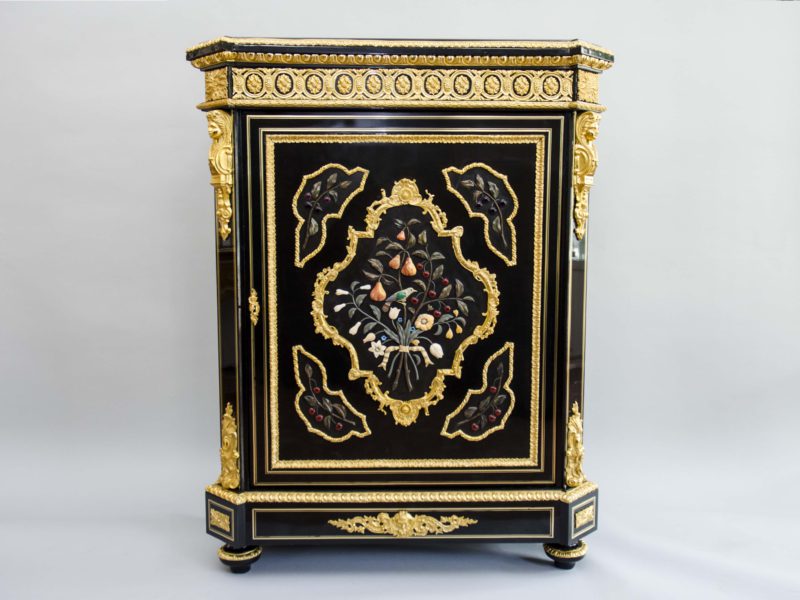
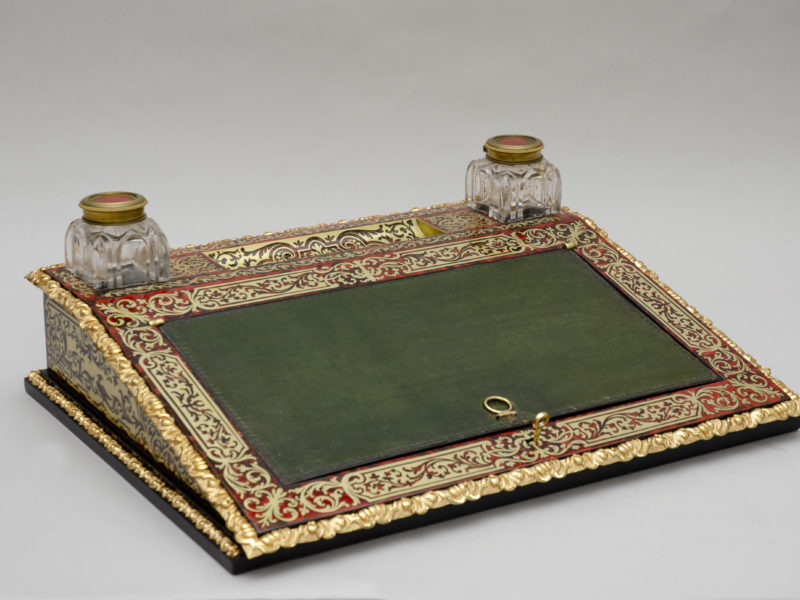
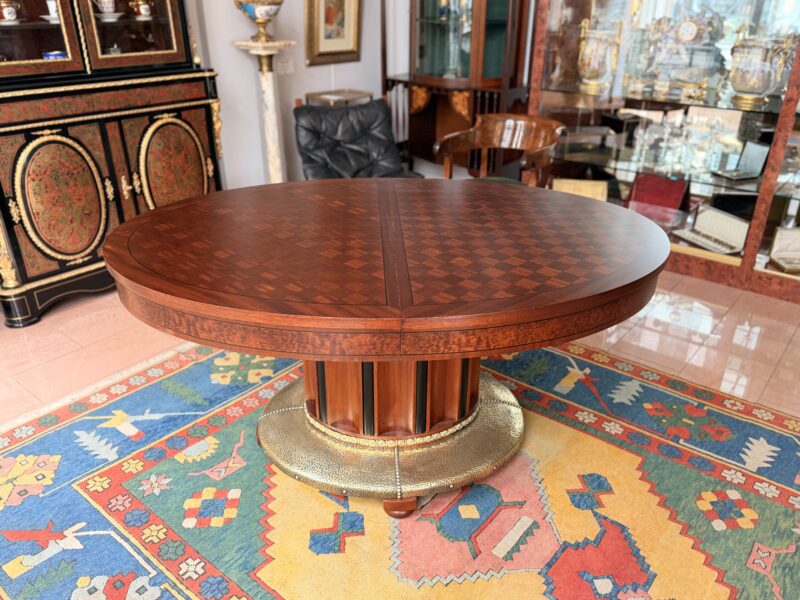
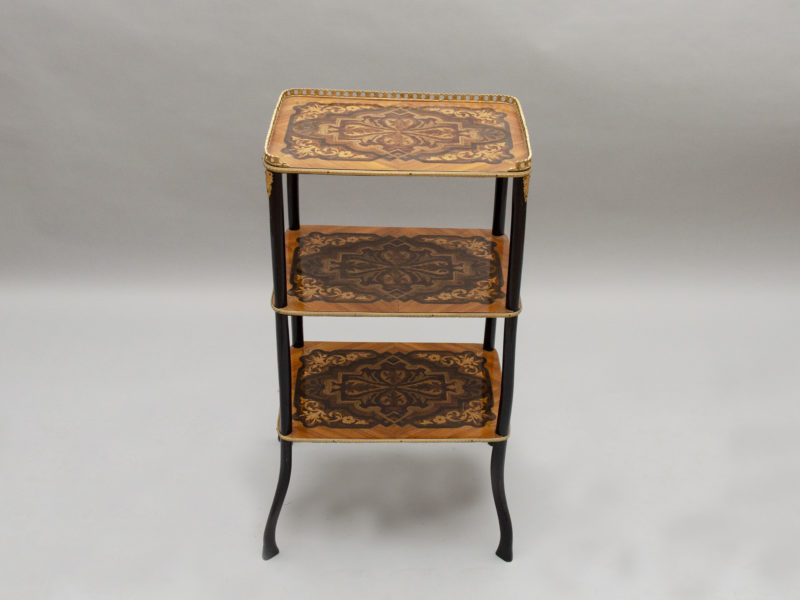
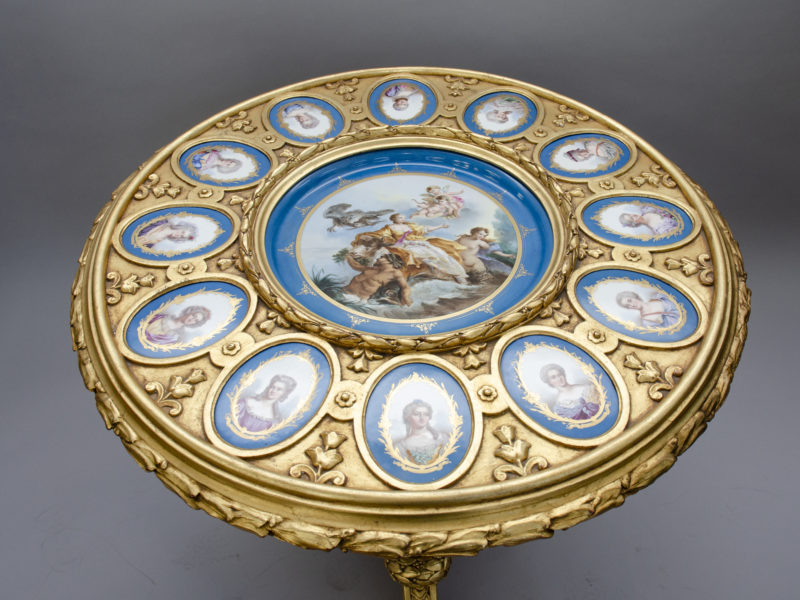
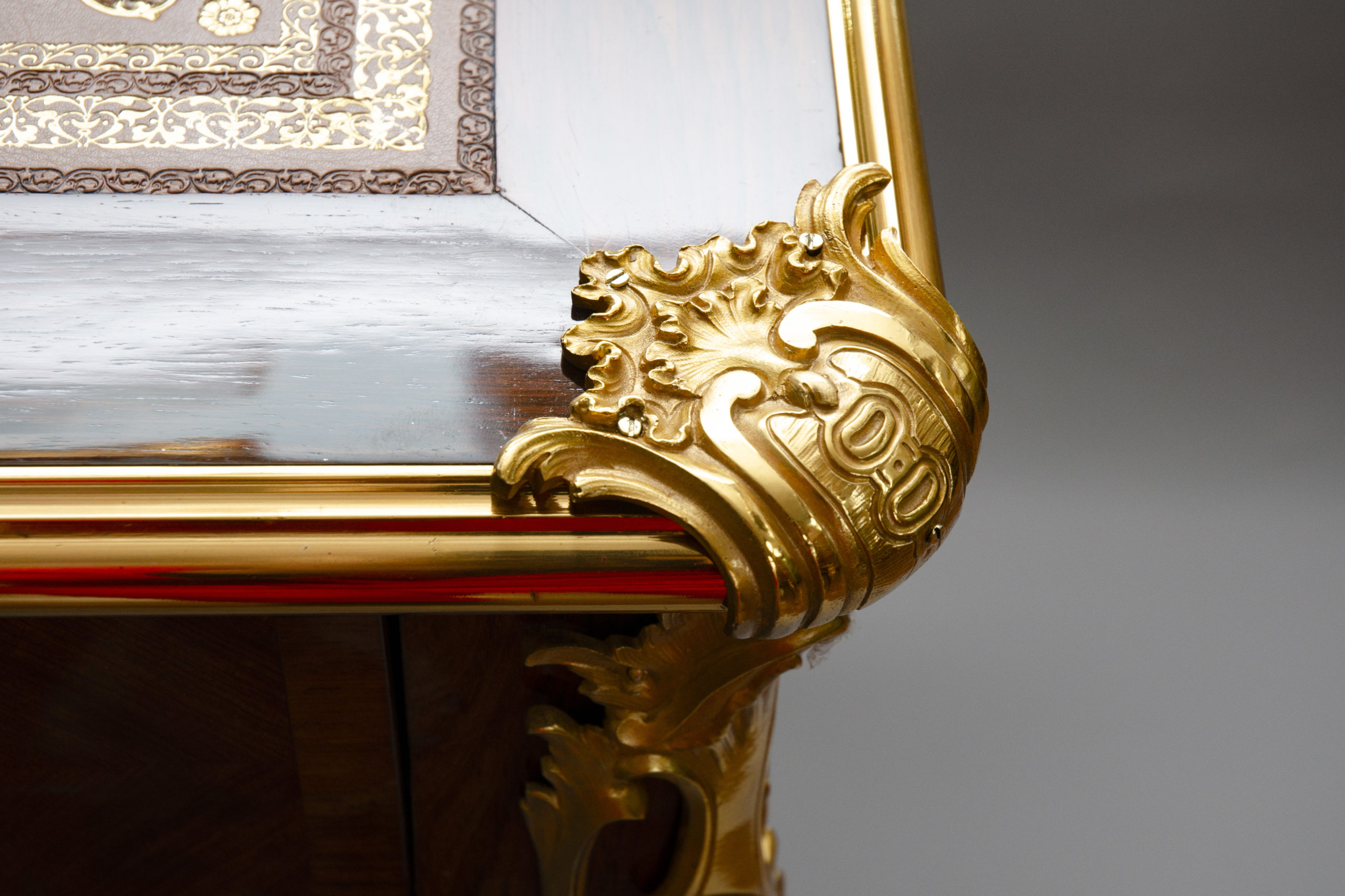
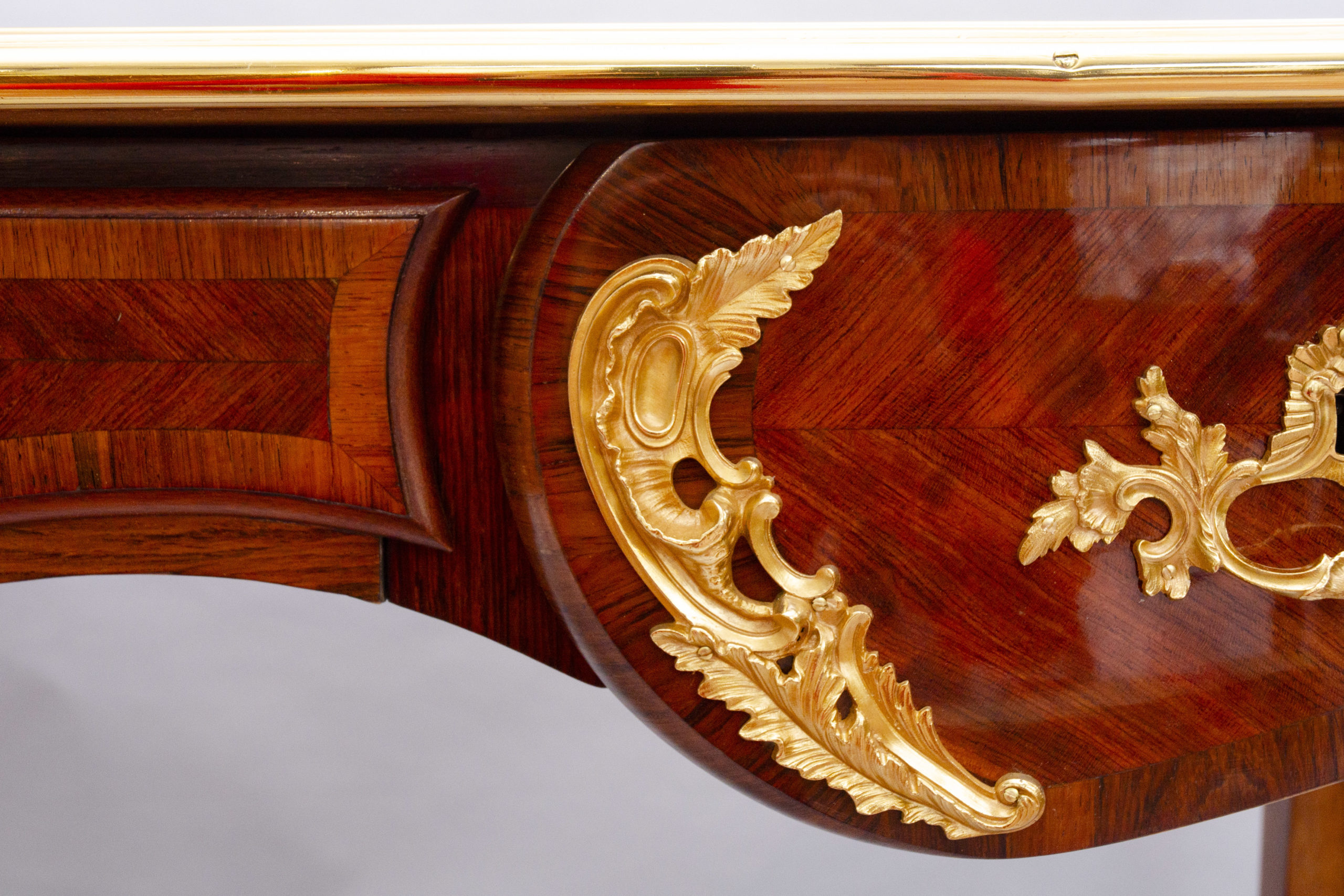
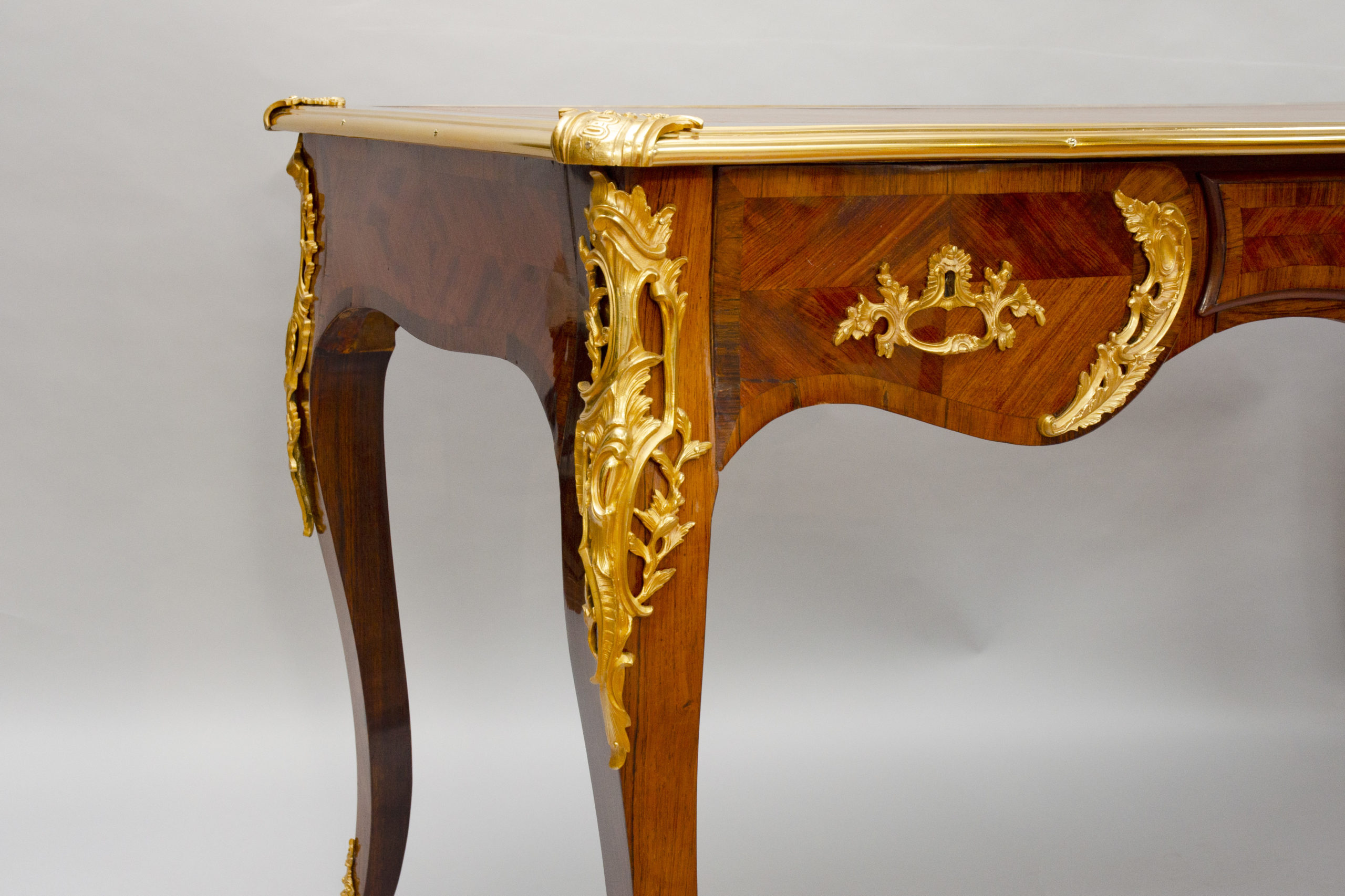
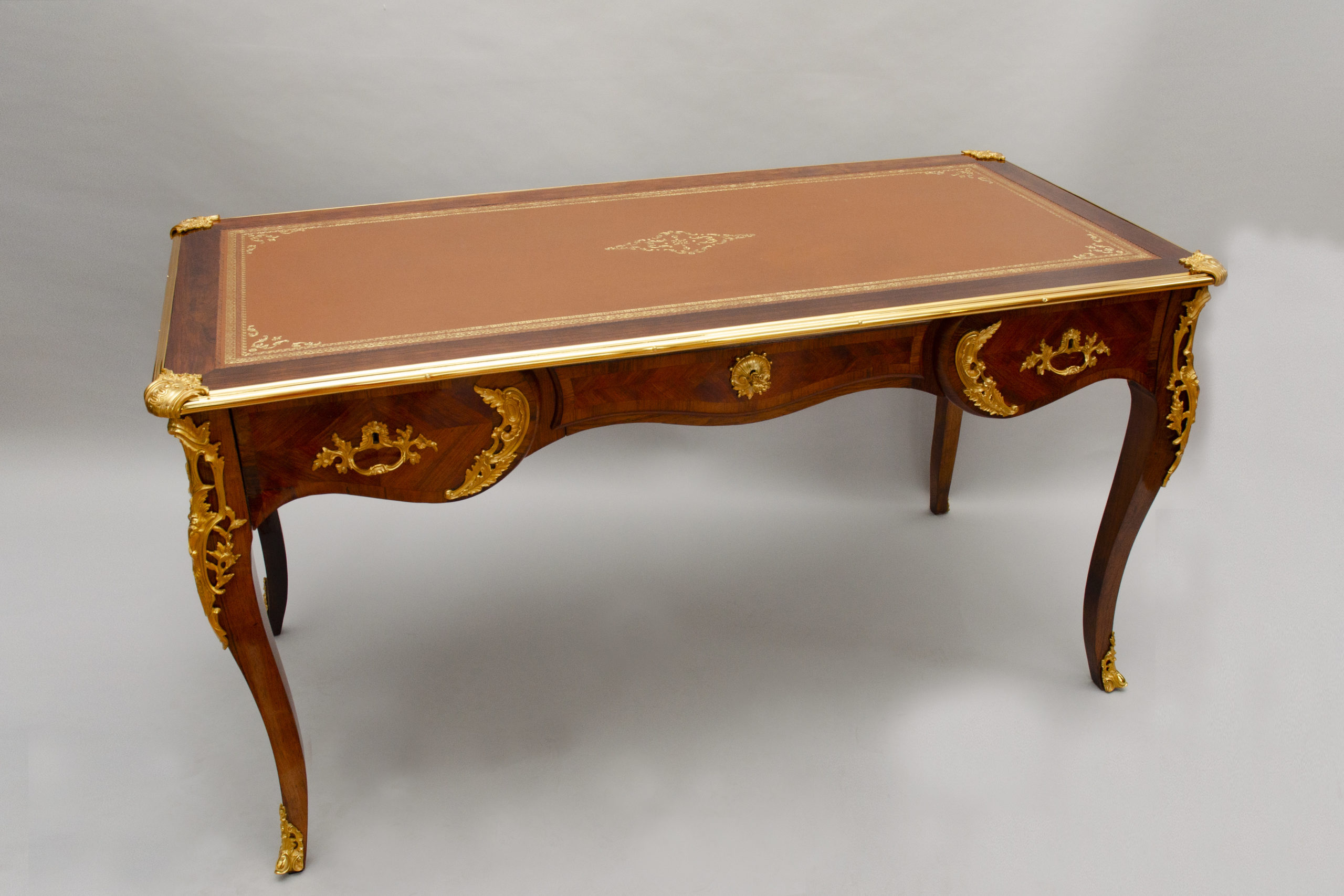
Refined rosewood veneered bureau plat in Louis XV style. Rare quality gilt bronzes. Completed restored.
Size: H 80 cm x W 152 cm x D 71 cm
France second part of the 19th century.
Lit: The writing desk originated in France in the late 17th century, in the wake of the opulence of Versailles. Before that, people wrote on multipurpose pieces of furniture—chests, ordinary tables, or folding cabinets—which did not meet the demands of prolonged writing. The expansion of the royal administration, the increase in diplomatic correspondence, and the rise of a literate aristocracy created a new need: a piece of furniture entirely dedicated to intellectual work.
The flat desk is distinguished by its large, uncluttered top, covered in morocco leather (a supple leather, often green or red), edged with a bronze molding or gilded trim, and resting on four curved legs connected by a crossbar. Beneath the top, a few discreet drawers suffice: unlike the cylinder desk or the secretary desk, it does not seek to conceal but to offer space and clarity. It is a piece of furniture as much for display as for work.
It reached its golden age during the Regency and under Louis XV. The great cabinetmakers—Boulle, Cressent, Oeben, Riesener—adorned it with refined marquetry, chiseled and gilded bronze, and rosewood and violetwood. Its lines curve, following the undulations of the Rococo style. The famous King’s desk, commissioned for Louis XV and completed by Riesener in 1769, represents the absolute pinnacle of this style, even though it is technically a cylinder desk: it bears witness to the decorative ambition of the era.
With Louis XVI, lines became straighter and ornamentation more restrained. The flat-topped desk took on more linear forms, tapered legs, and a neoclassical aesthetic influenced by the excavations at Herculaneum and Pompeii. Then the Empire style imposed columns, caryatids, antefixes, and solid mahogany: it became a symbol of power, taking pride of place in ministerial offices and notary’s offices.
In the 19th and 20th centuries, the flat-top desk became more widespread and simplified. It shed its ornamentation, gained in simplicity, and eventually spanned all styles—from Art Nouveau to Art Deco, right through to contemporary design—while always retaining its essence: a generous desktop, an invitation to thought, and that instantly recognizable silhouette that has made it, for three centuries, the furniture of power and the mind.
In stock