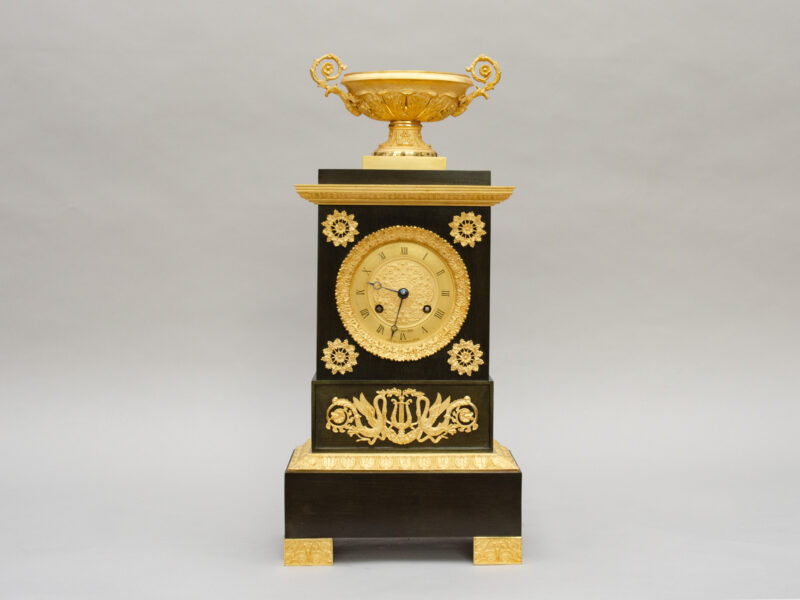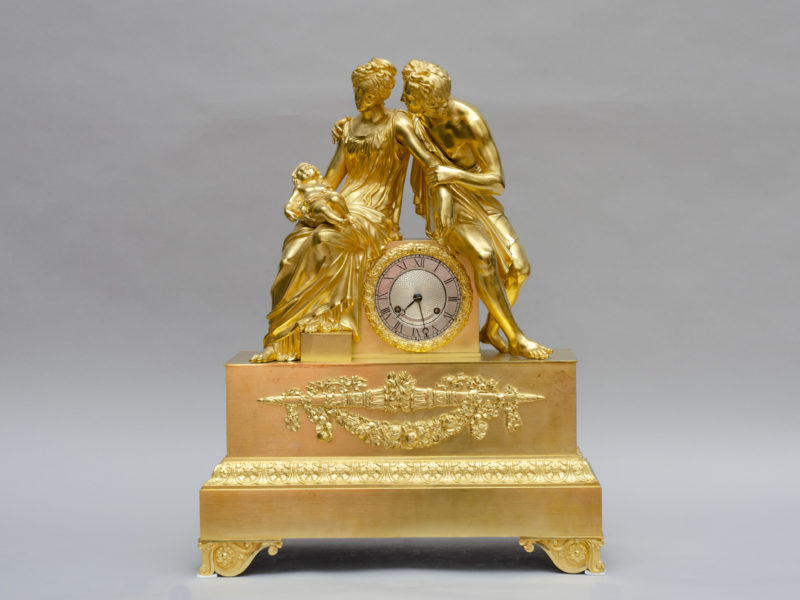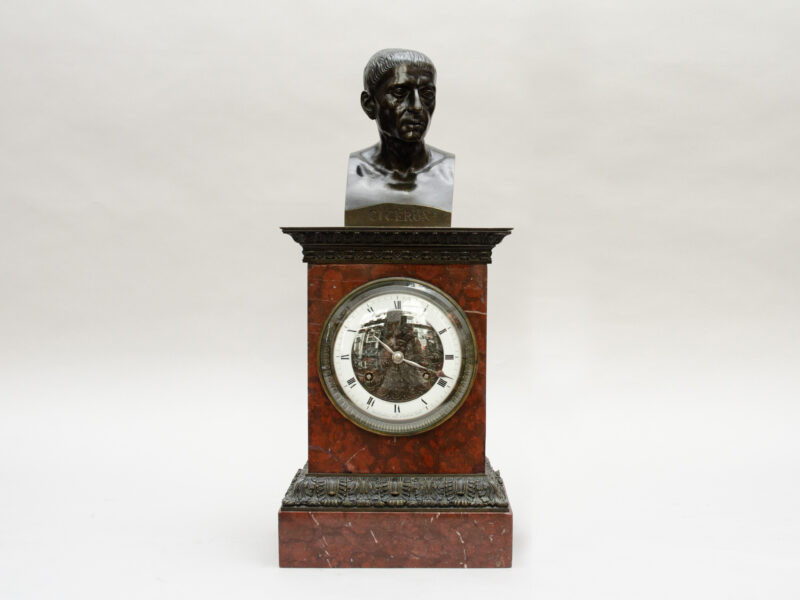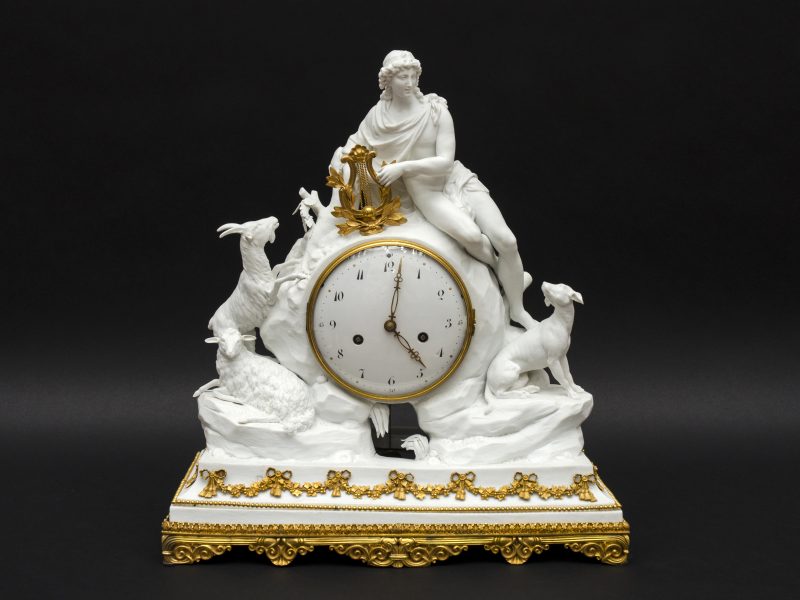
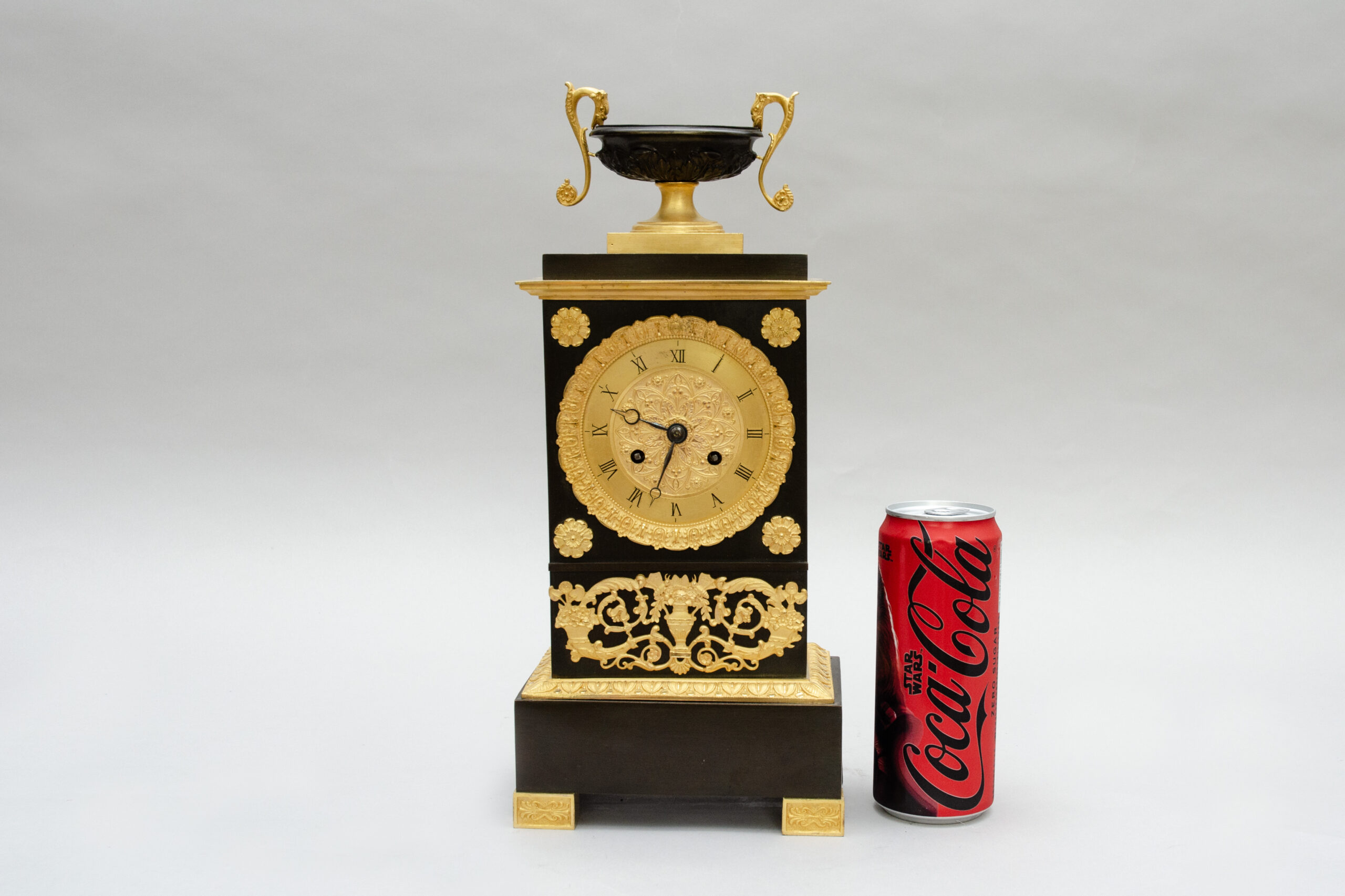
Small bronze clock, attributed to Charles Prosper Leroy
1.300€
In stock
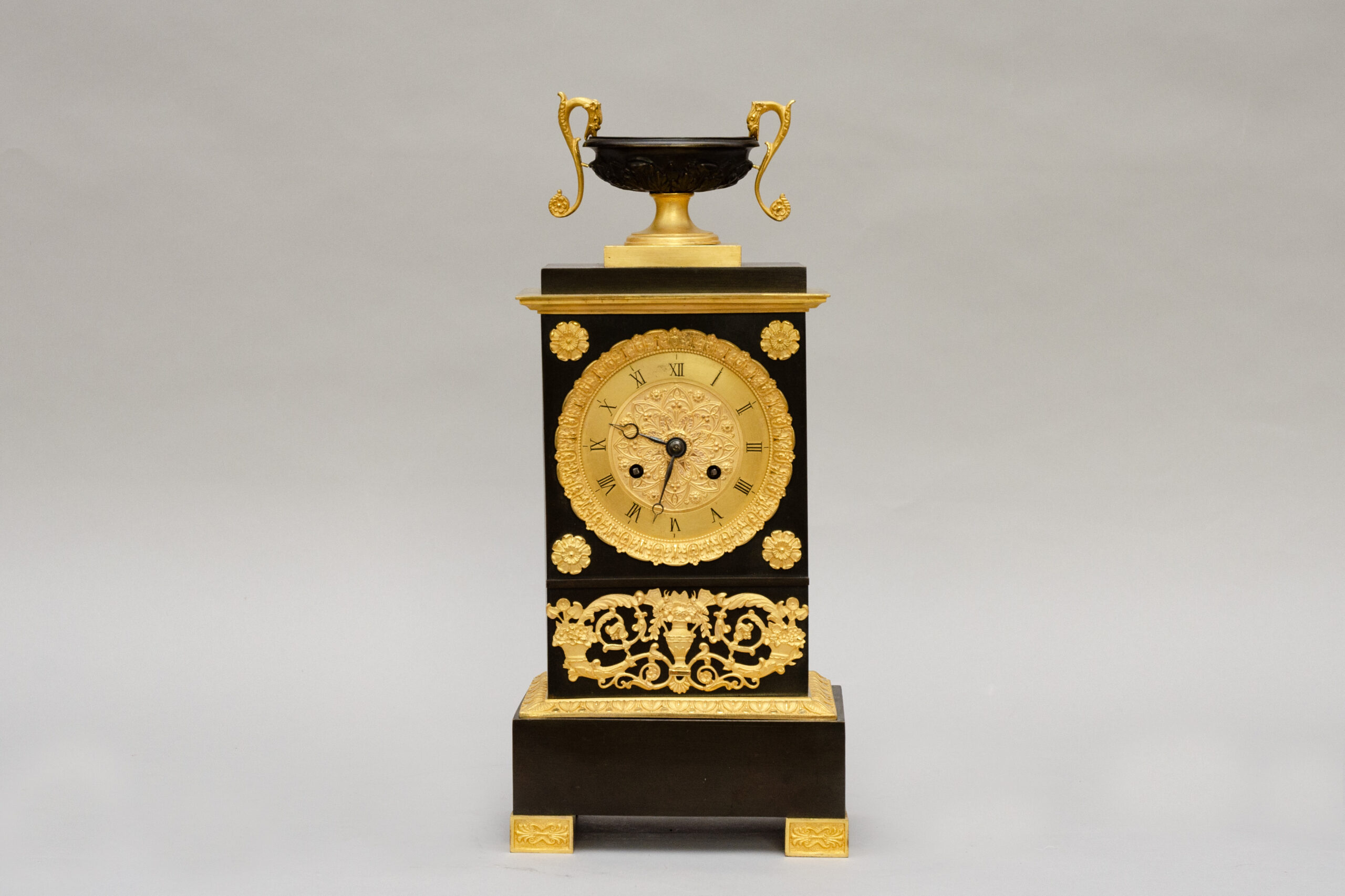
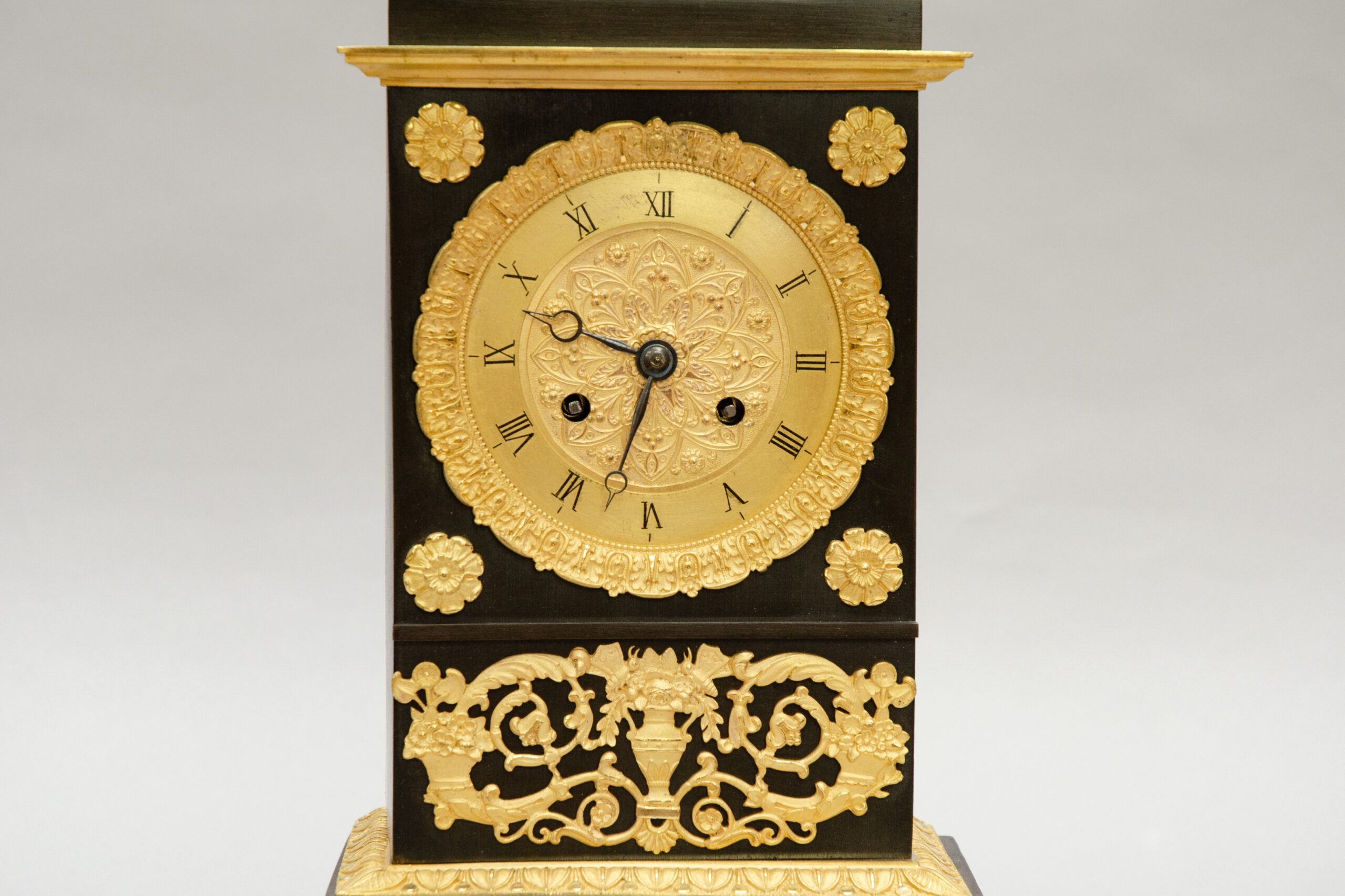
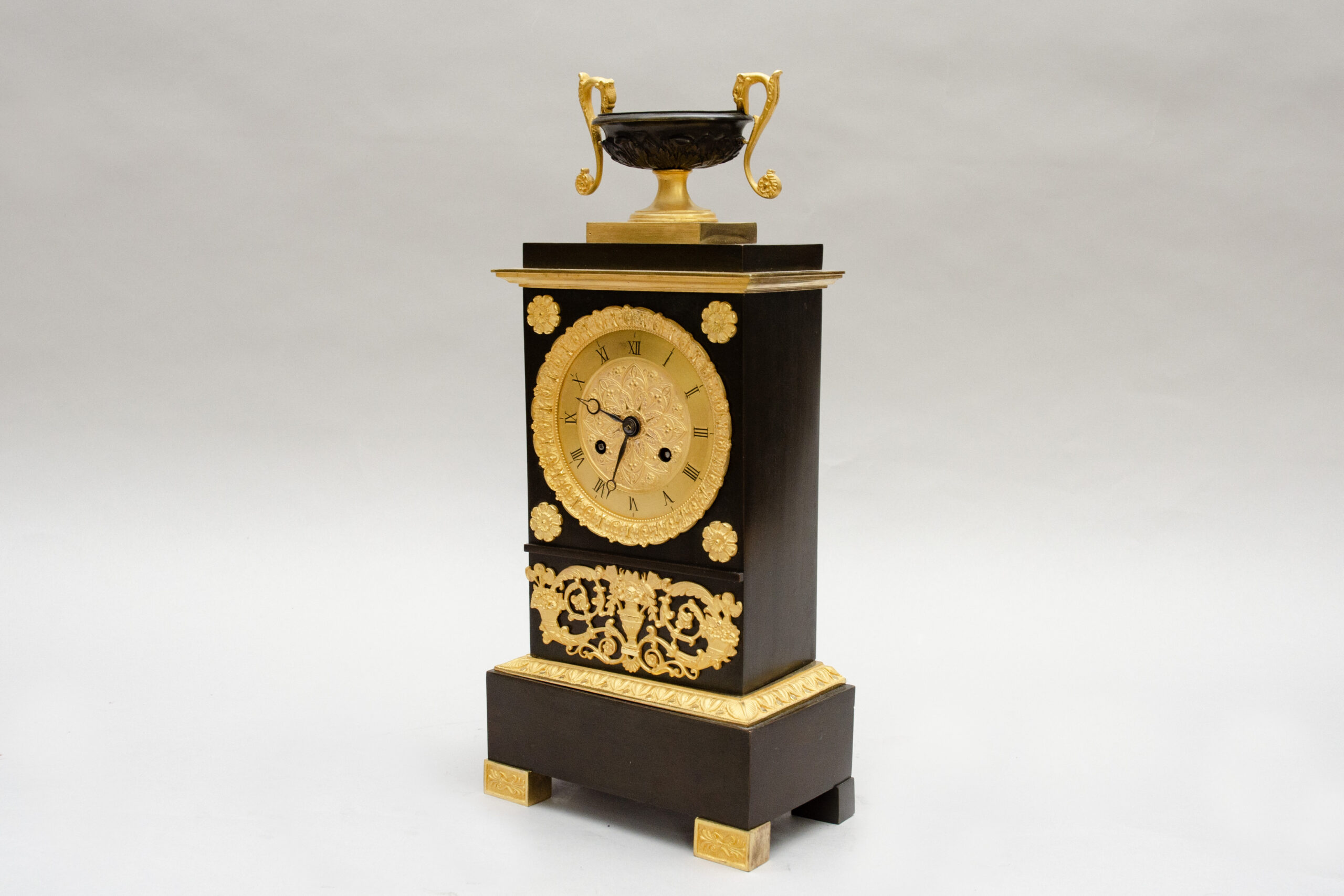
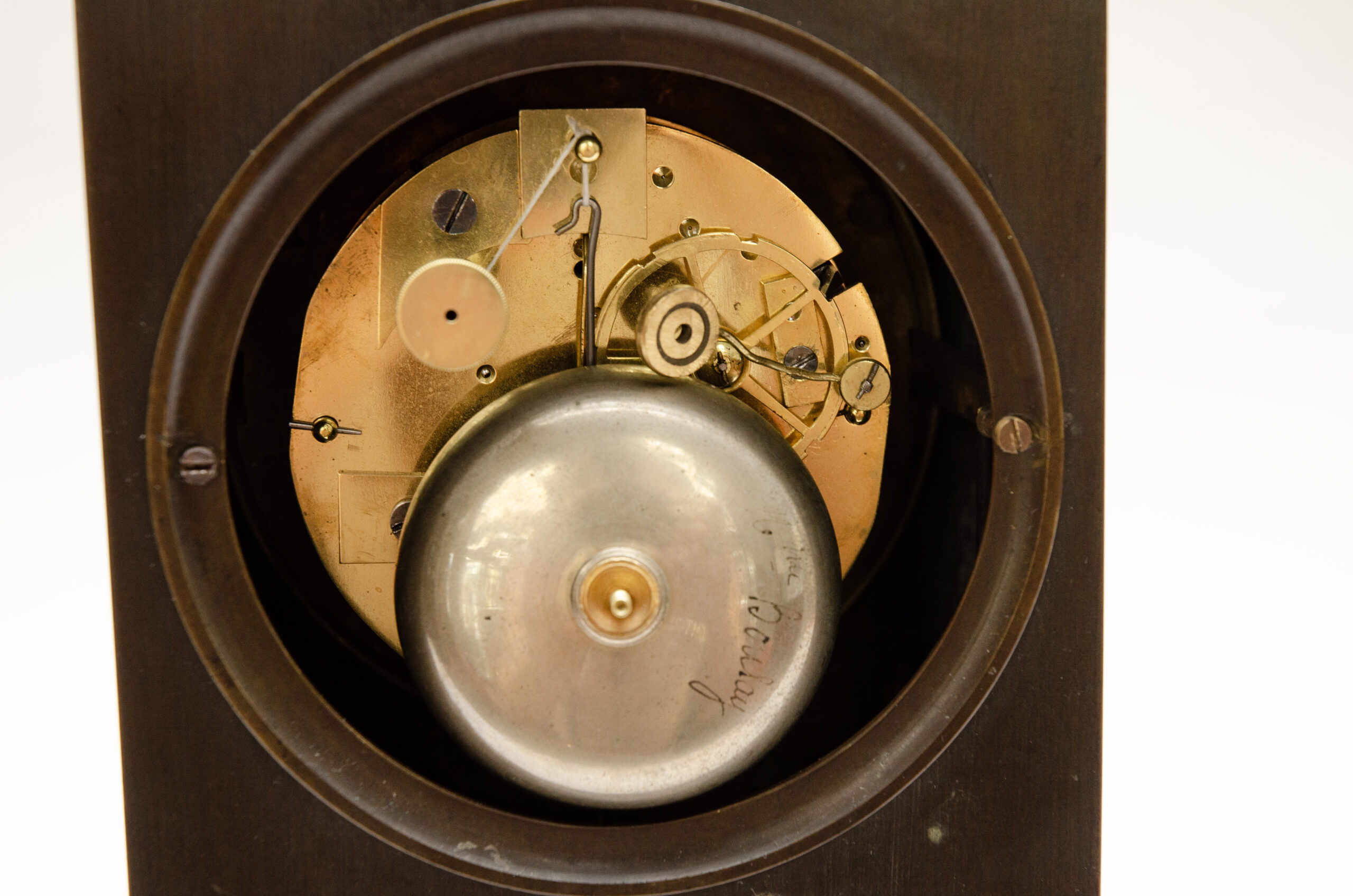
This bronze “born” clock, smaller in size than the previous model, features the same neoclassical decorative style, finished with a double black and gold (mercury-based) patina. Although unsigned, it is attributed to Charles Prosper Leroy based on close stylistic similarities with a larger portico clock, which is signed ‘Chles Leroy, Rue du Temple’ and features comparable bronze treatment, ornamentation and overall composition.
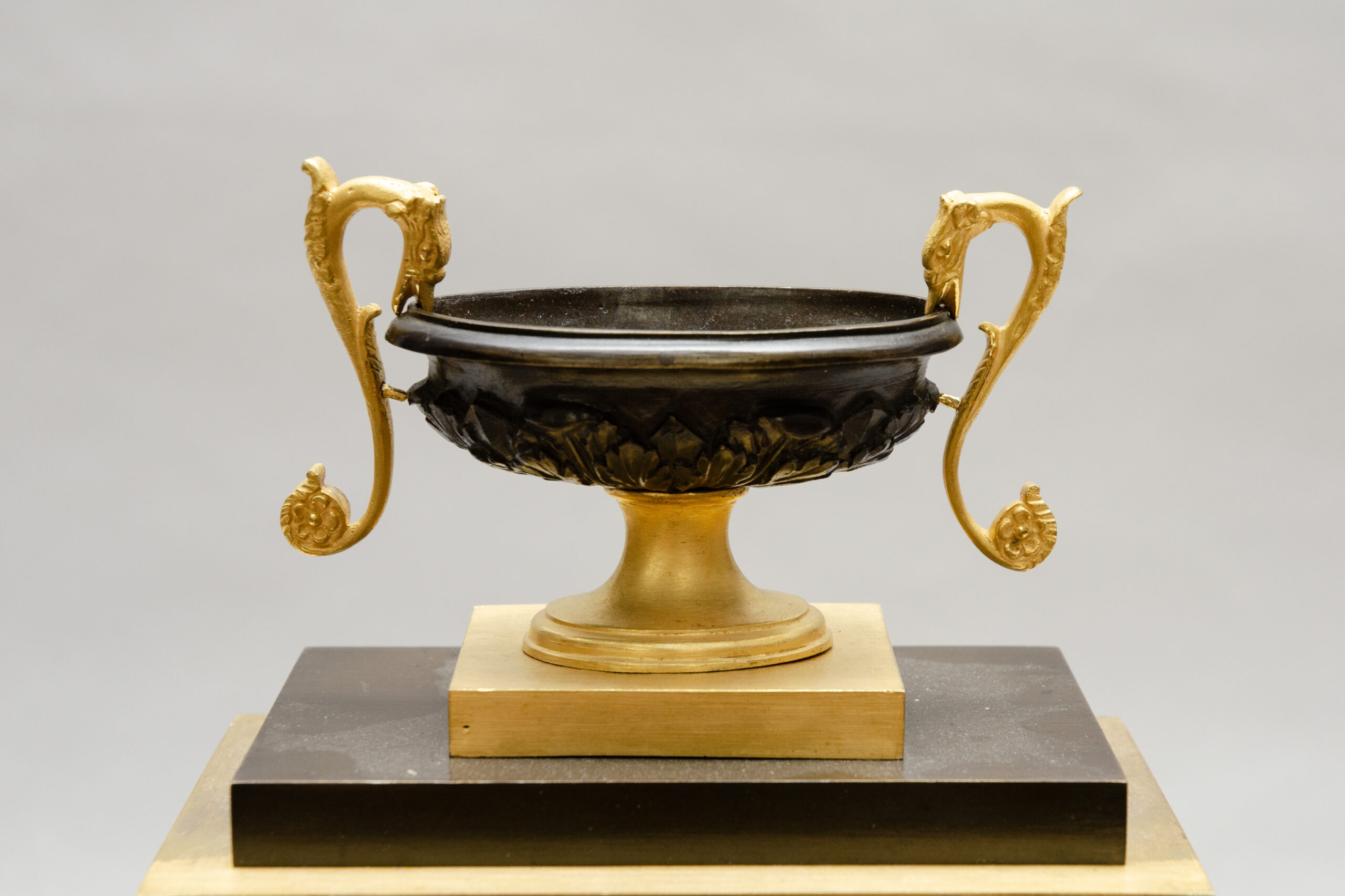
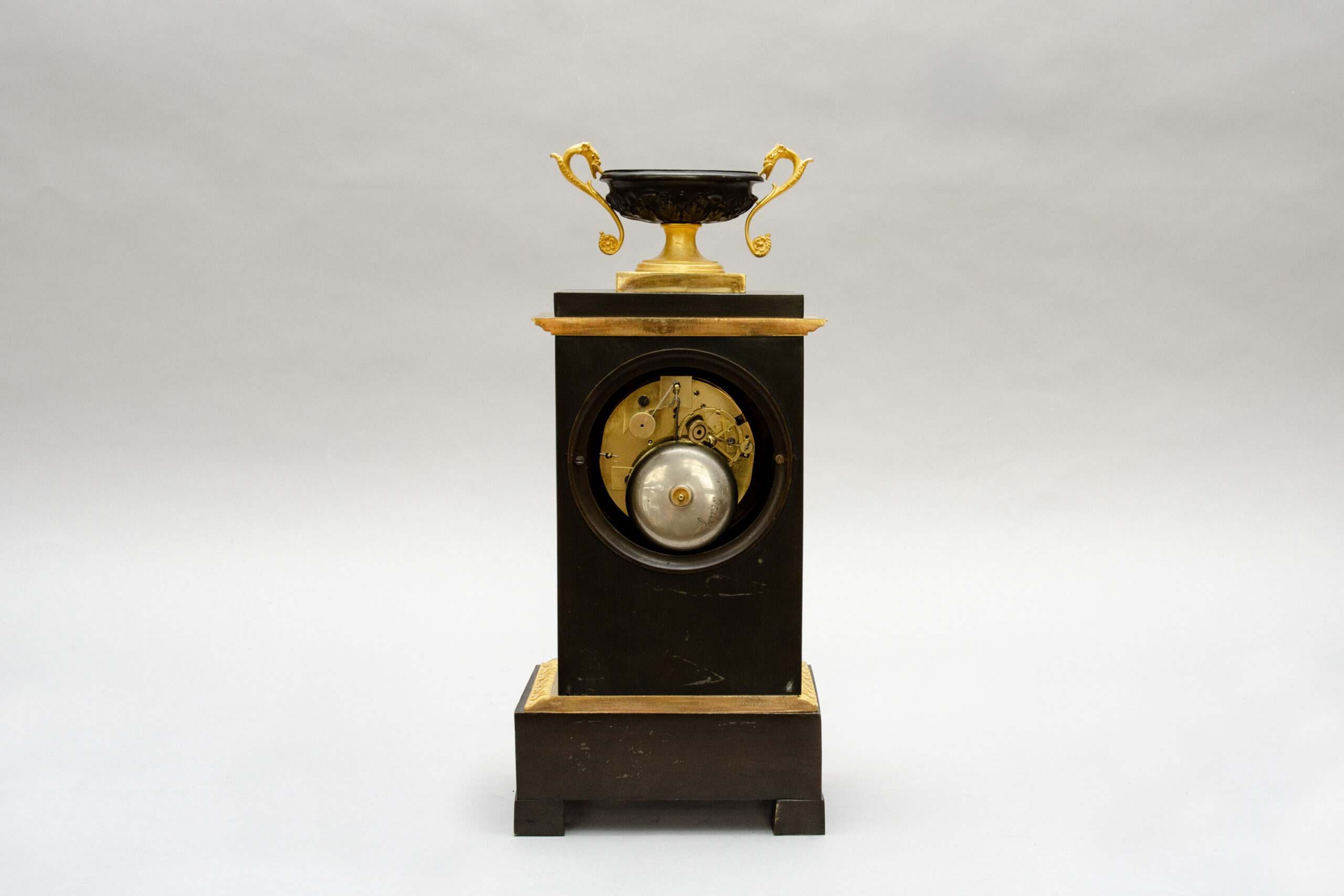
The dial, surrounded by chiseled foliage motifs, stands out against the clock’s dark body, whilst a bowl with curled handles crowns the upper section, in the tradition of the vase-style clocks characteristic of the period. (The two small handles on the bowl are removable.) The movement has been fully overhauled by our master clockmaker and is in perfect working order; the clock is in perfect condition.
Size: H 32 cm — base 14.5 x 8.5 cm
Paris, c. 1810–1830.
Lit: Charles Prosper Leroy was a Parisian clockmaker who worked on Rue du Temple between 1810 and 1830, at the height of the Restoration period. He was one of the most prominent clockmakers of his time, having had the distinguished honour of supplying clocks to Madame Mère, Letizia Bonaparte, mother of Emperor Napoleon I, as well as to the kings of France upon the restoration of the monarchy. This dual recognition – first imperial, then royal – testifies to the reputation for excellence enjoyed by his workshop, which was able to win over patrons with opposing political views through the sheer quality of his work alone. Clocks bearing the mark ‘Chles Leroy, Rue du Temple’ remain highly sought after by collectors today for the finesse of their gilded bronze and the reliability of their movements.
In stock