
11/02/2022
3.700€
In stock
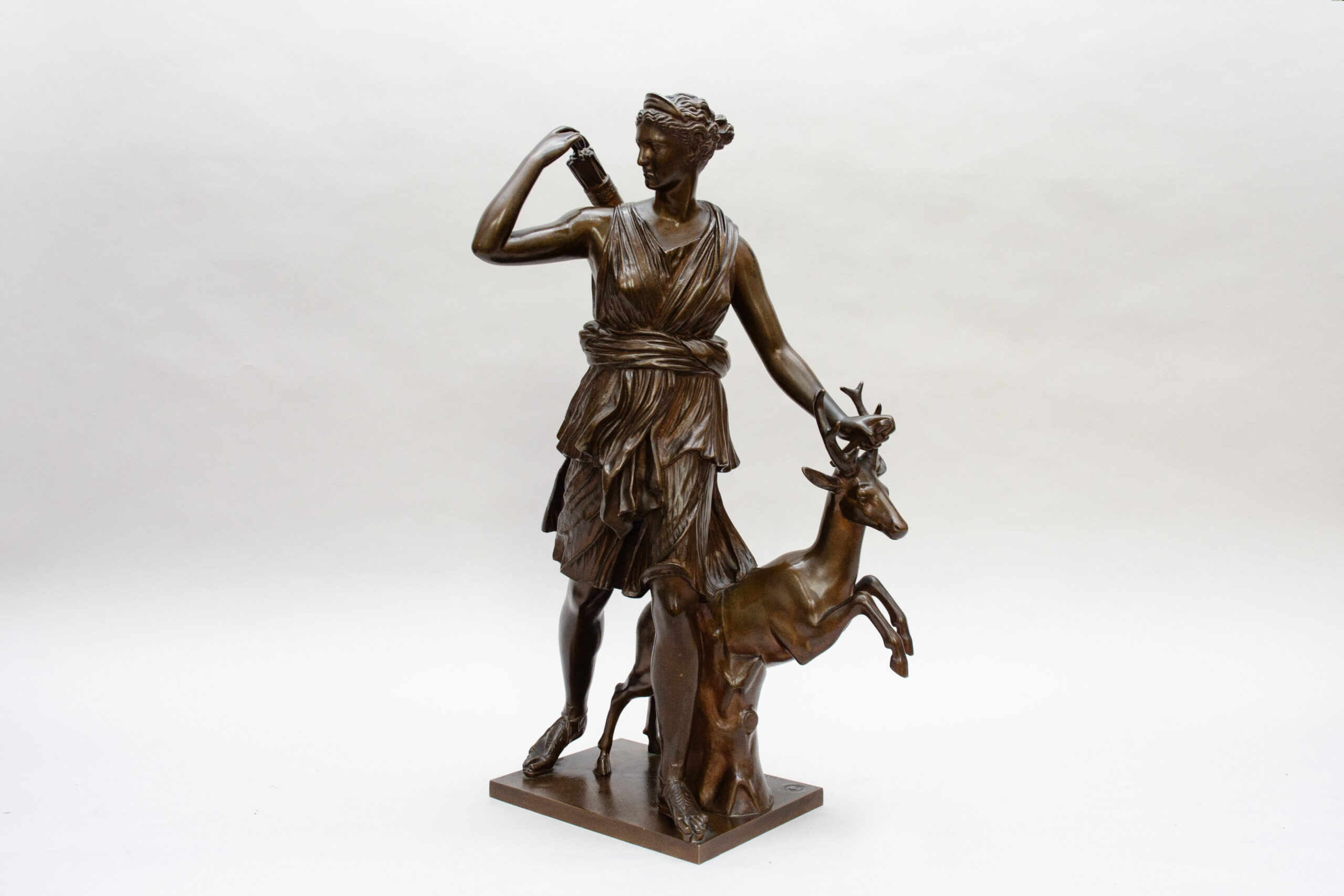
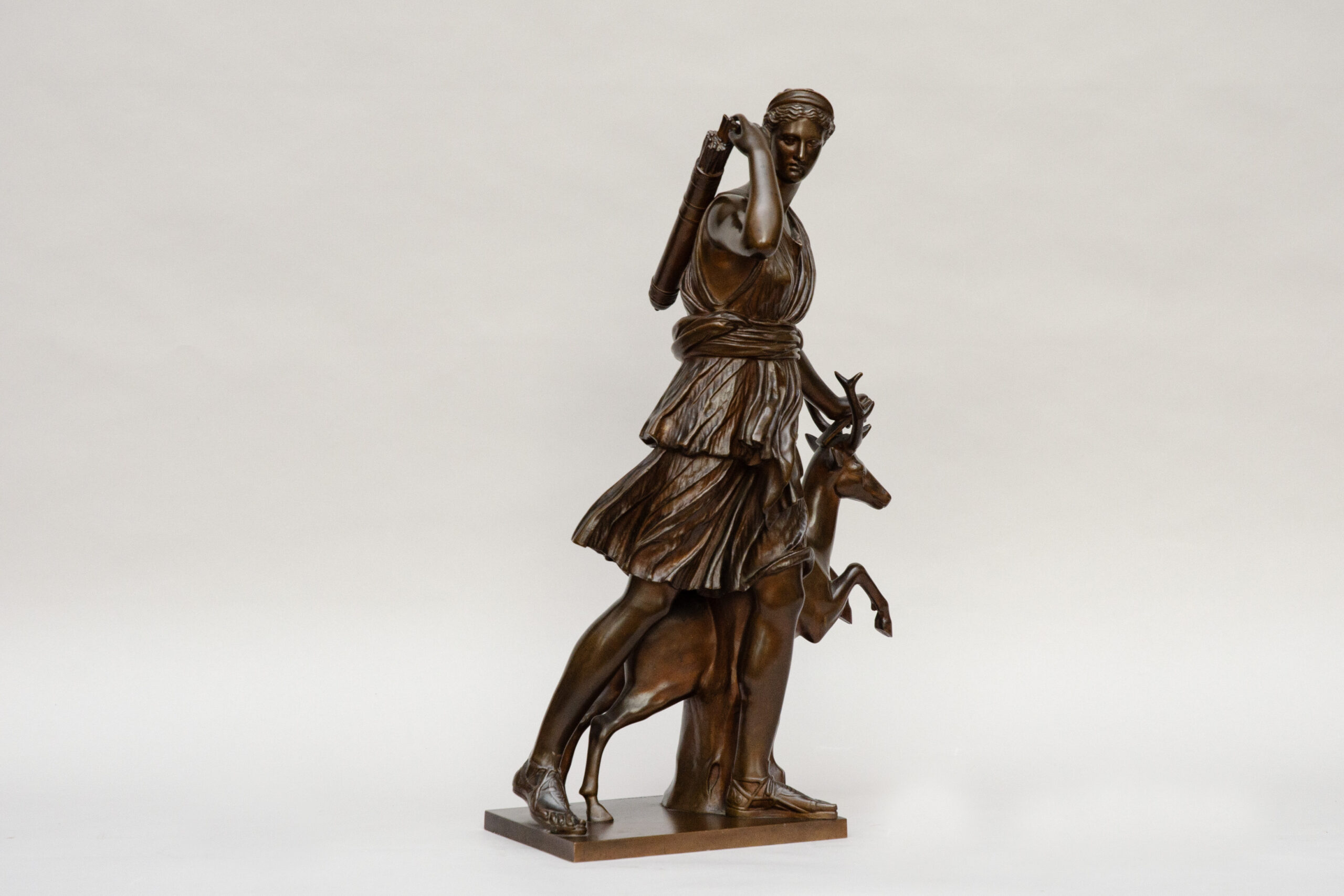
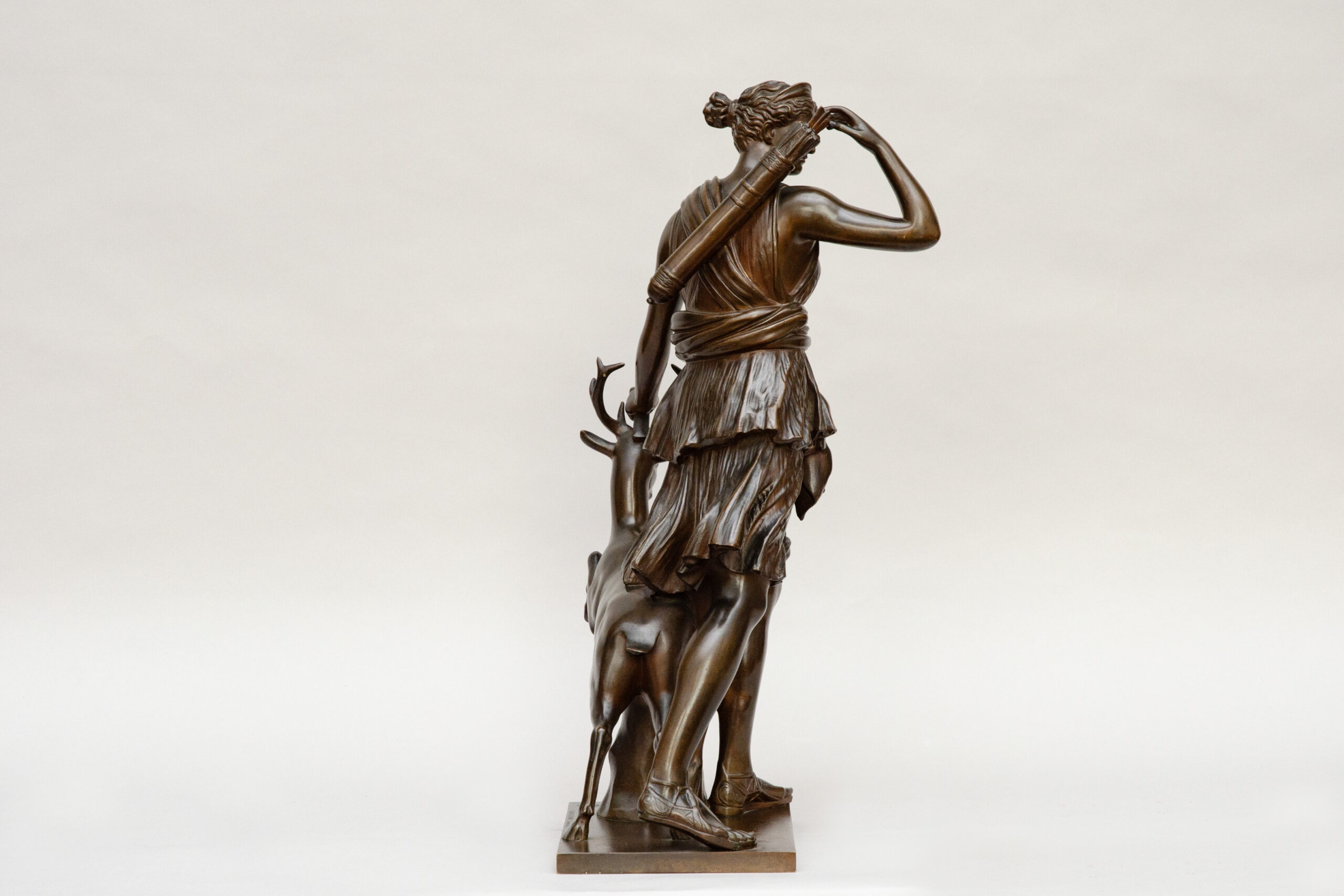
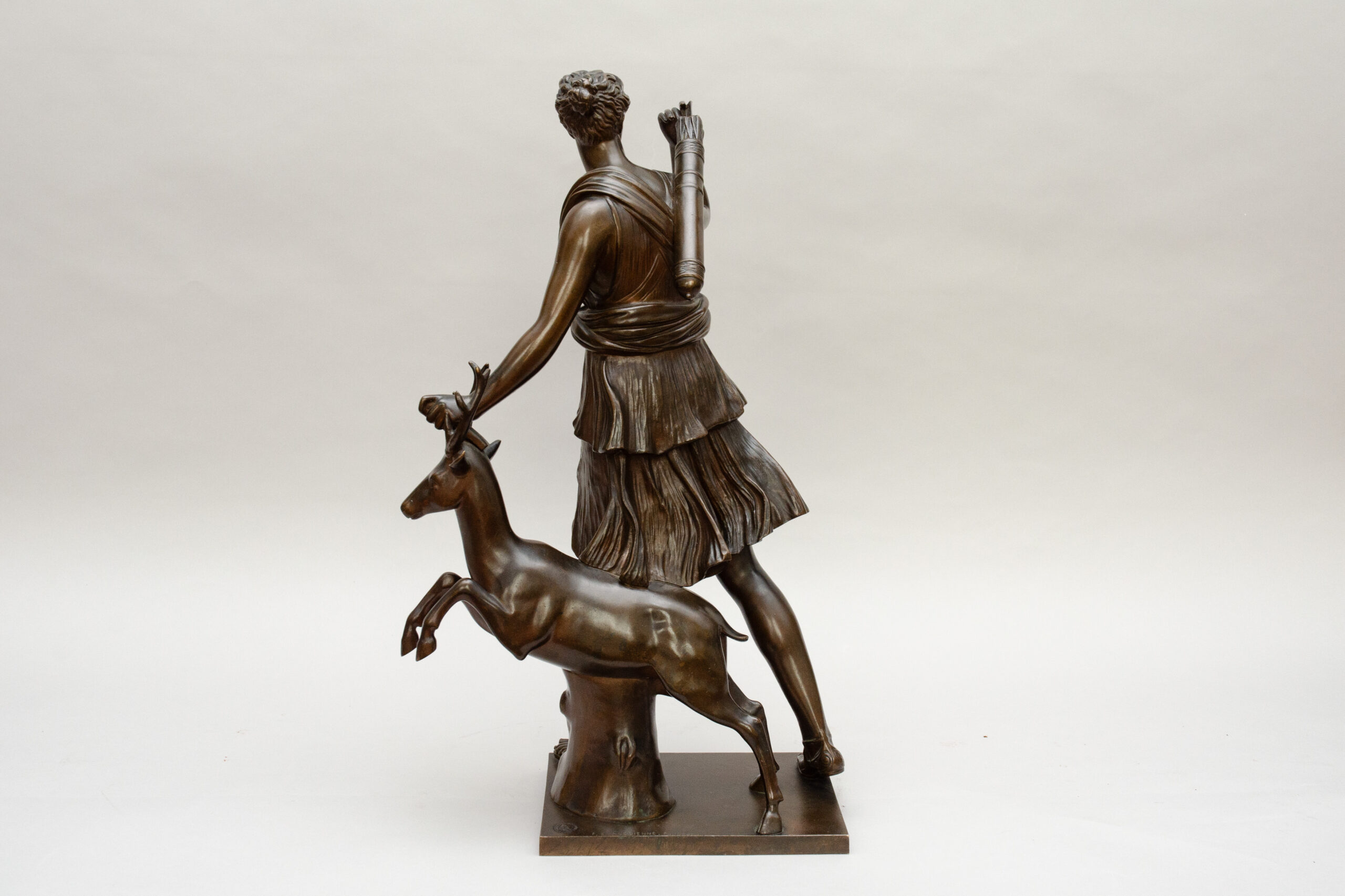
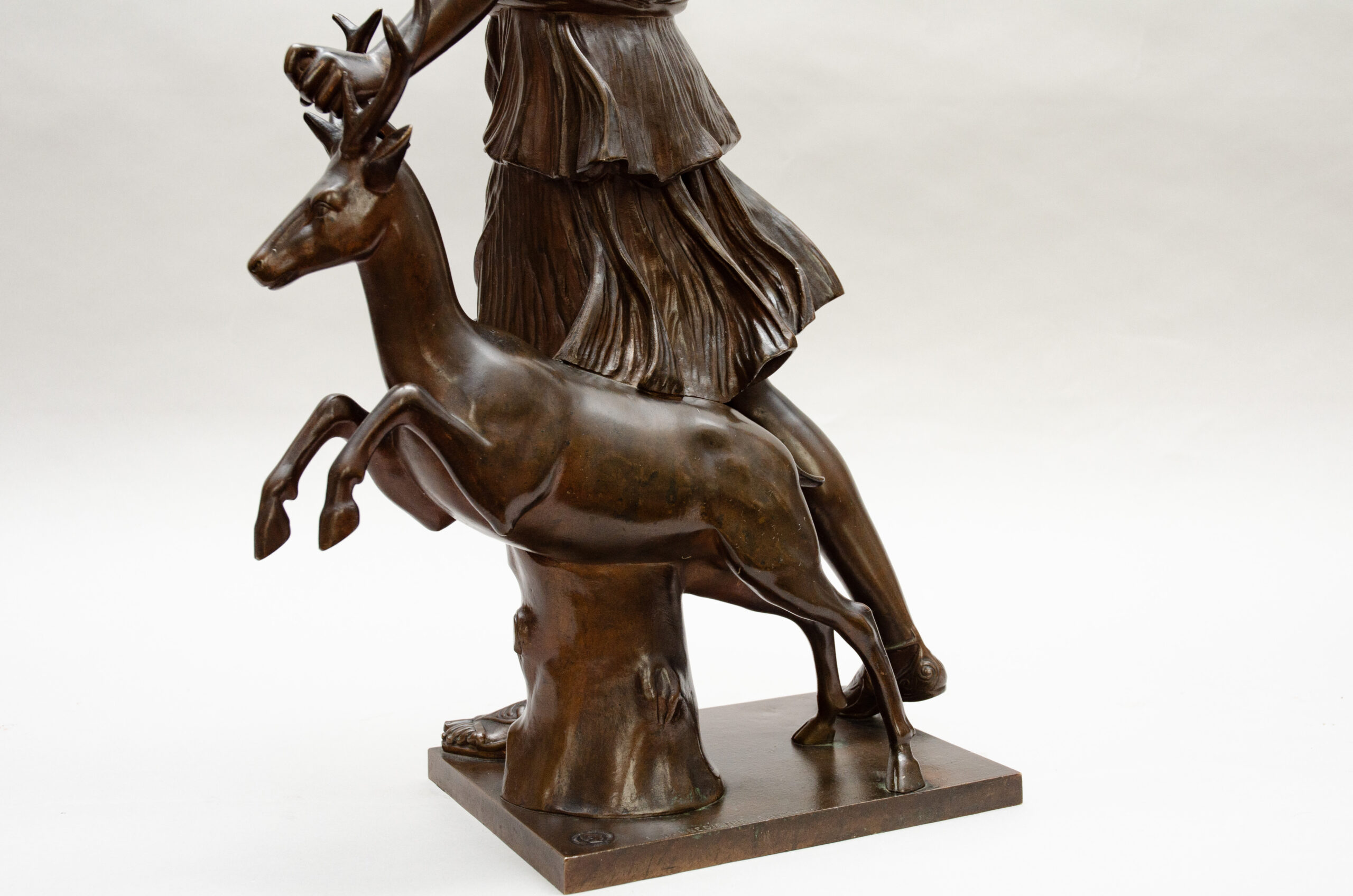
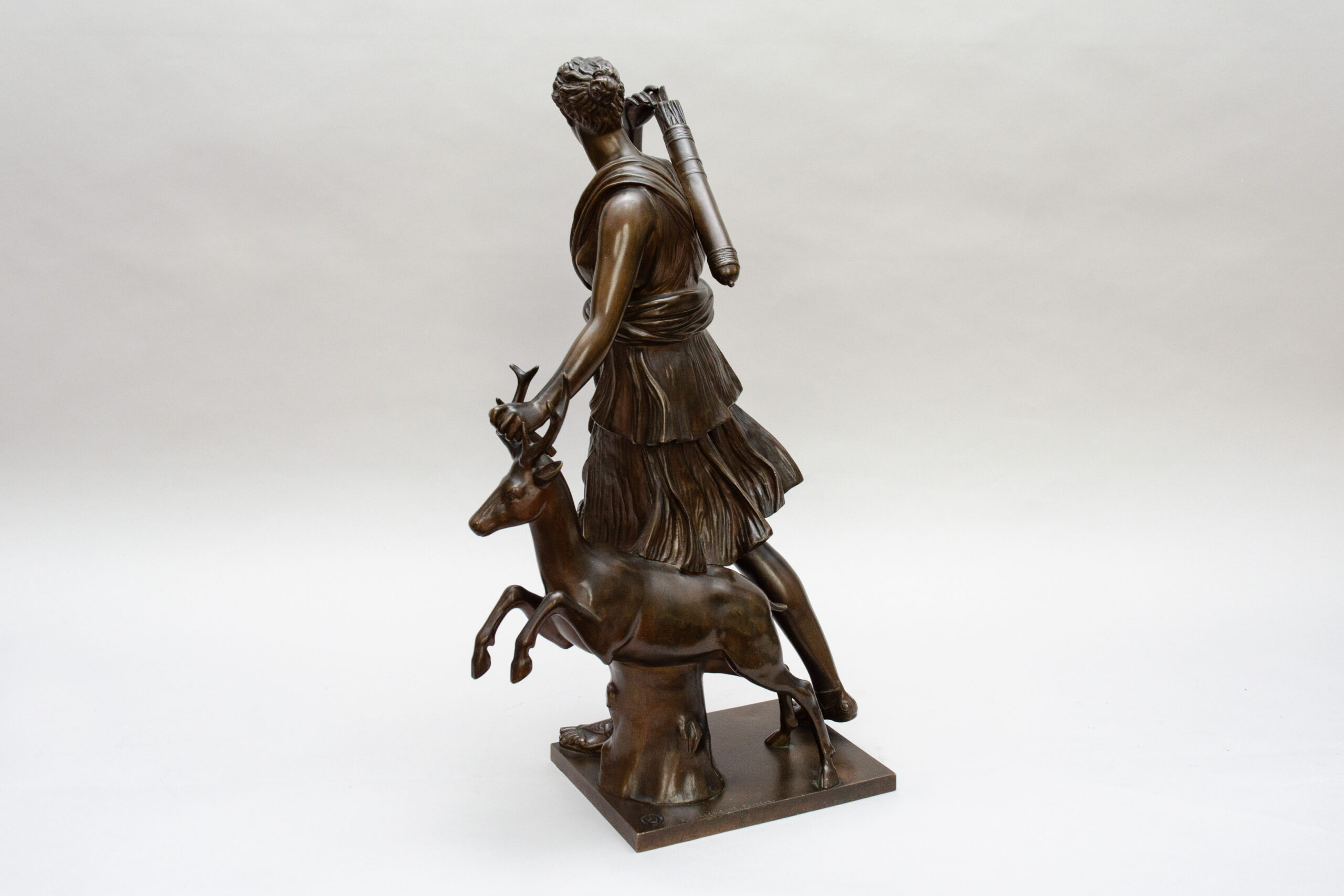
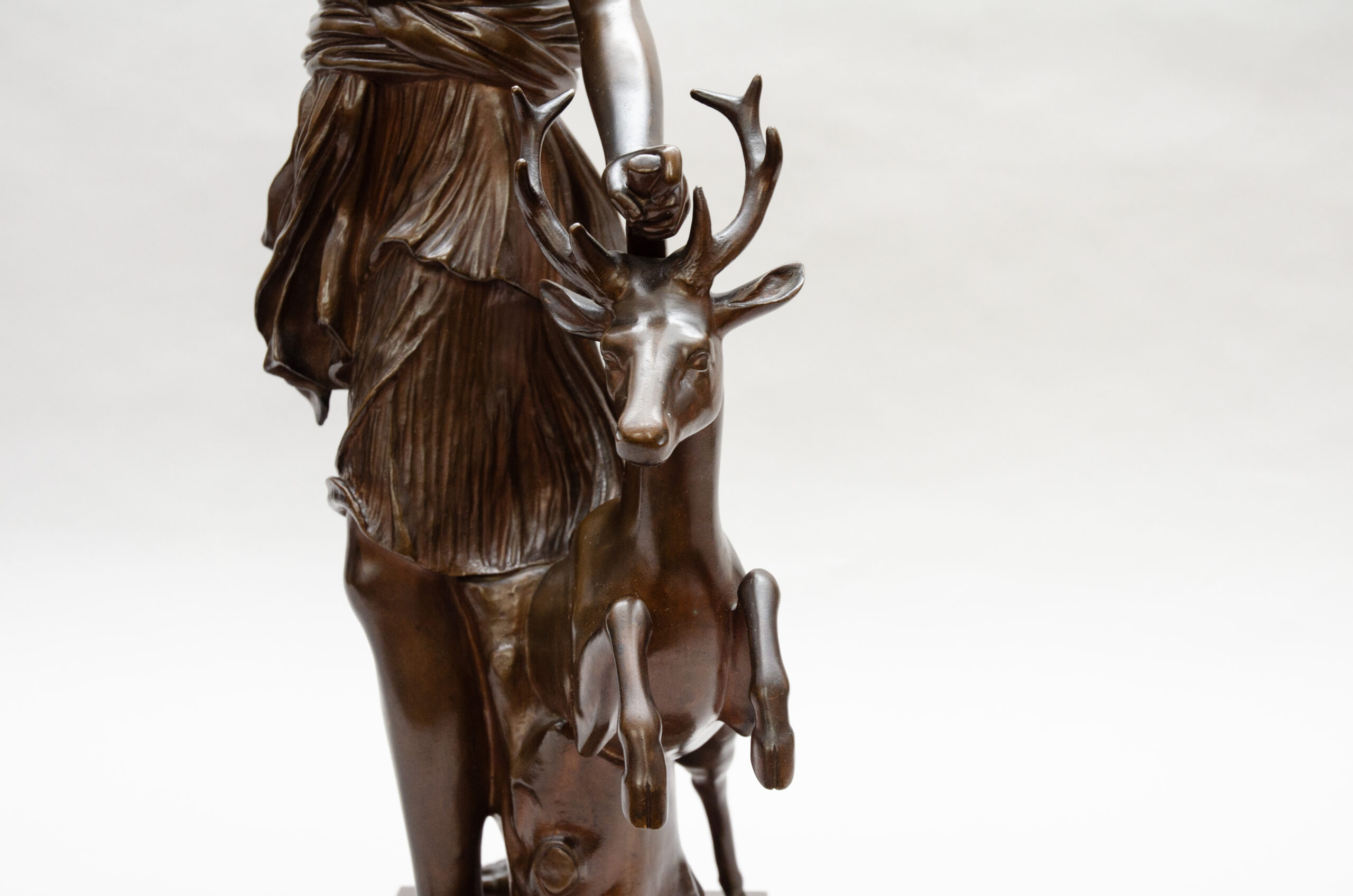
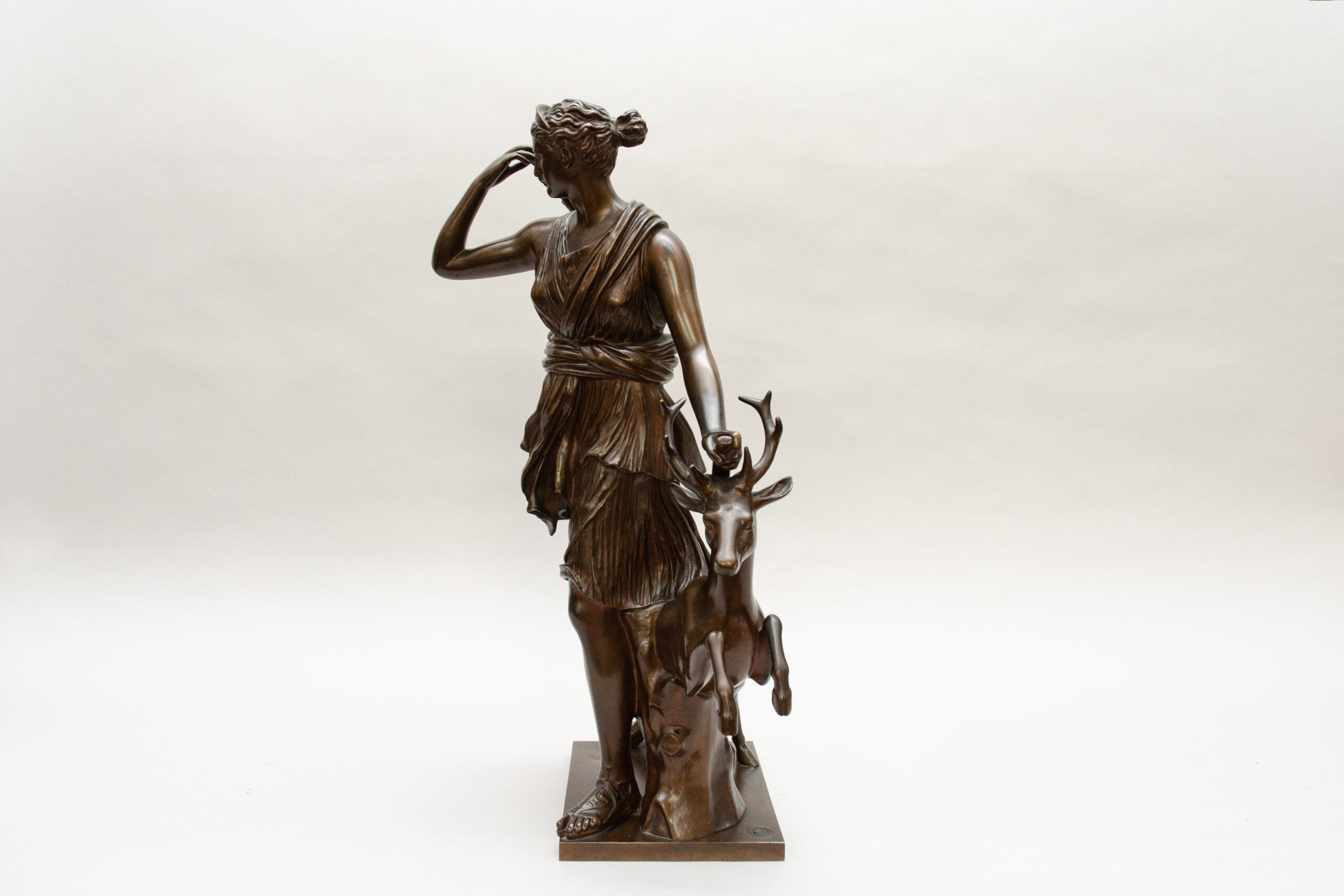
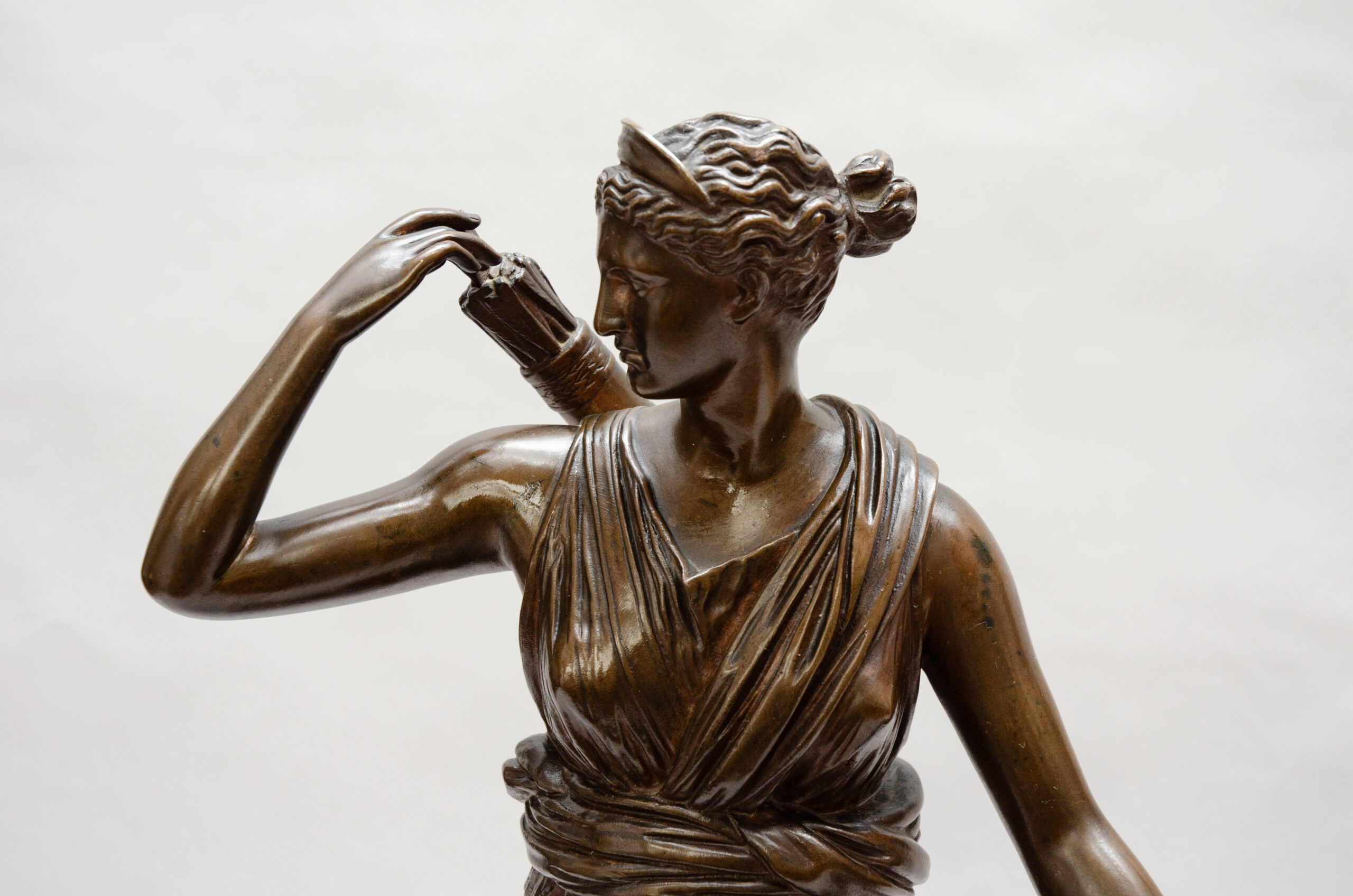
An elegant bronze figure with a brown patina depicting Diana the Huntress, captured in the act of walking alongside a young stag. The goddess, dressed in a short tunic tucked into her belt in accordance with the classical iconography of hunting deities, rests her right hand on the quiver slung over her shoulder, whilst her left hand holds the stag by the antlers, in a gesture of complicity and quiet dominance. The composition, full of restrained movement, delicately captures the animated drape of the tunic and the anatomy of the leaping stag, depicted on three legs.
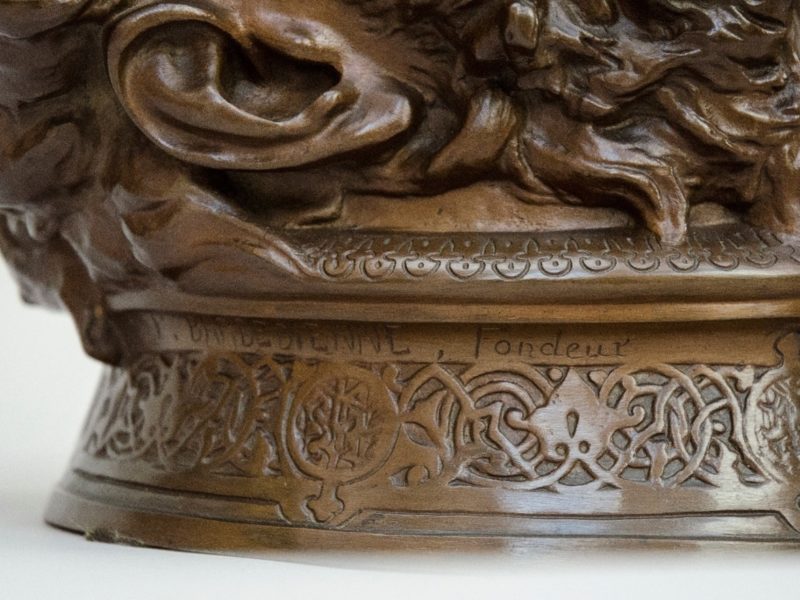
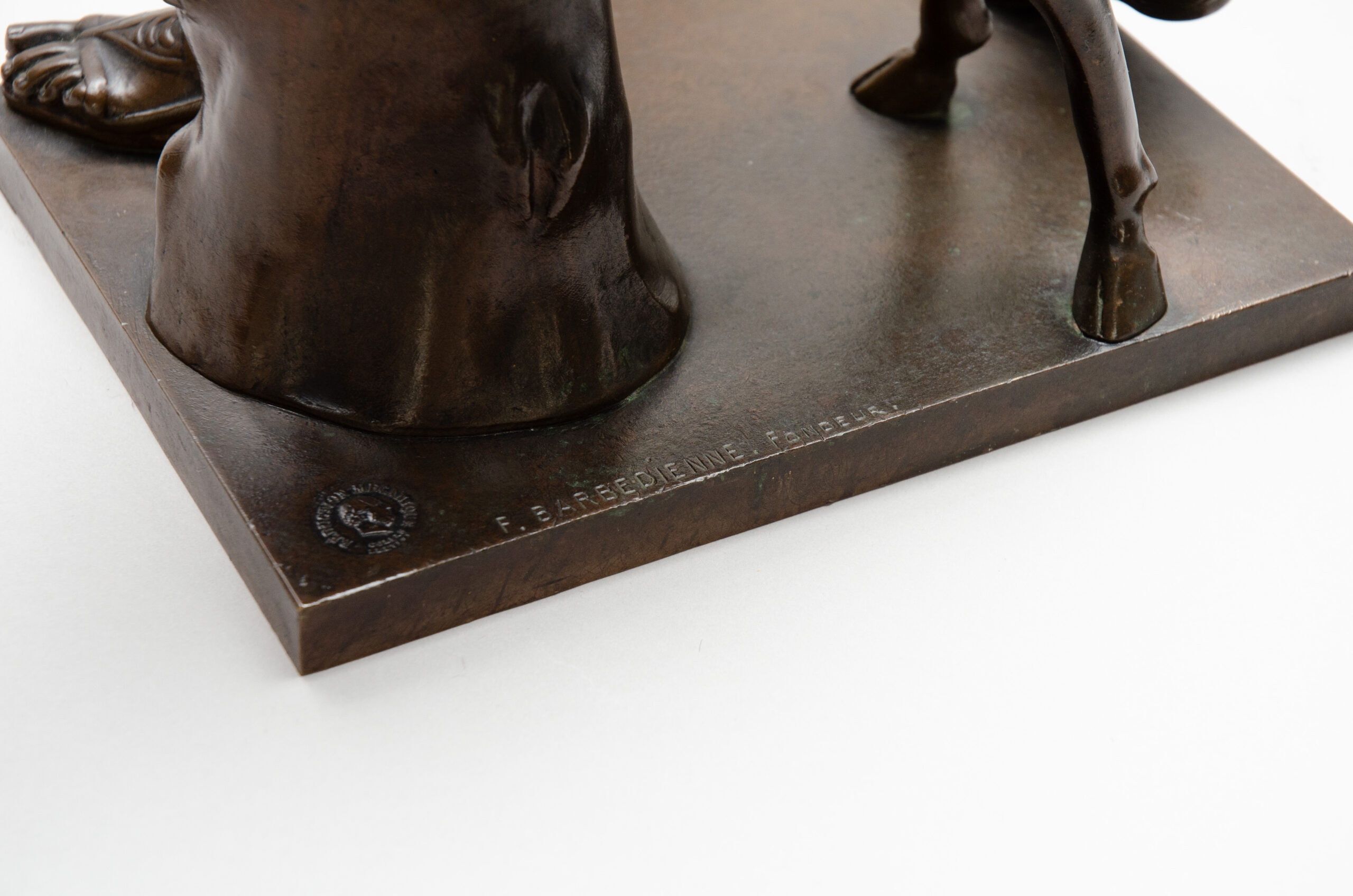
The bronze, with its beautiful, nuanced brown patina, rests on a rectangular plinth and bears the signature of the founder Barbedienne, a mark of casting and chiselling of the very highest order.
Size: H 52 cm — plinth 15 x 20 cm
19th-century French school
Lit: This composition is based on one of the most famous and most frequently copied ancient models in the history of sculpture: the Diana of Versailles, now housed in the Louvre Museum. It is a Roman marble copy, dating from the Imperial period (2nd century), of a Greek bronze original from the 4th century BC, generally attributed to the Athenian sculptor Leochares. Rediscovered in Italy, the statue entered the French royal collections in 1556, when Pope Paul IV presented it to King Henry II – a gift whose allusion to Diane de Poitiers, the sovereign’s favourite, did not escape anyone’s notice. The work successively adorned the Château de Fontainebleau, the Louvre and then the Château de Versailles, which is how it came to be known by its current name.
Lit: Ferdinand Barbedienne, born in 1810, founded in 1838, together with the engineer Achille Collas, one of the most prestigious Parisian art foundries of the nineteenth century. Thanks to the mechanical reduction process developed by Collas, the Barbedienne foundry was able to produce, in various sizes, faithful reproductions of ancient and modern masterpieces held in major museums, thereby making a heritage previously reserved for royal collections accessible to a broad clientele from the bourgeoisie and the aristocracy. Renowned for the excellence of its lost-wax casting and the quality of its patinas, the Barbedienne foundry remains today one of the most sought-after signatures in 19th-century bronze art.
In stock