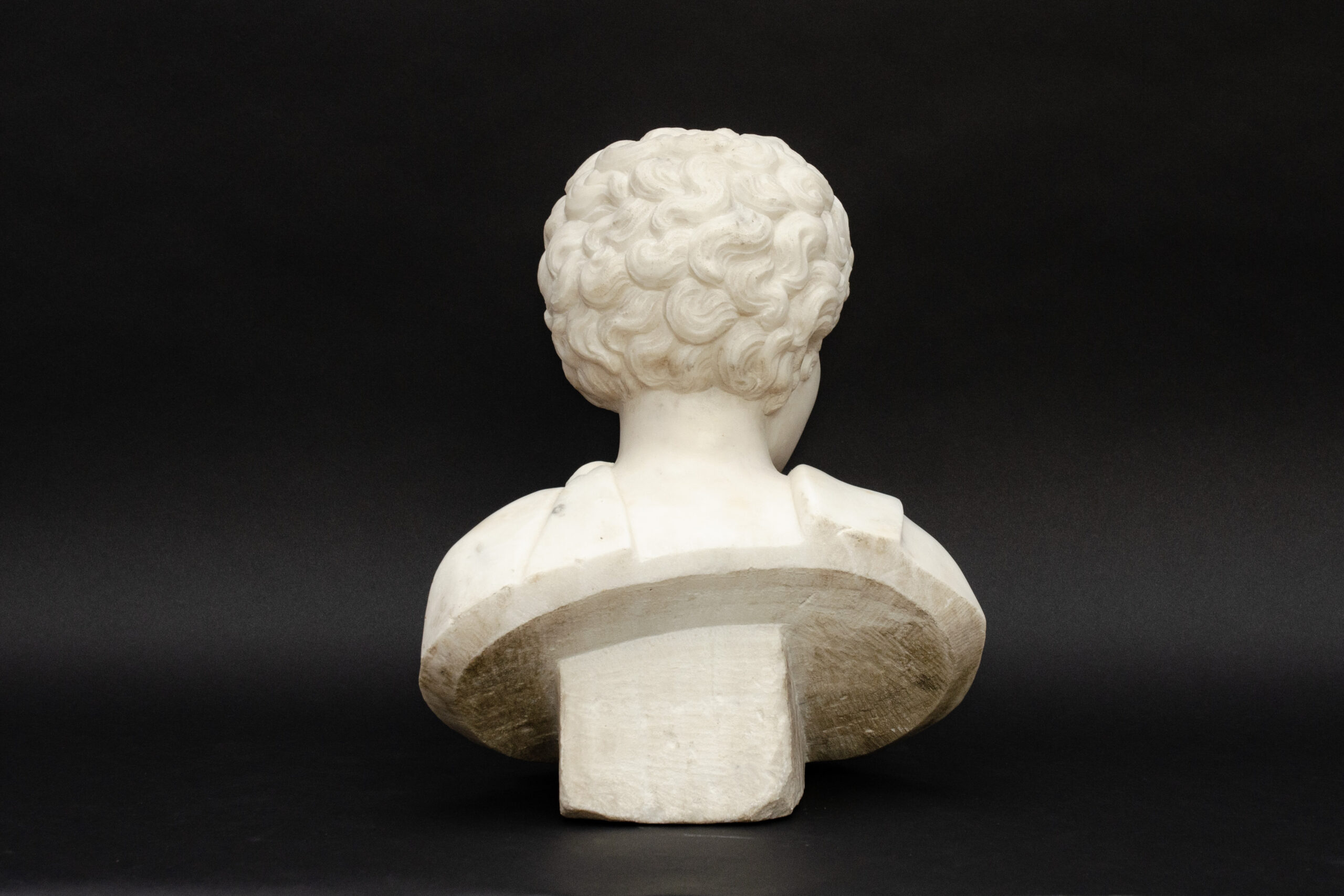
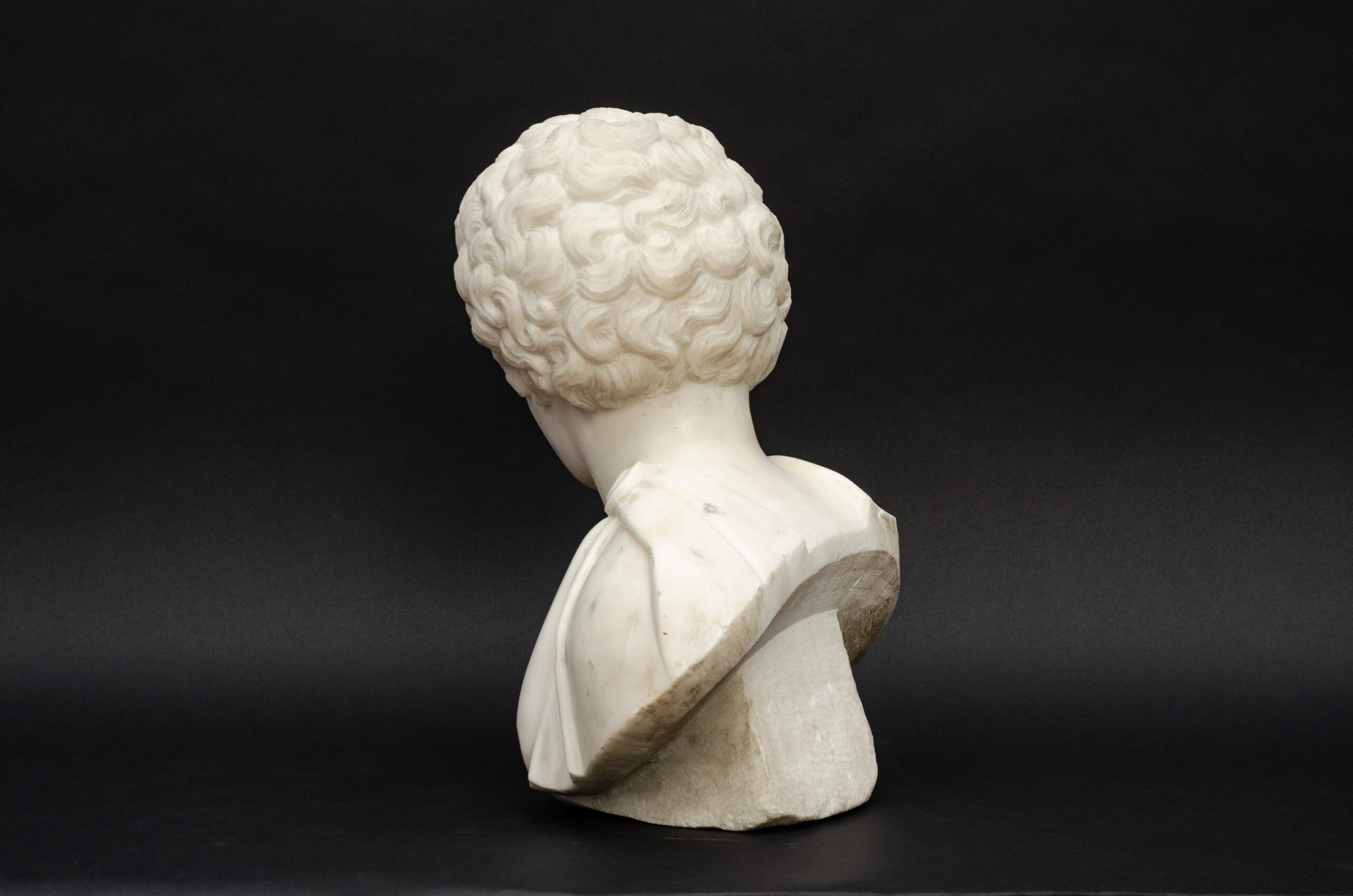
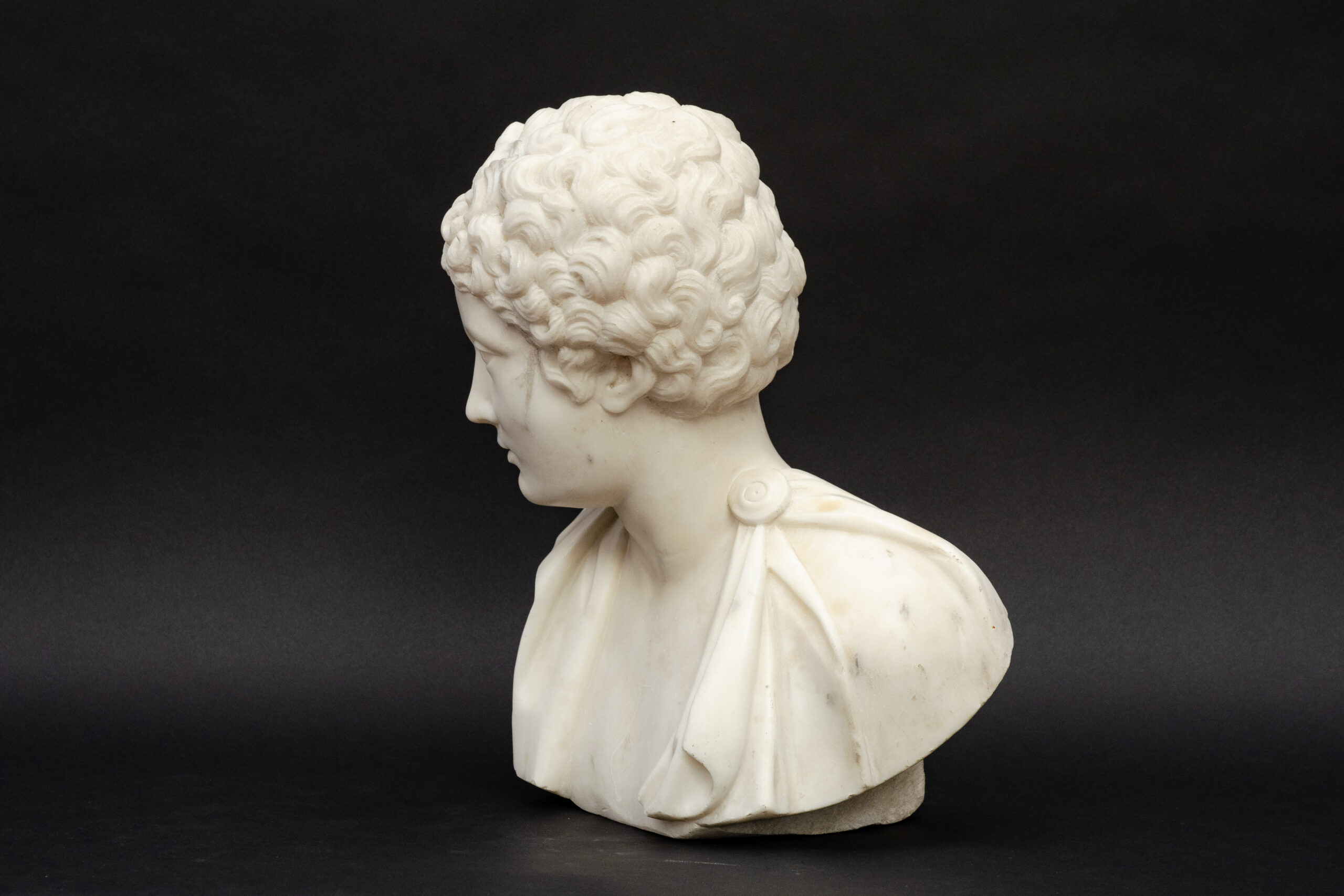
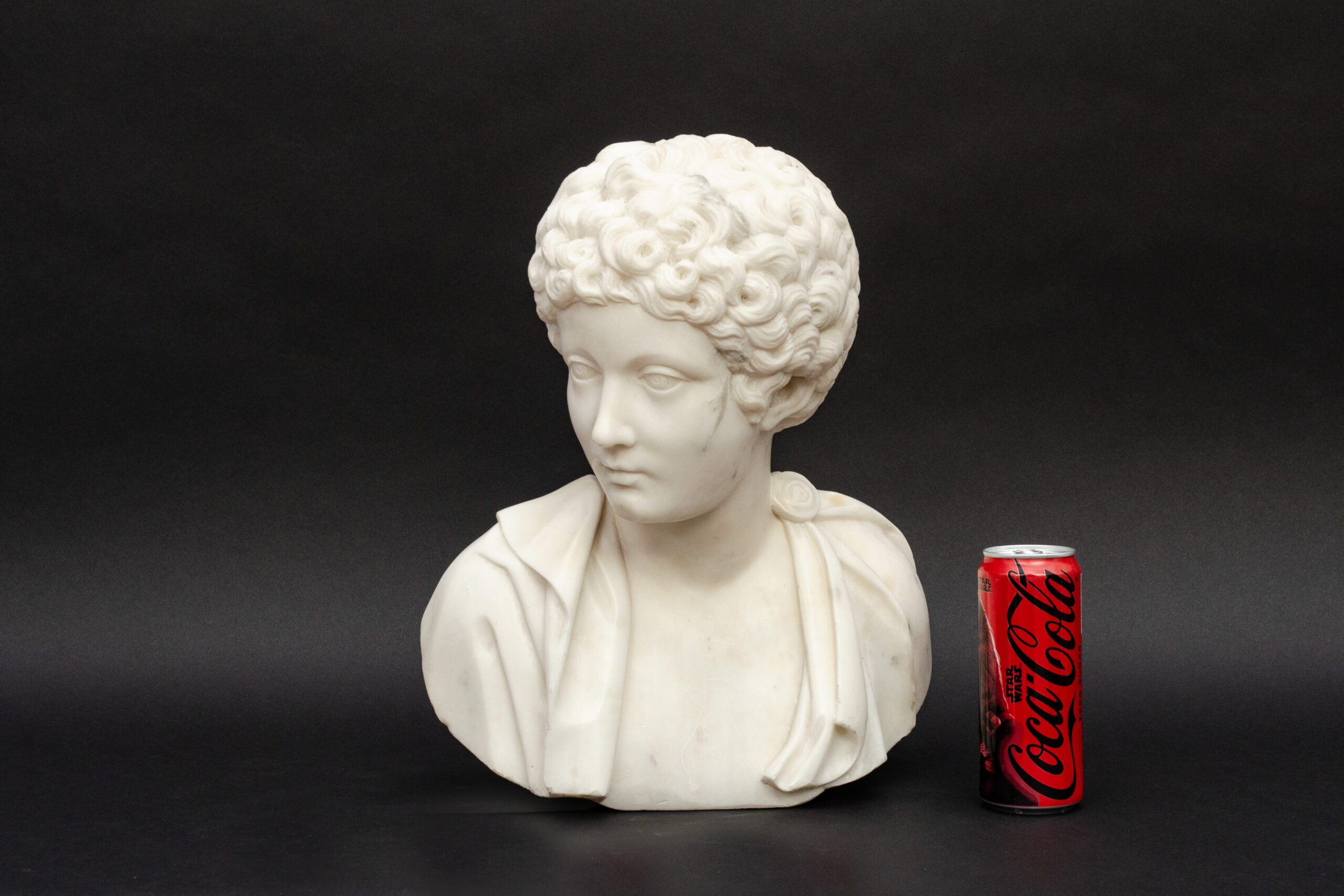
Marbre bust of the young Marcus Aurelius
Price on request
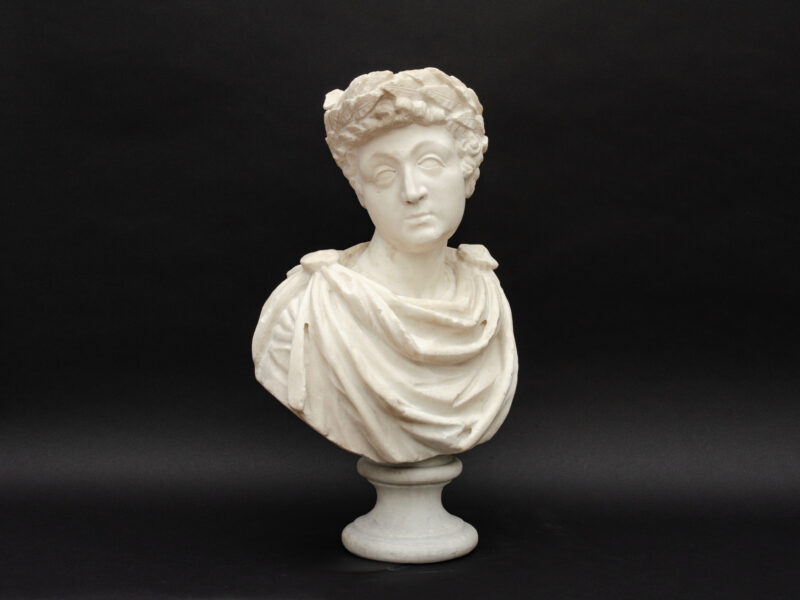
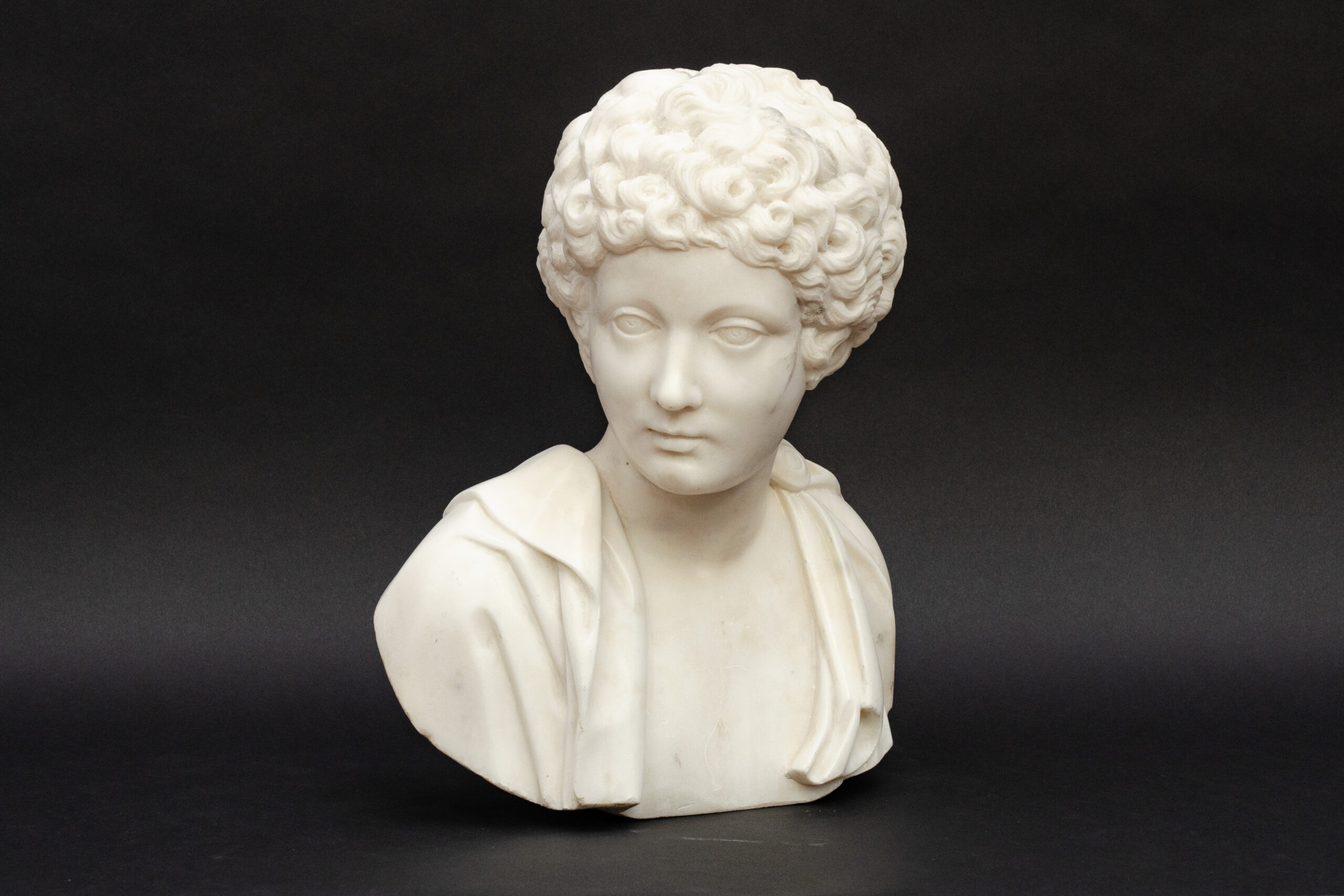
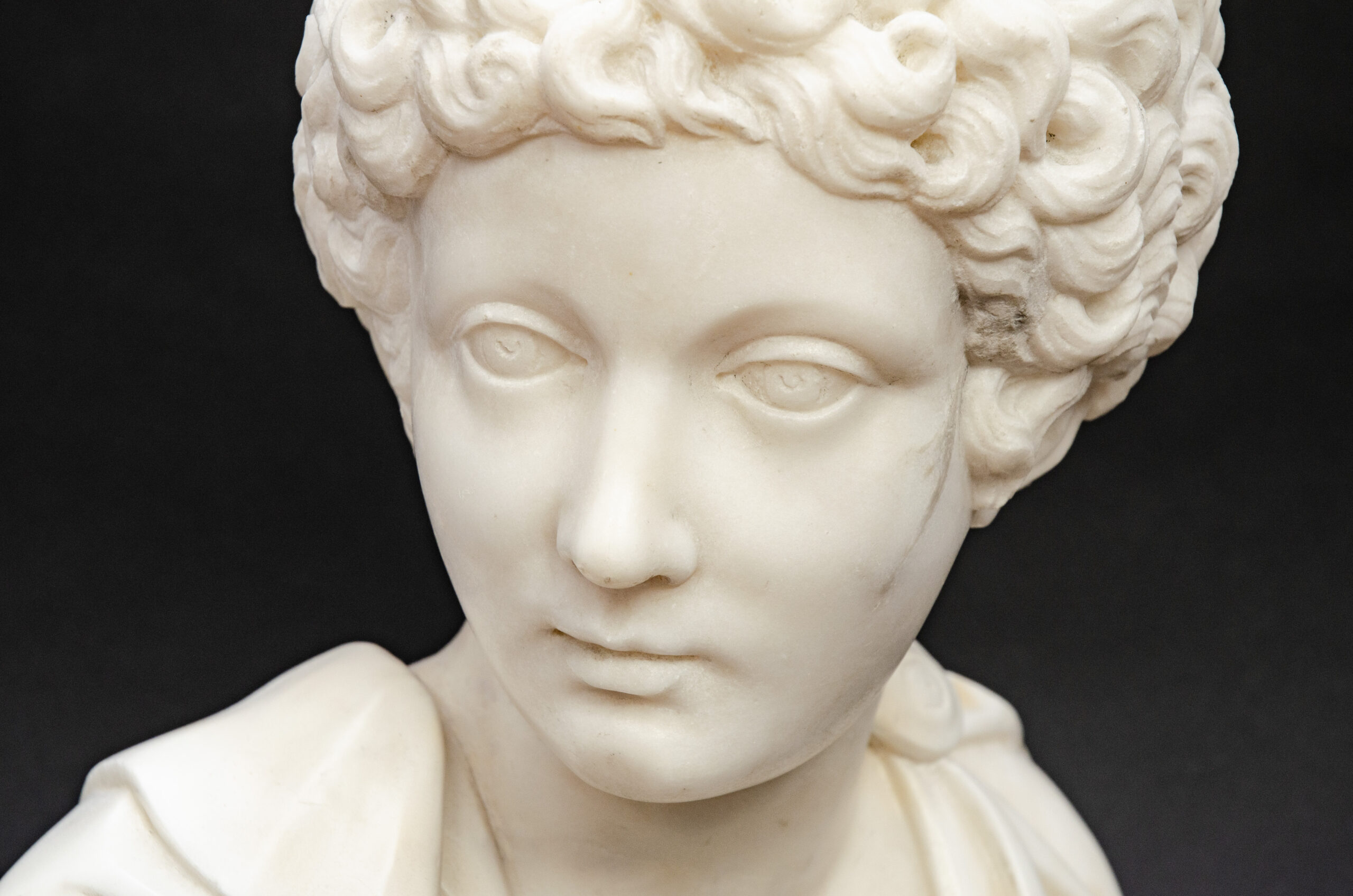
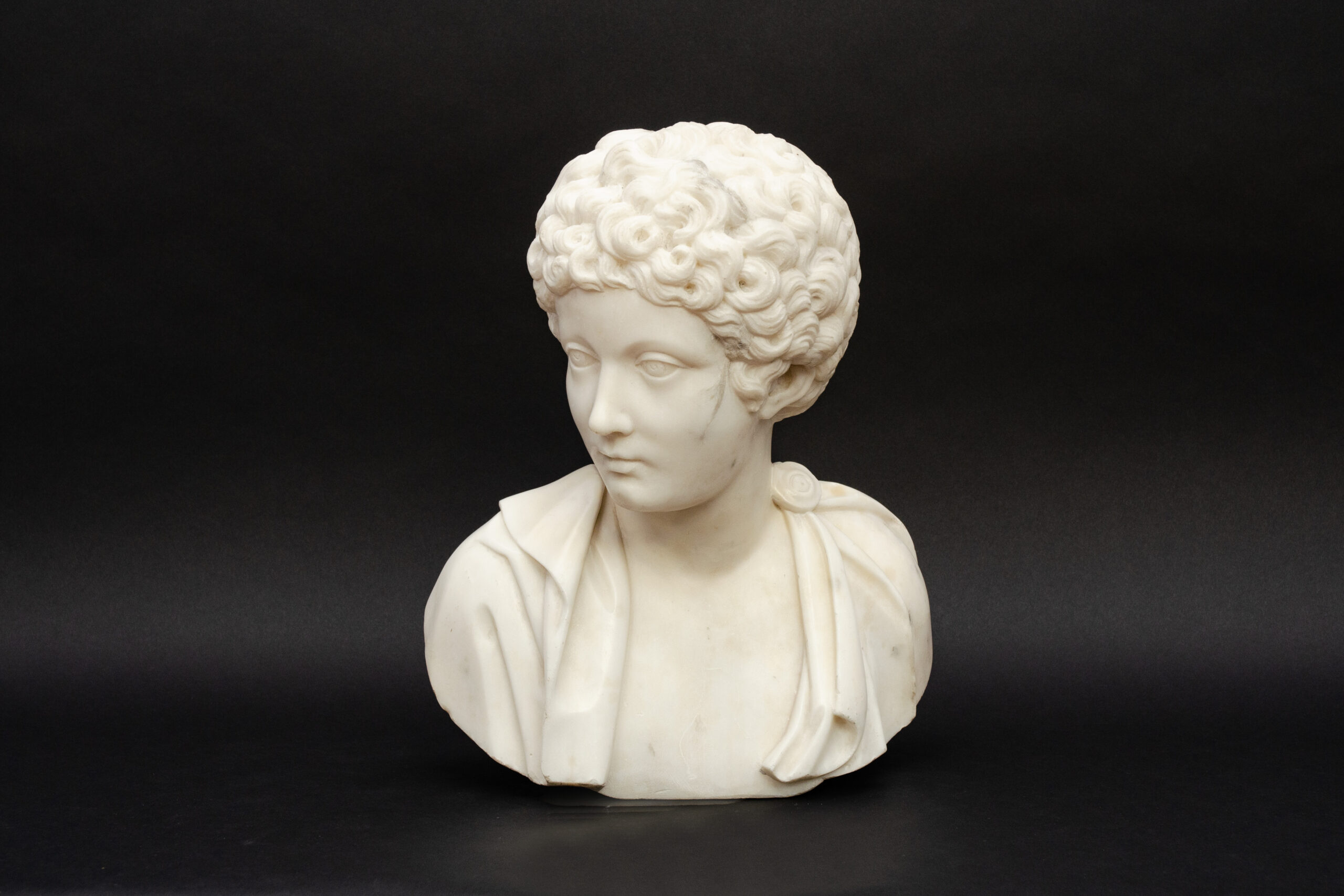
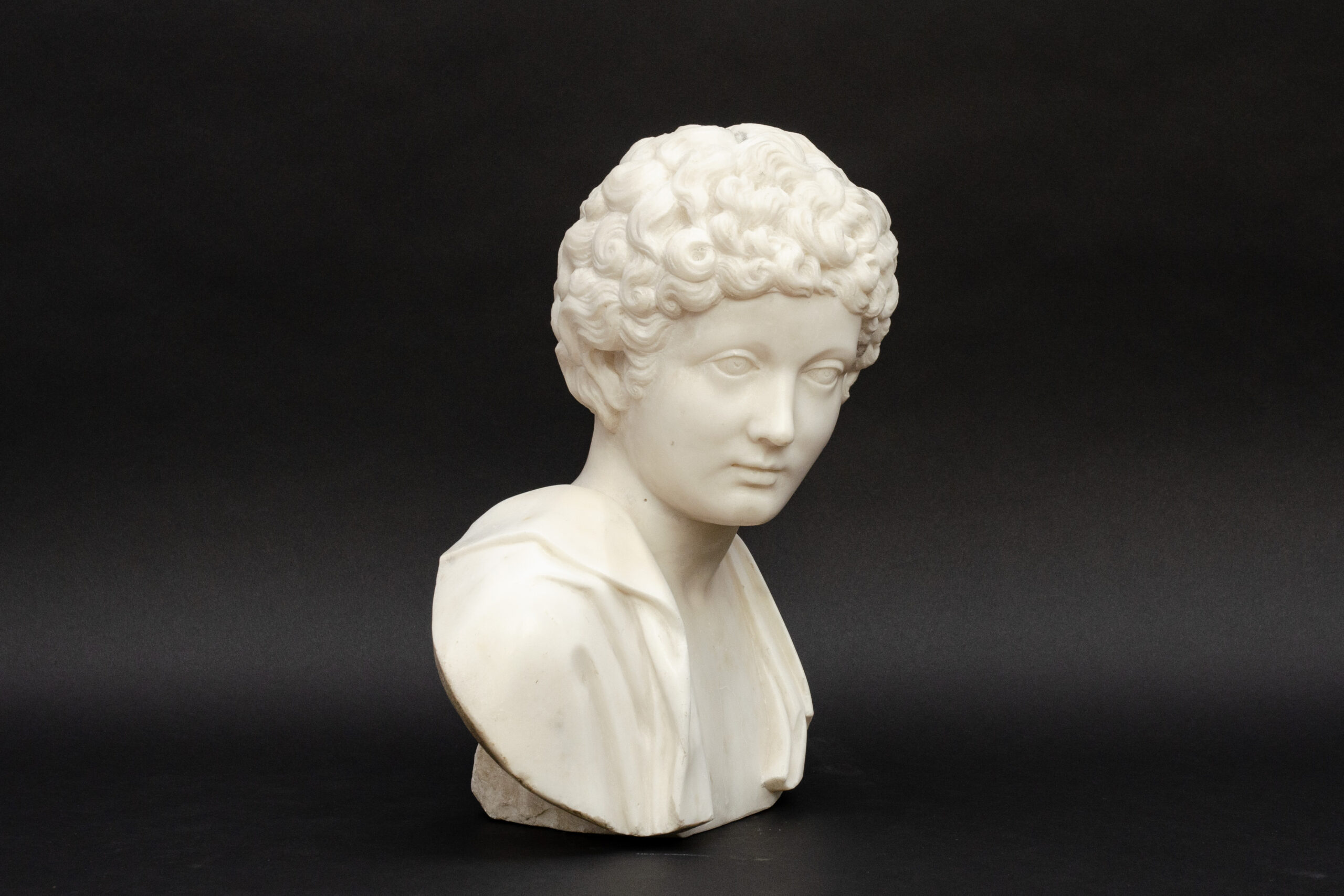
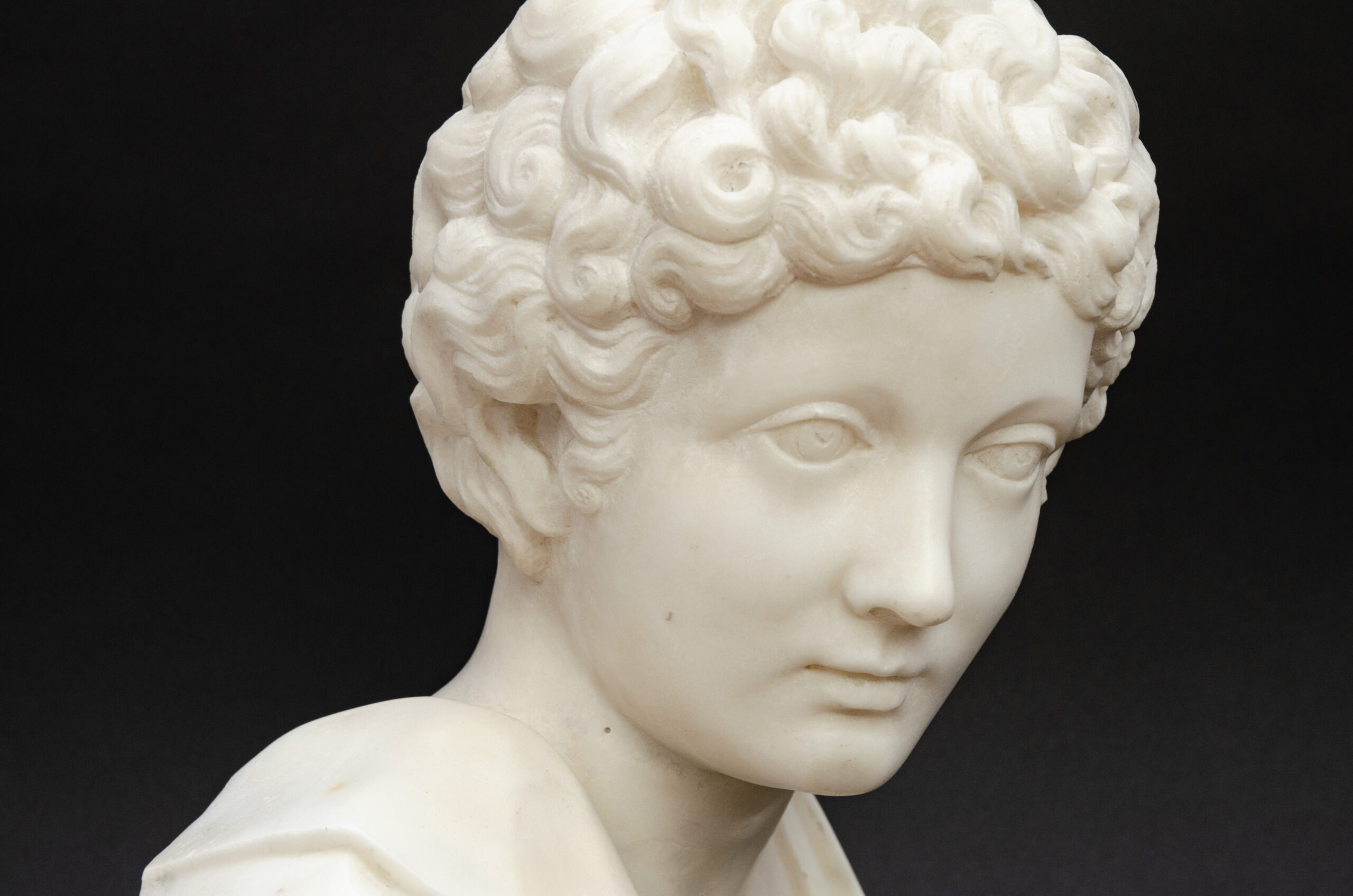
Contact usA bust of the young Marcus Aurelius, after the Roman models from the Antonine period. This remarkable marble bust depicts Marcus Aurelius in his youth, long before the familiar image of the philosopher-emperor with a full beard. The subject is portrayed at the age of the crown prince: his face still beardless, his features regular and his gaze calm. The head, turned slightly, brings the composition to life and lends it a meditative air. This restrained movement avoids the solemn frontality of an official portrait and subtly varies the profile, the gaze and the volume of the hair.
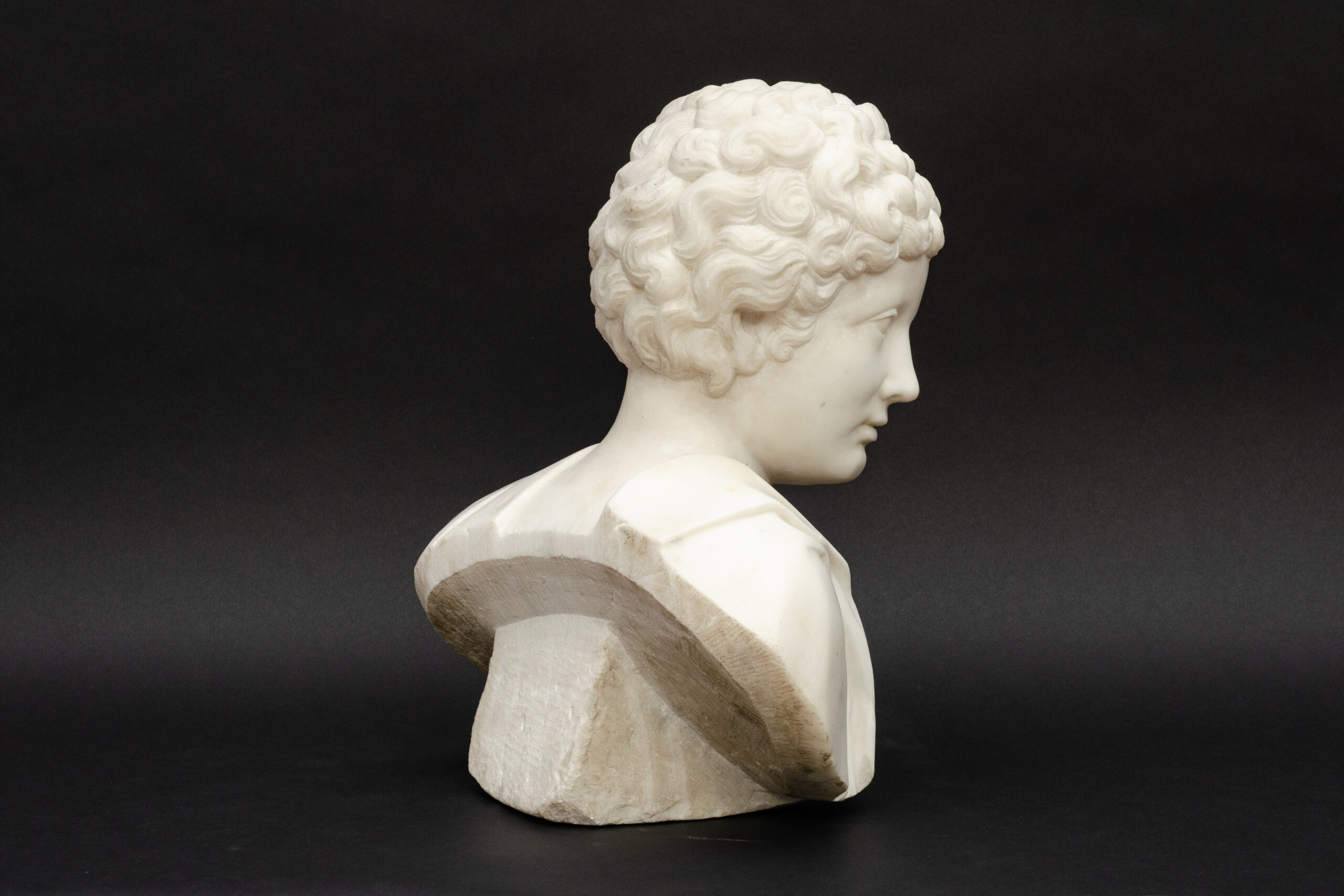
The face embodies a classical ideal tempered by a genuine quest for character. The forehead is smooth, the nose straight and the mouth small, framed by a delicate line. The large, almond-shaped eyes, with clearly defined eyelids, are sculpted with incised irises and pupils. This technique, inherited from Roman portraiture of the Antonine period, concentrates all expression in the gaze. Yet this gaze remains distant and inward-looking: the sculptor seeks neither grandiloquence nor military authority, but a form of precocious gravity which, in retrospect, foreshadows the future Stoic sovereign. The hair is the masterpiece of the work. It forms a compact mass of thick curls around the skull, rendered at times as deeply carved spirals, at others as supple, undulating locks. The chisel shapes the general contours, whilst the bur, used sparingly at the heart of the curls, creates deep shadows and accentuates their relief. The contrast between this highly detailed crown of hair and the smoother finish of the face gives the portrait its sculptural power. Viewed in profile and from the back, the locks remain carefully arranged, evidence that the bust was designed to be viewed from multiple angles.
Dimensions: Height: 38 cm – Width at the shoulders: 33 cm – Depth: 17 cm.
Italian school, probably Roman, second half of the 18th century, associated with the sculpture workshops working for the Grand Tour.
Context: The iconography is linked to the official portraits circulated whilst Marcus Aurelius was still Caesar. A Roman head dated to around 138 and held at the Metropolitan Museum already displays the distinctive features of this type. The ancient bust of the young Marcus Aurelius from the Villa di Chiragan, created around 145 and held at the Musée Saint-Raymond, offers another significant point of comparison. His portrait marks an evolution of the adolescent type with the appearance of a fledgling moustache and beard.
The most significant comparison, however, concerns an 18th-century bust of the young Marcus Aurelius held at the Louvre, also in white marble and attributed to a possible Roman artist. Although smaller and mounted on a Sienna-coloured pedestal, it directly attests to the success of this model in 18th-century decorative sculpture. (Bust of the young Marcus Aurelius – Louvre collections website)
An Italian bust of Marcus Aurelius, dating from the late 18th or early 19th century and held at the Saint Louis Art Museum, is explicitly interpreted as a memento of antiquity intended for a Northern European traveller visiting Rome. It serves as a reminder of how Marcus Aurelius, admired as a philosopher-emperor, occupied a privileged place in the culture of the Grand Tour.
Biography: Born in Rome on 26 April 121 as Marcus Annius Verus, Marcus Aurelius was adopted as heir by Emperor Antoninus Pius. He received a thorough education in rhetoric and philosophy and became drawn to Stoicism at a very early age. On Antoninus’s death in 161, he became emperor and initially shared power with his adoptive brother Lucius Verus. His reign, which lasted until 180, was marked by the war against the Parthians, a severe epidemic and lengthy campaigns on the Danubian frontiers. It was largely during these campaigns that he wrote, in Greek, the texts known as *Thoughts to Myself* or *Meditations* – personal exercises devoted to duty, self-control and acceptance of the natural order. Mark Aurelius, who died on 17 March 180, probably in Vindobona or Sirmium, remains one of the leading figures of Stoicism and the archetype of the philosopher-emperor, seeking to reconcile the exercise of power with the demands of reason and virtue.