
11/02/2022
Price on request
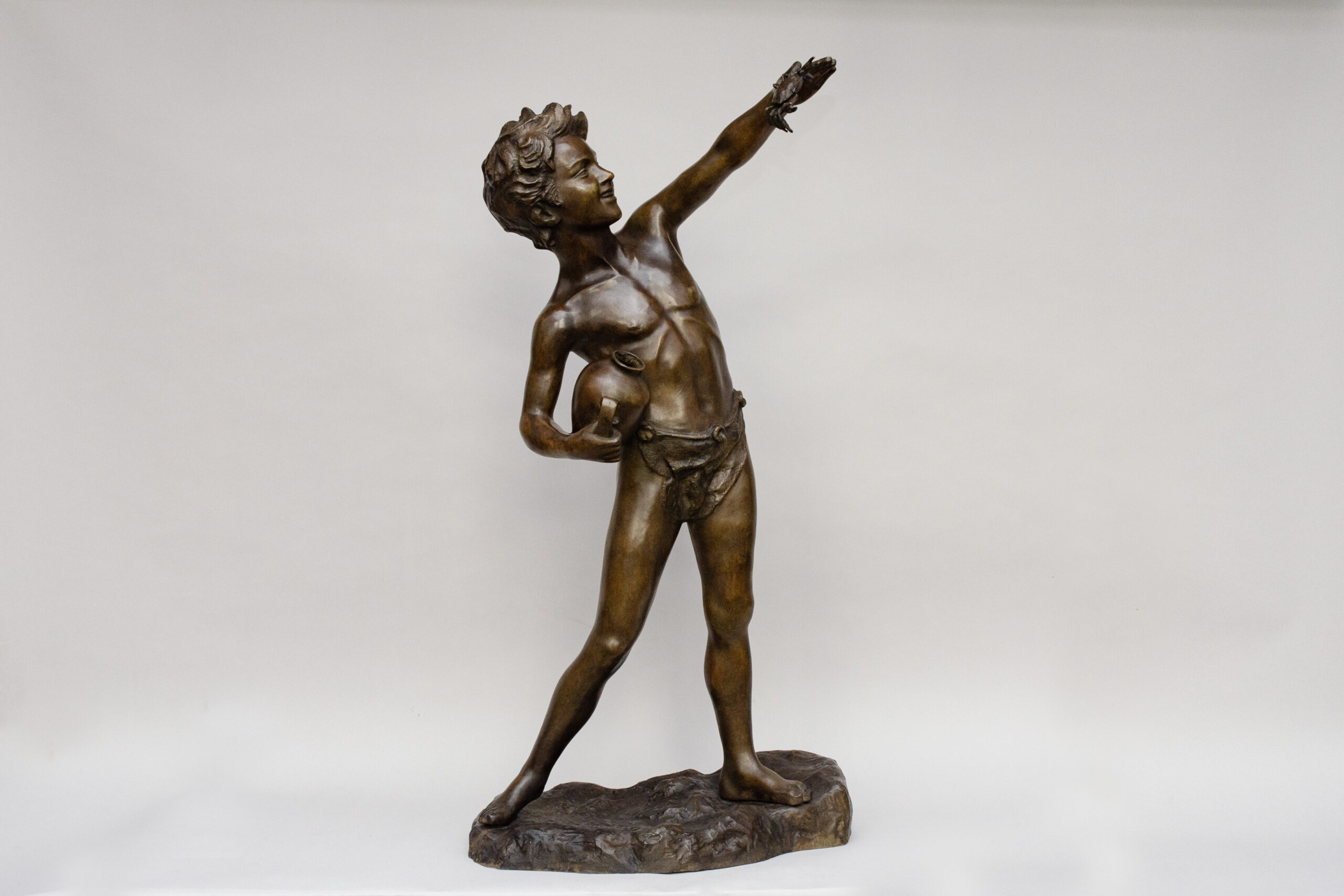
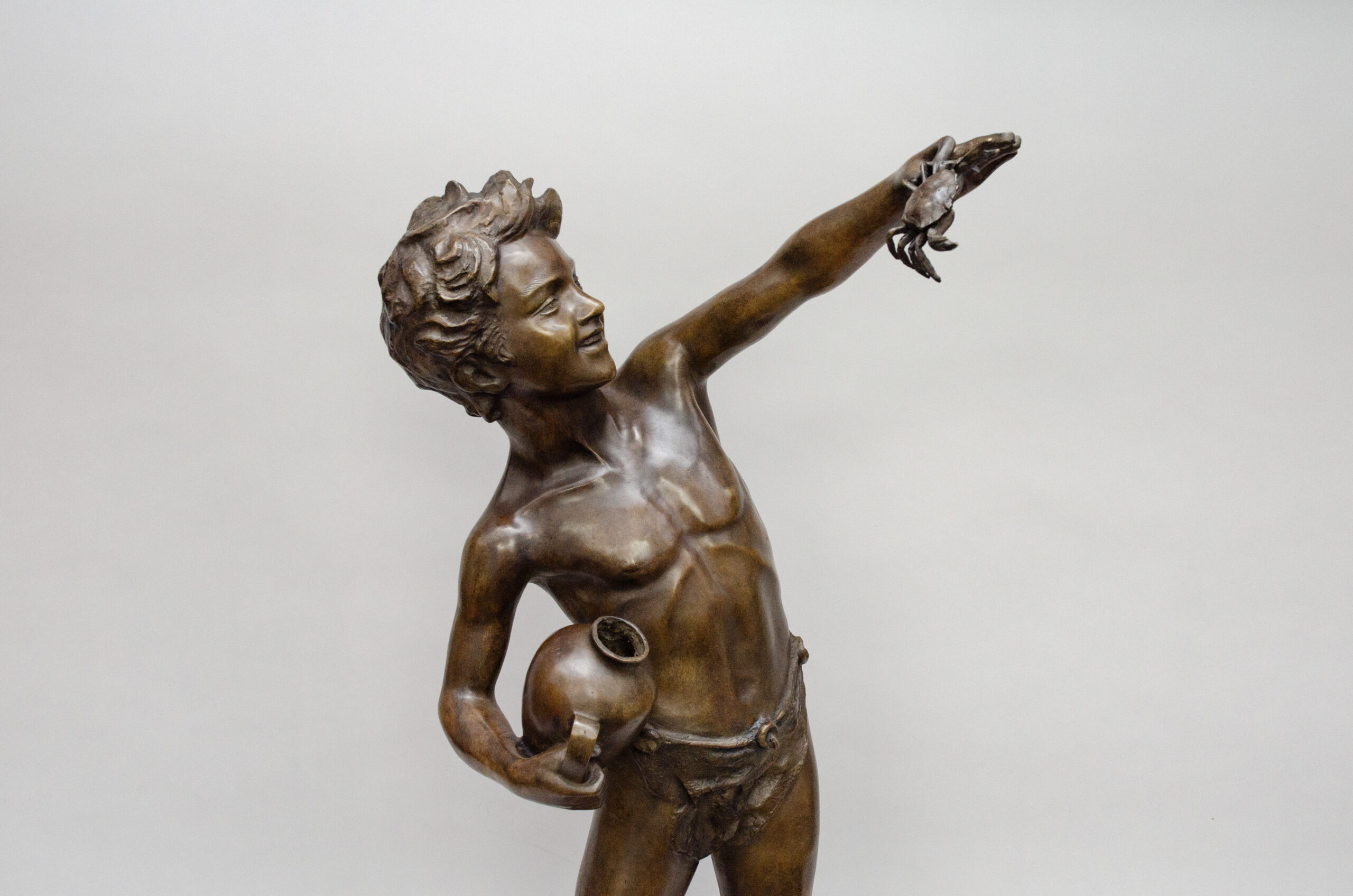
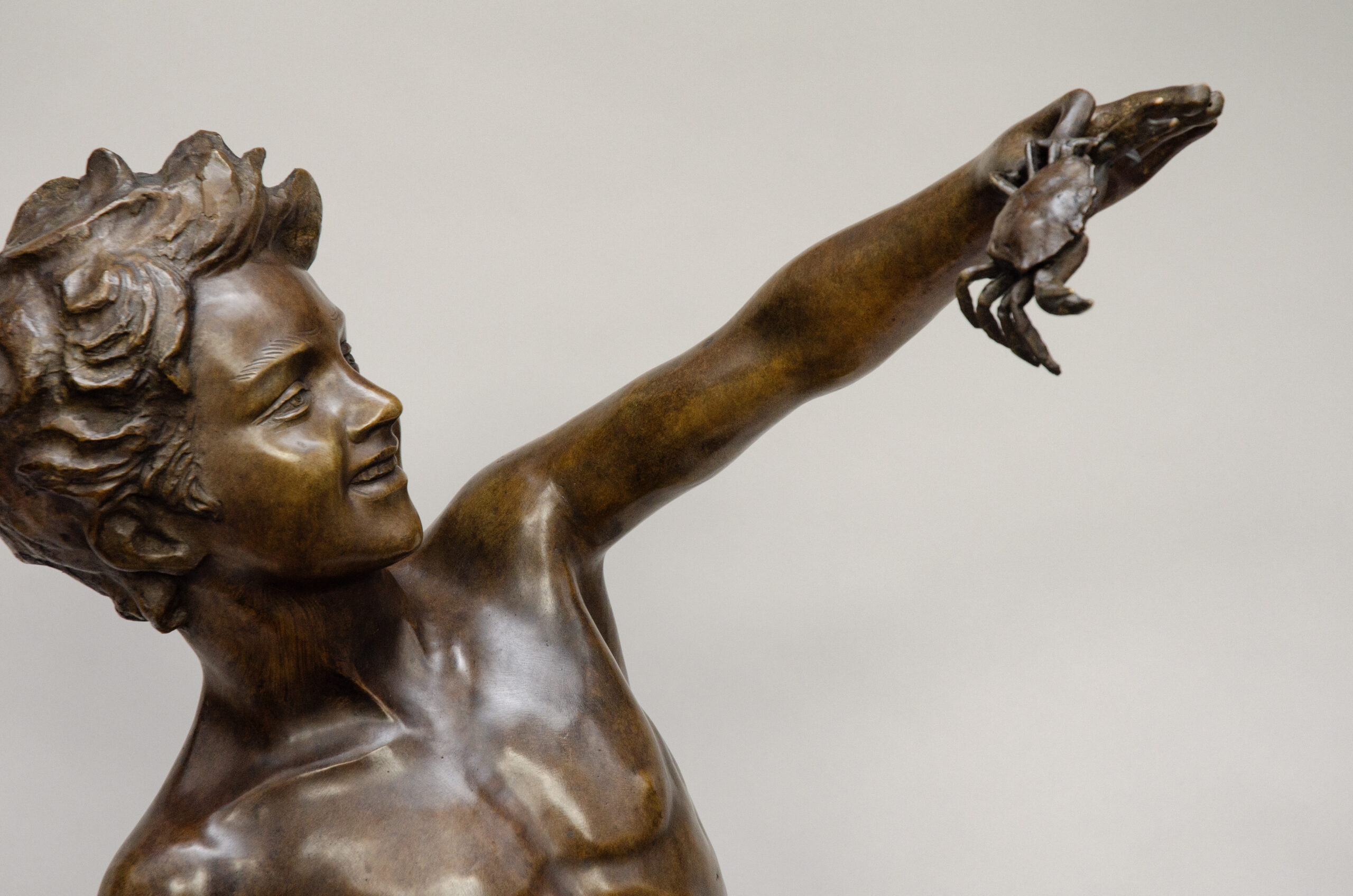
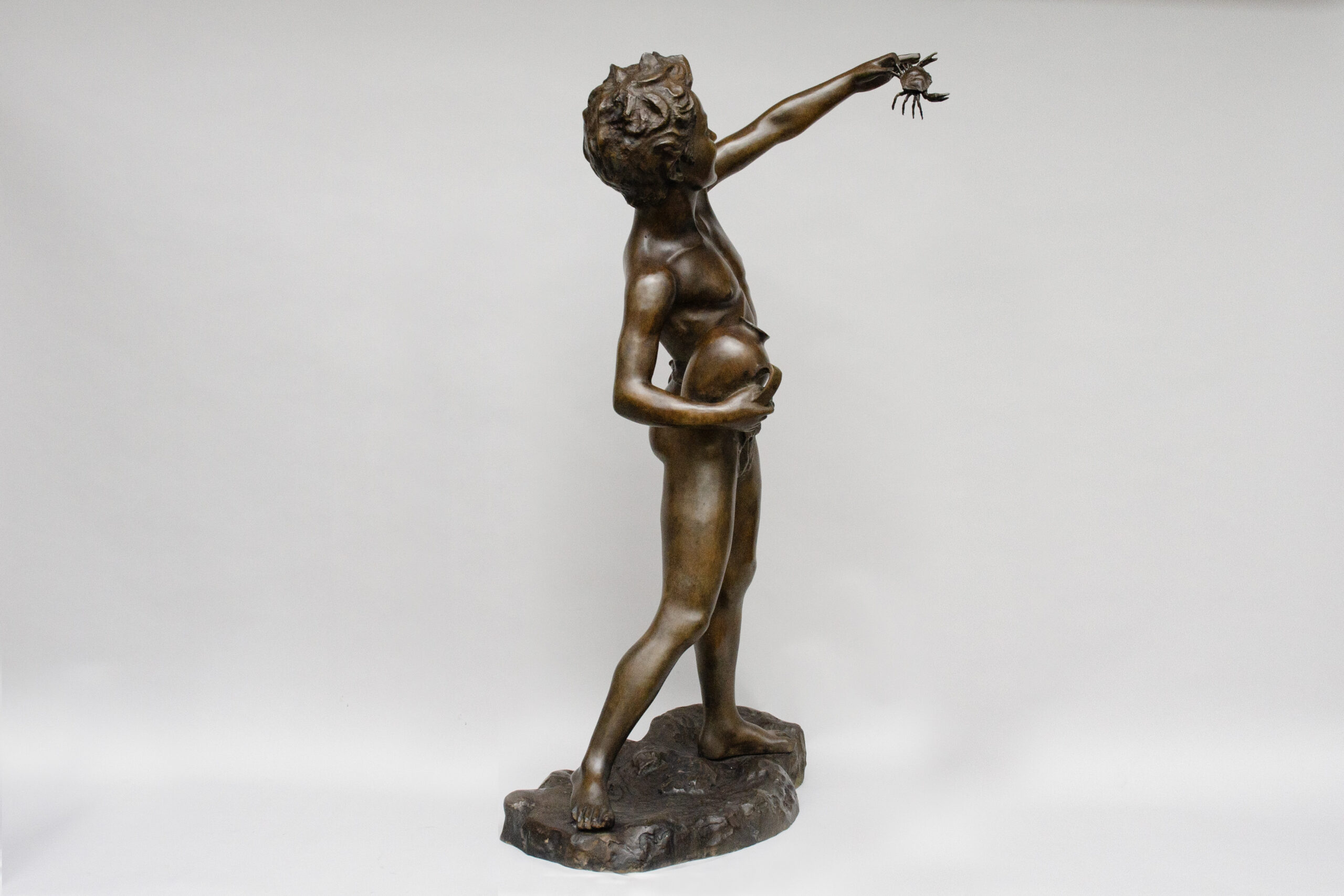
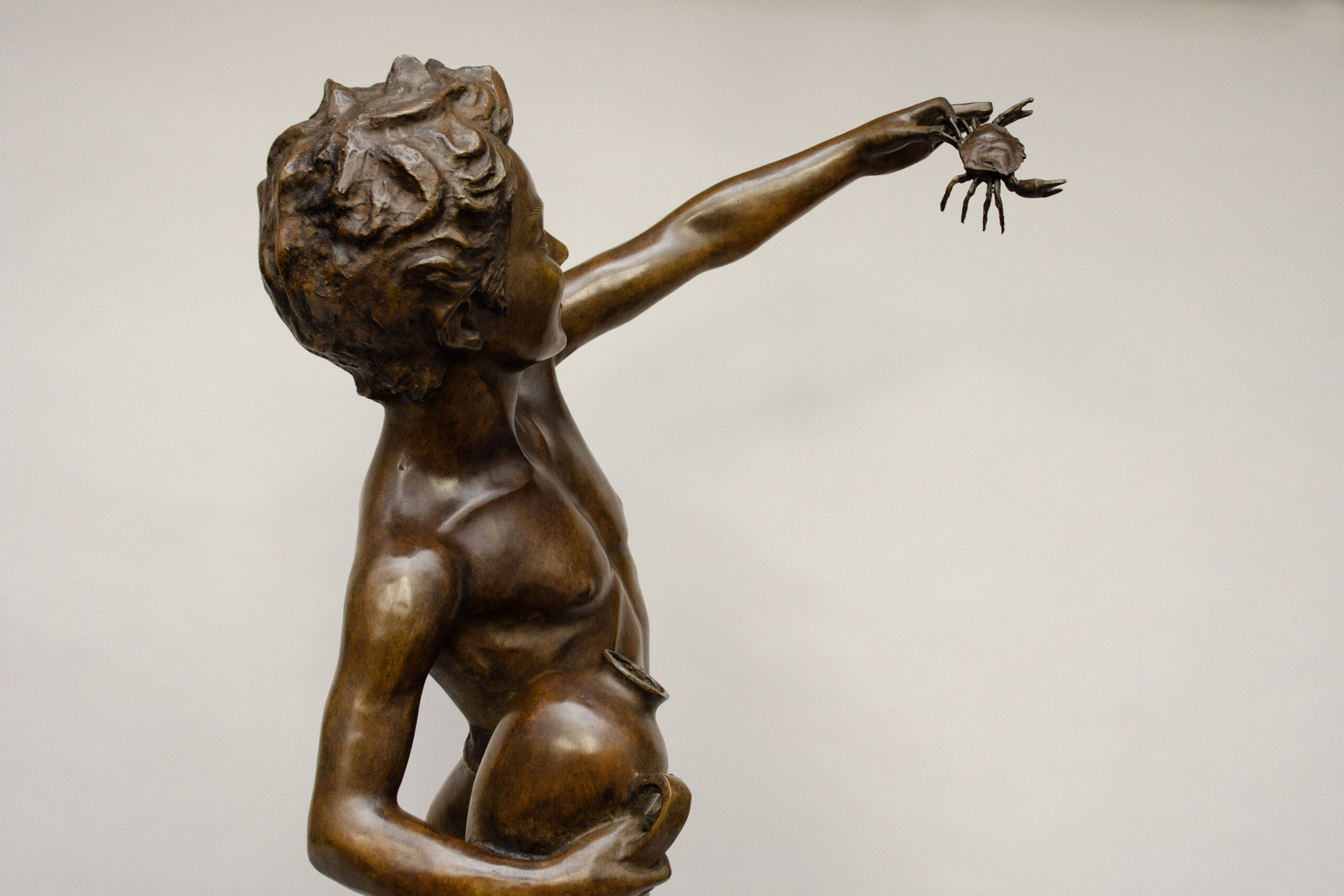
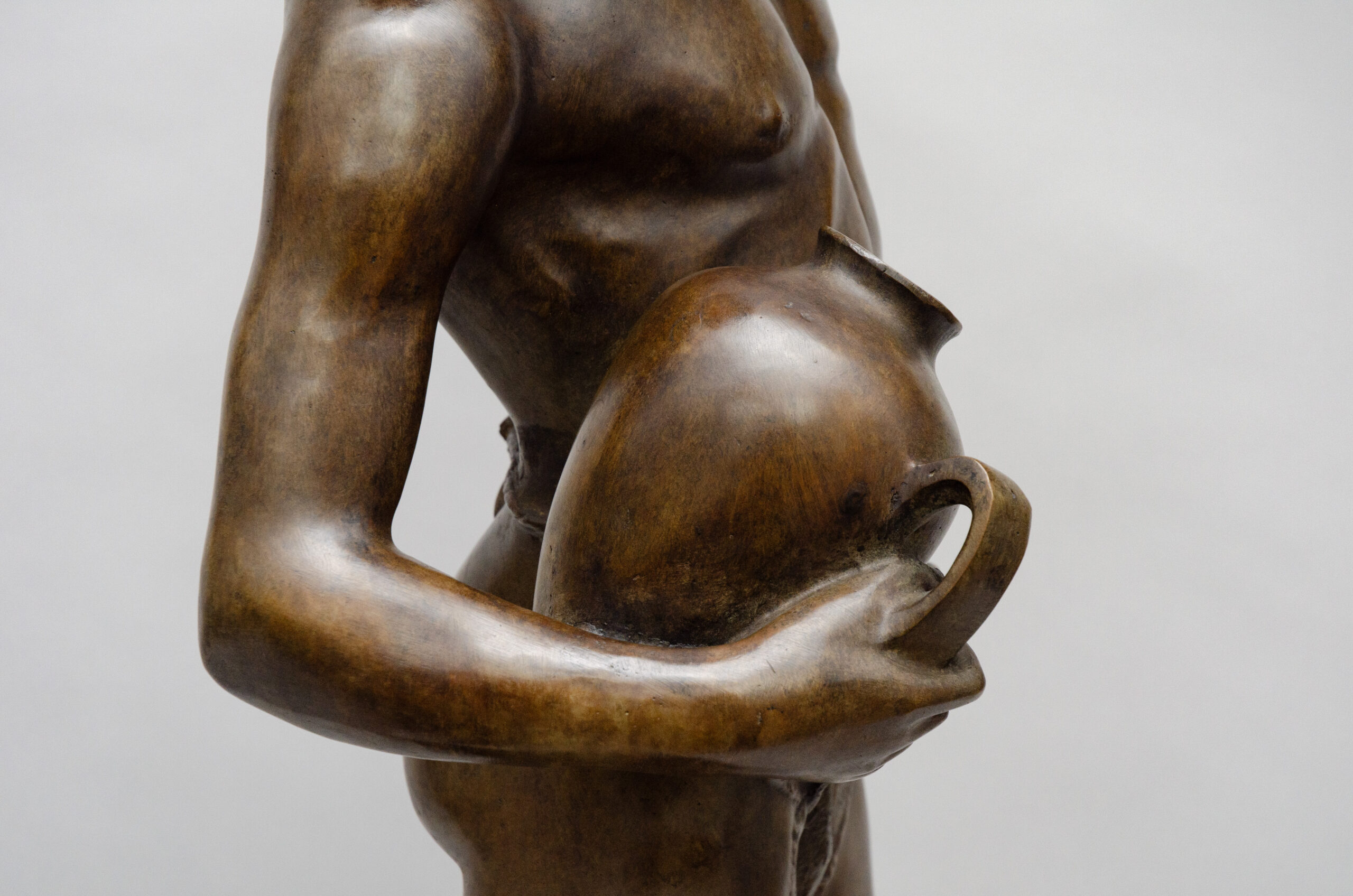
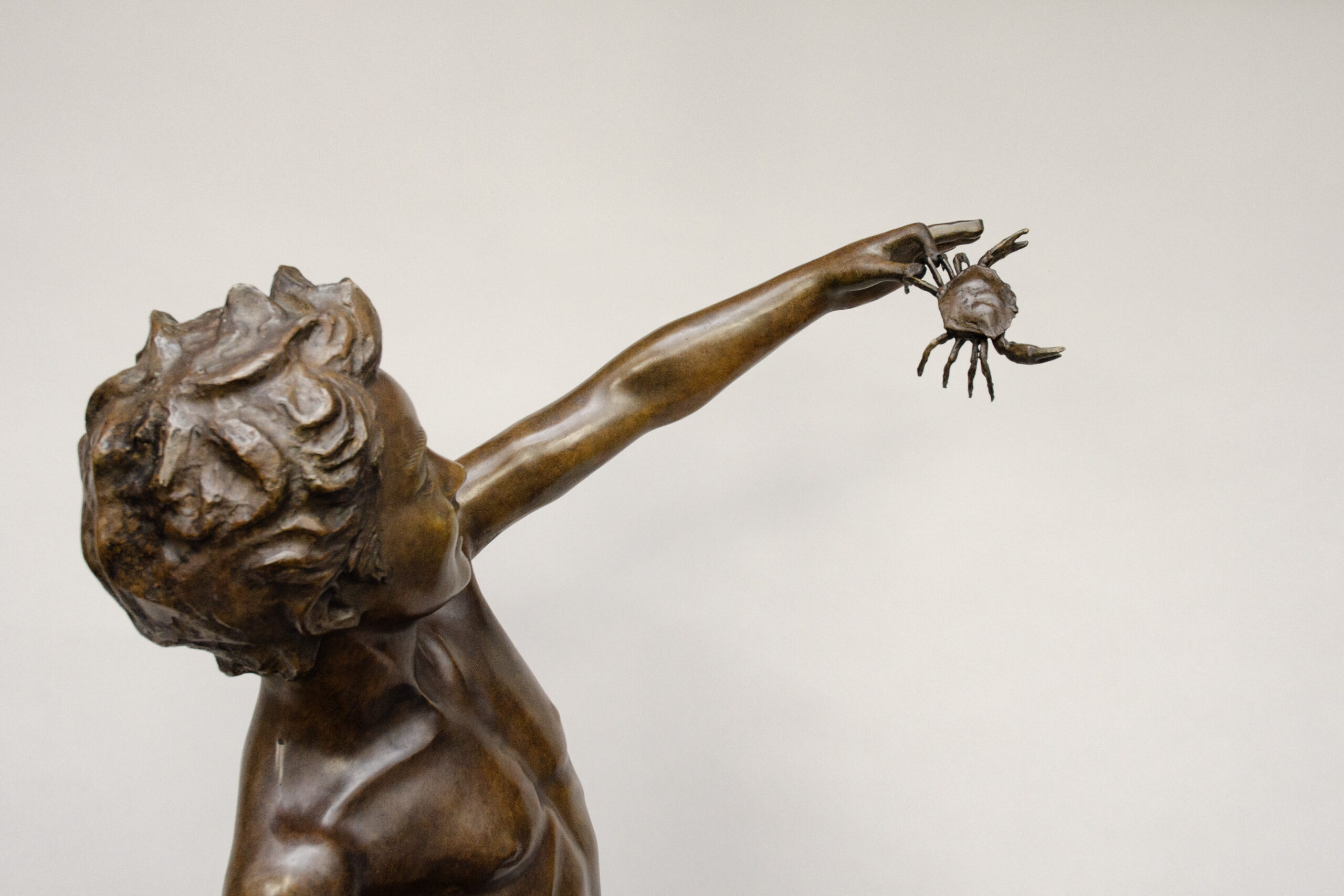
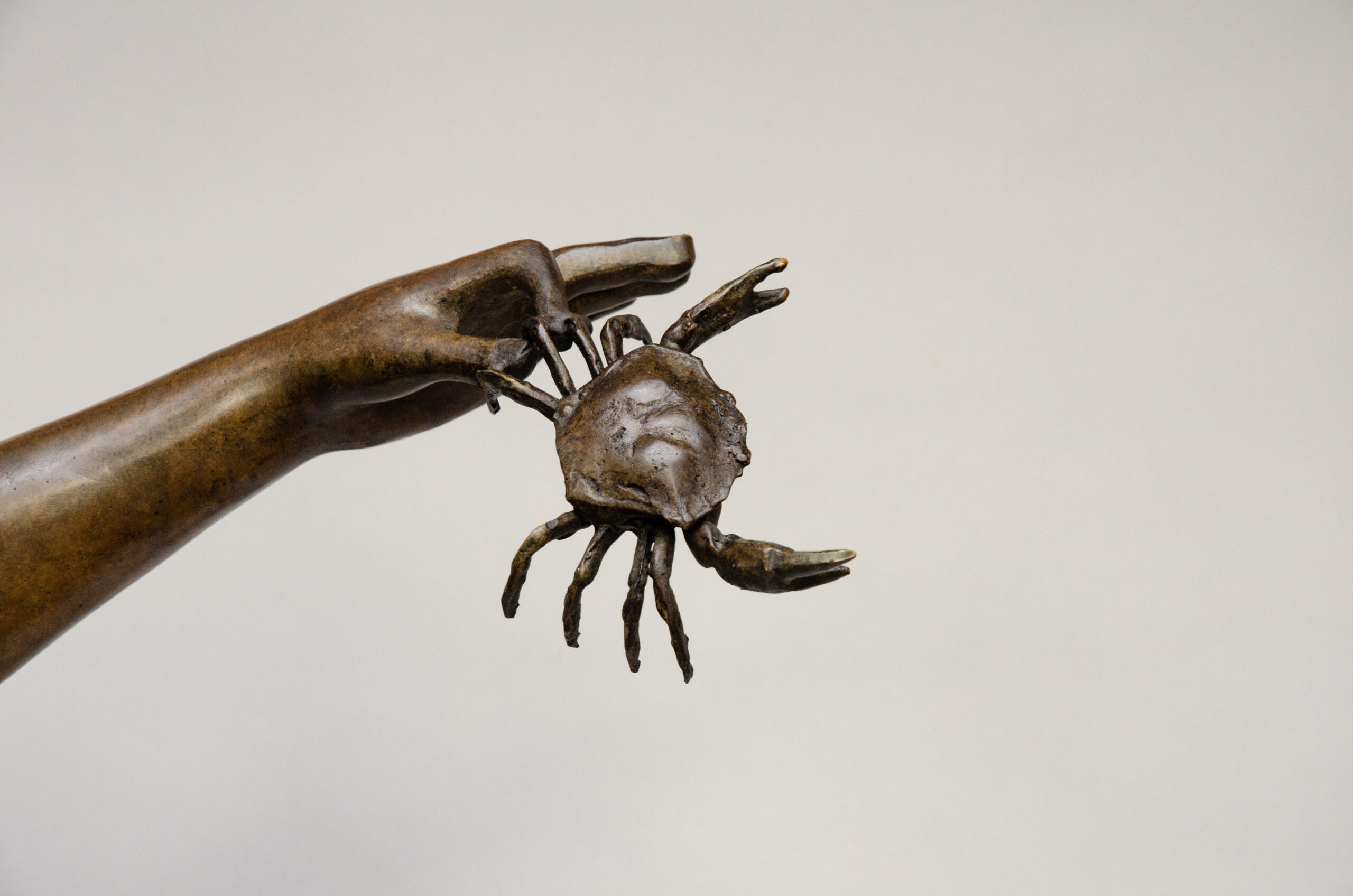
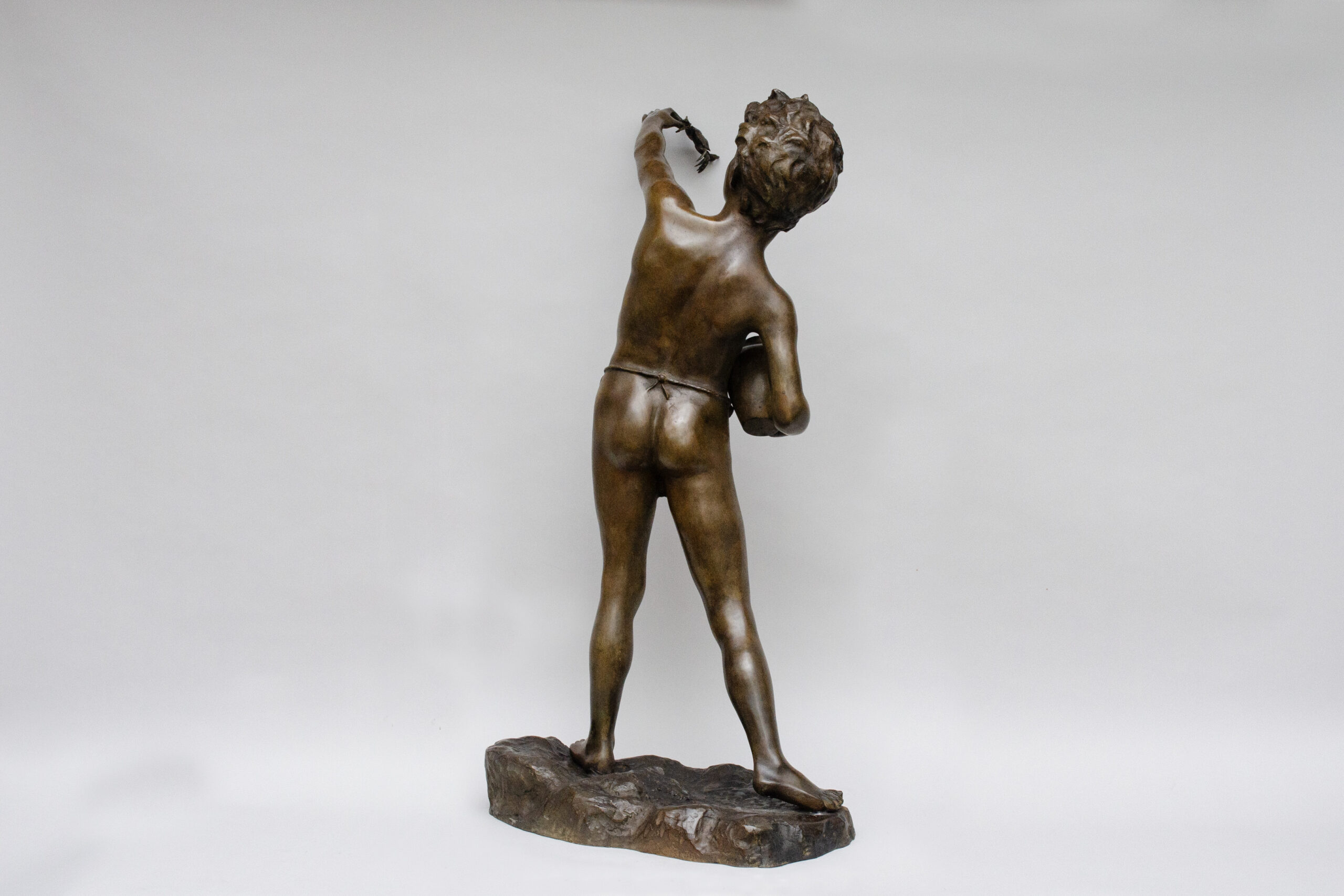
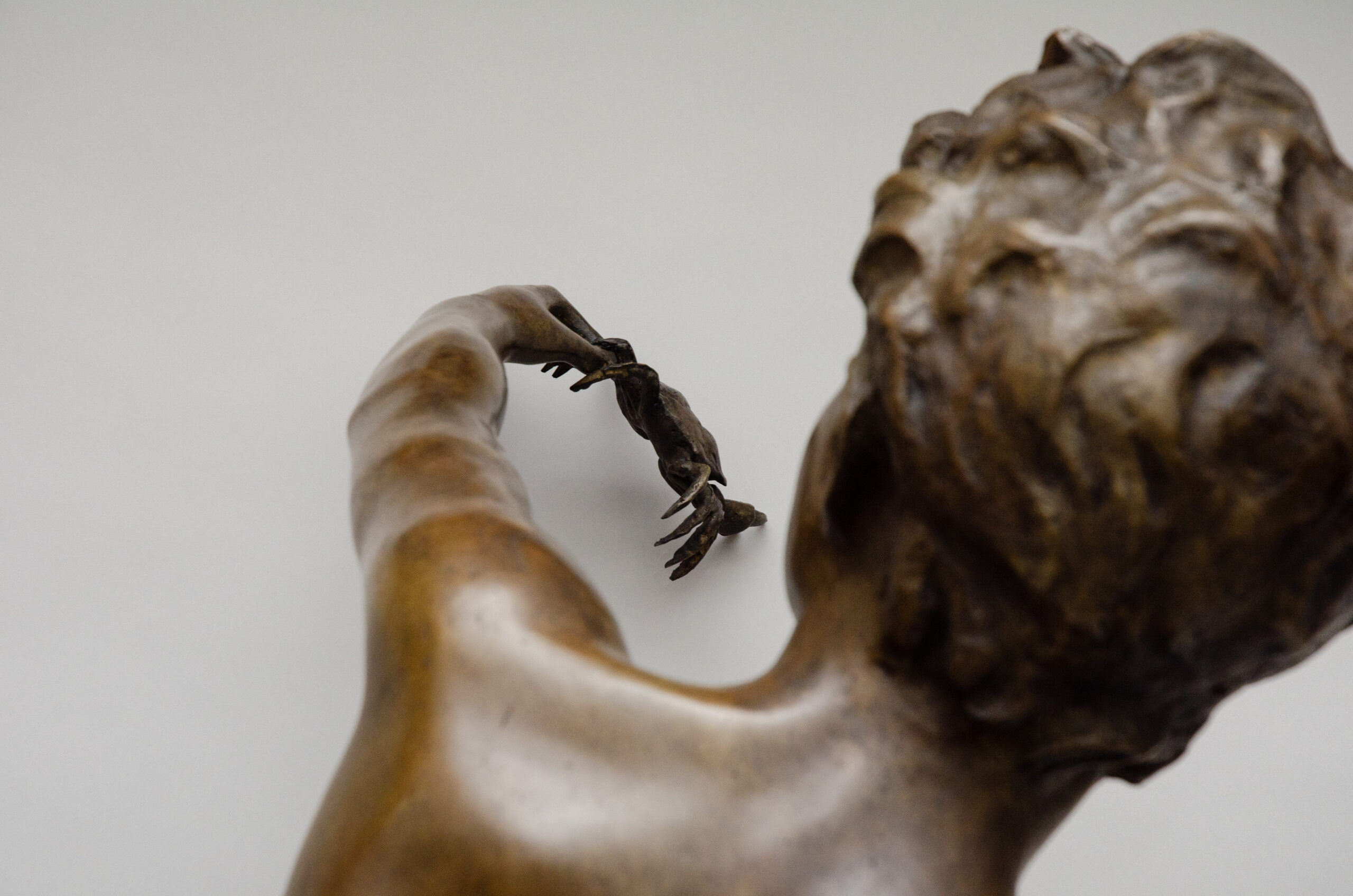
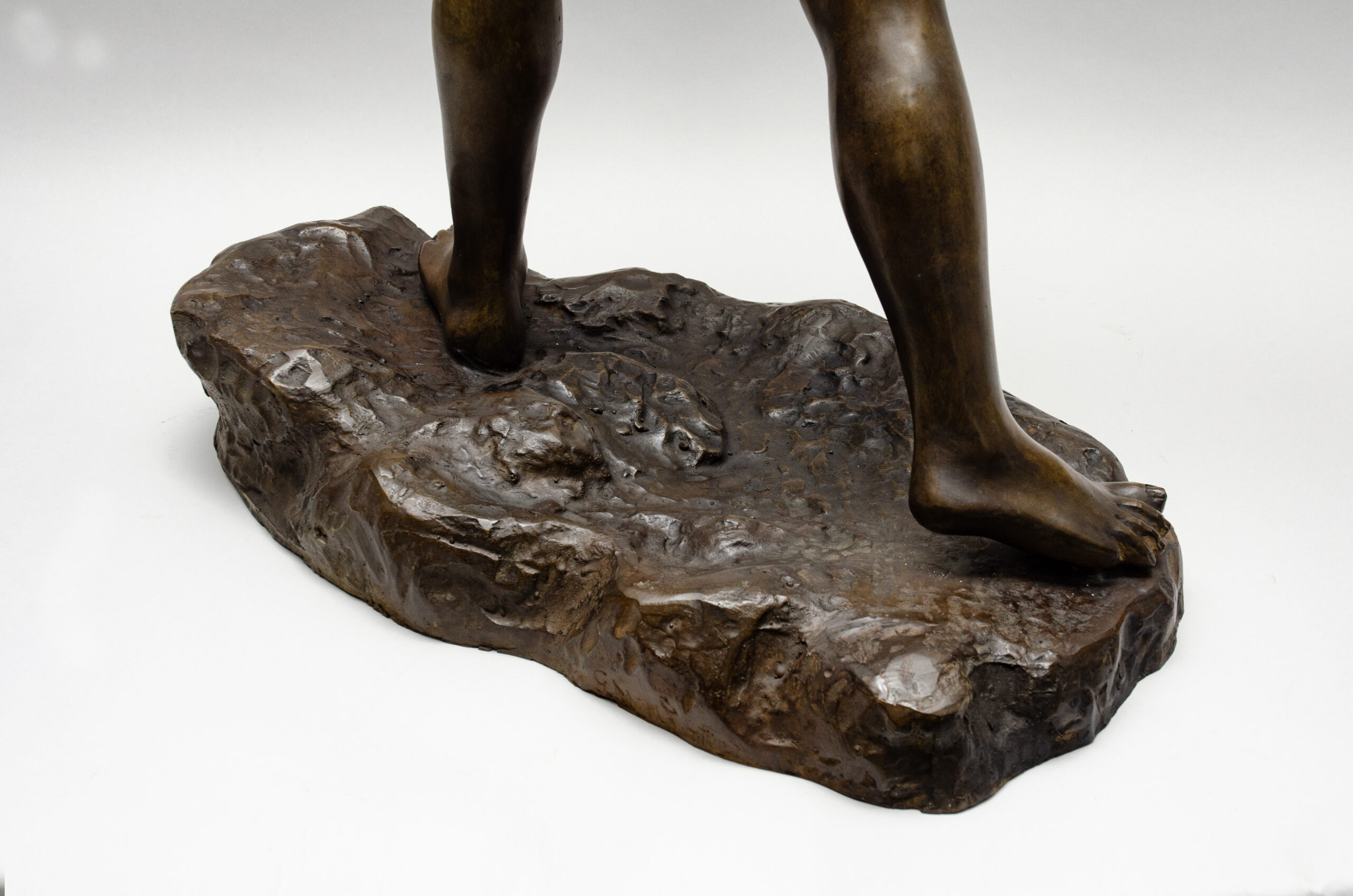
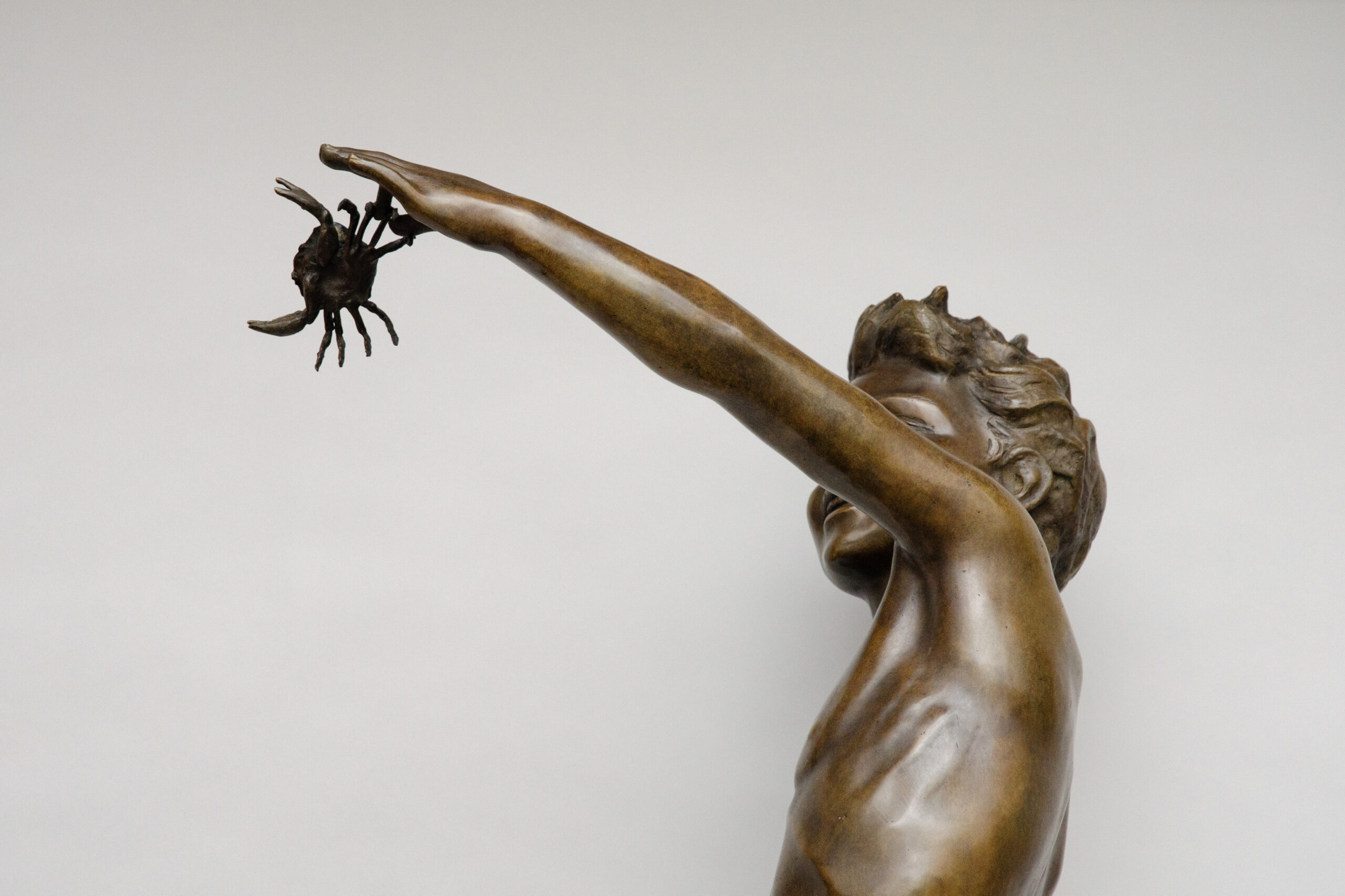
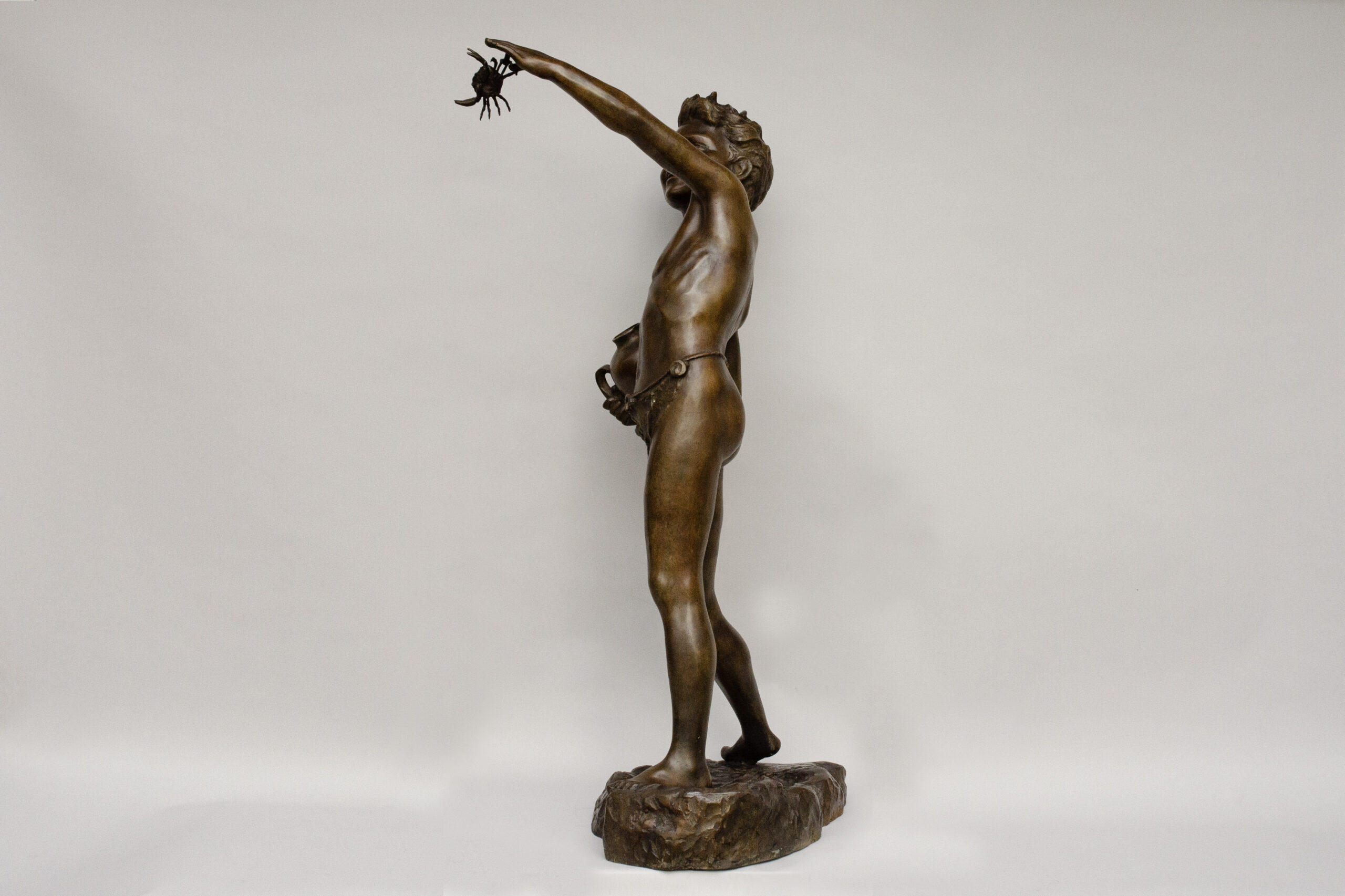
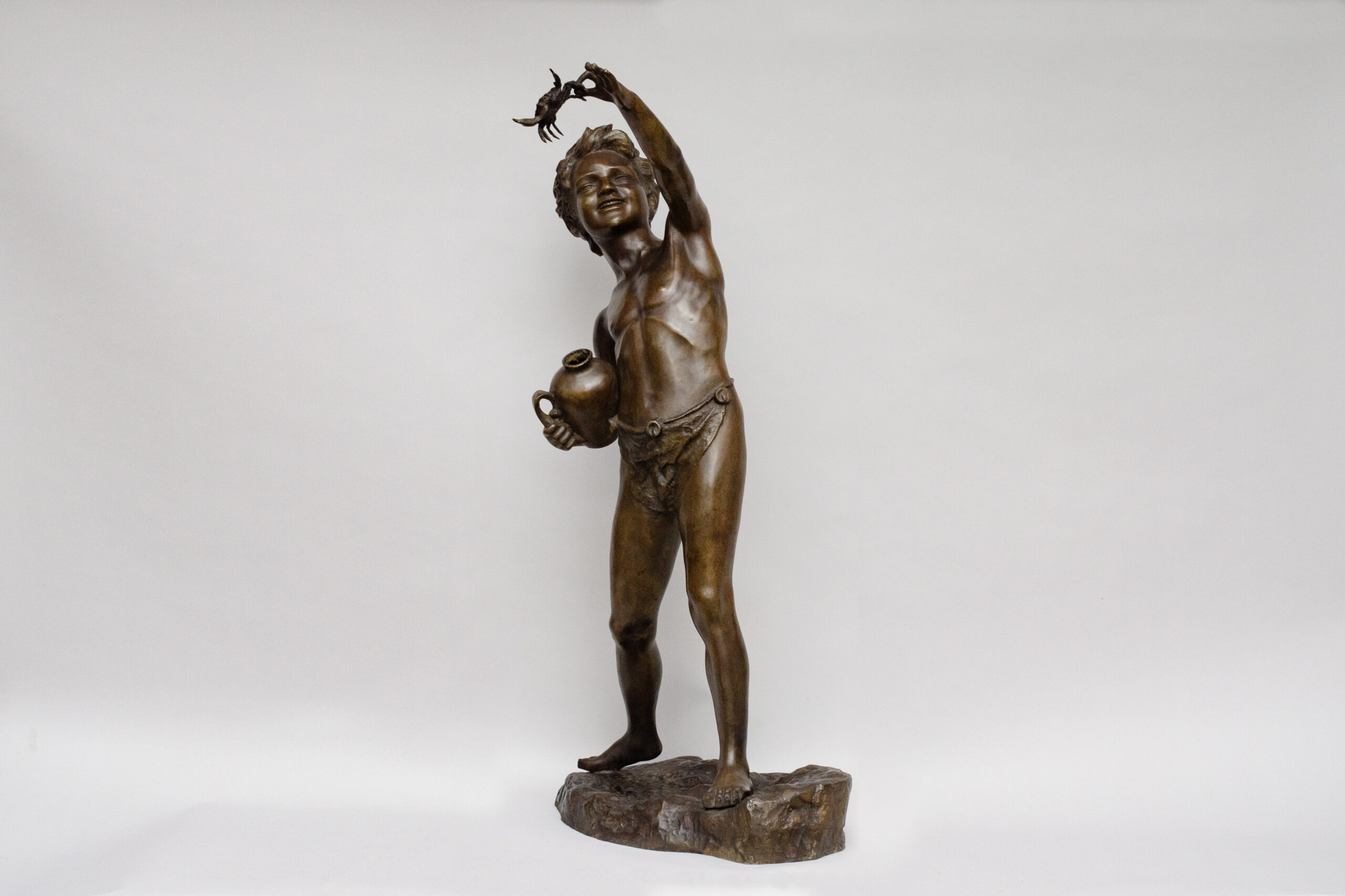
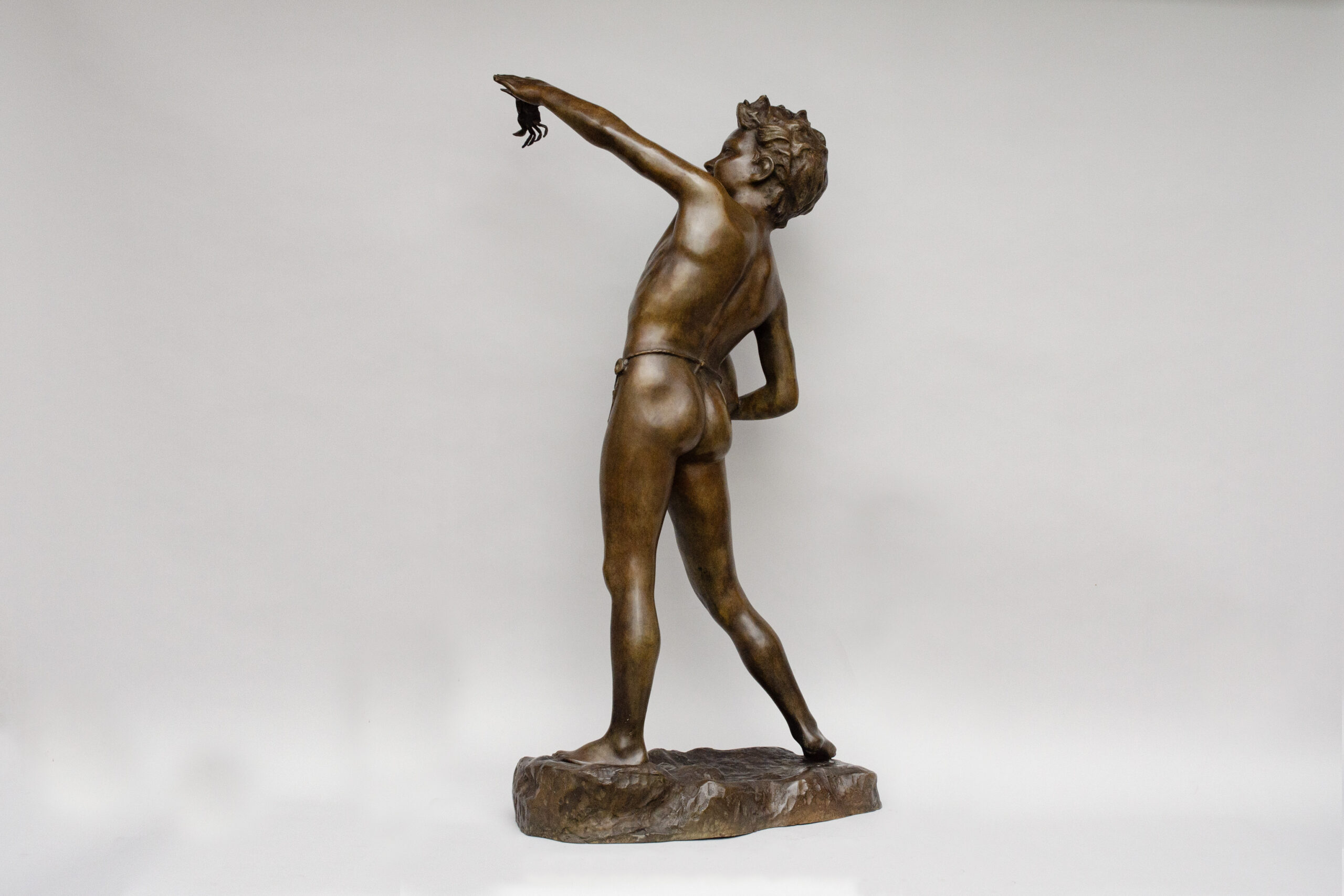
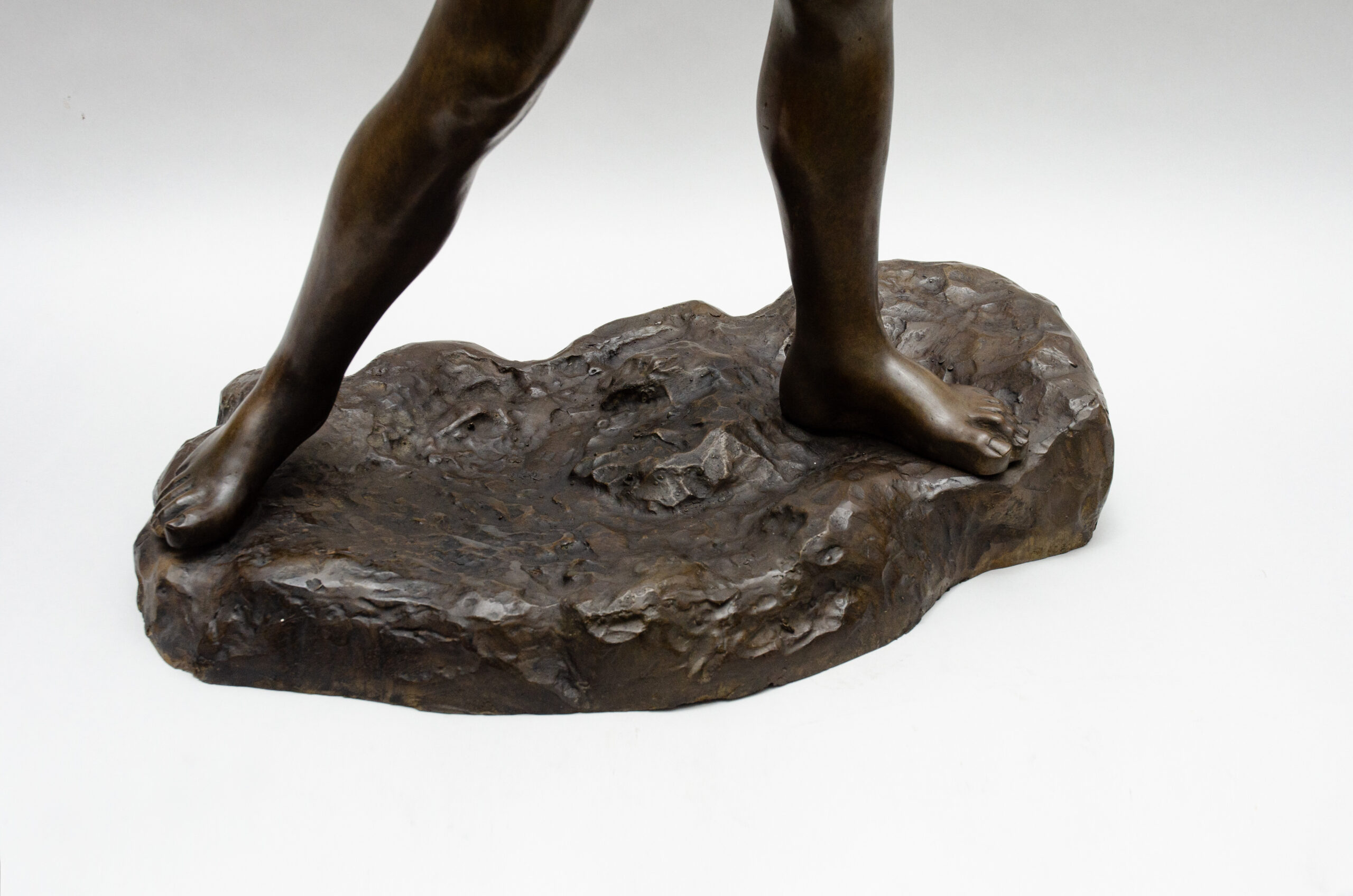
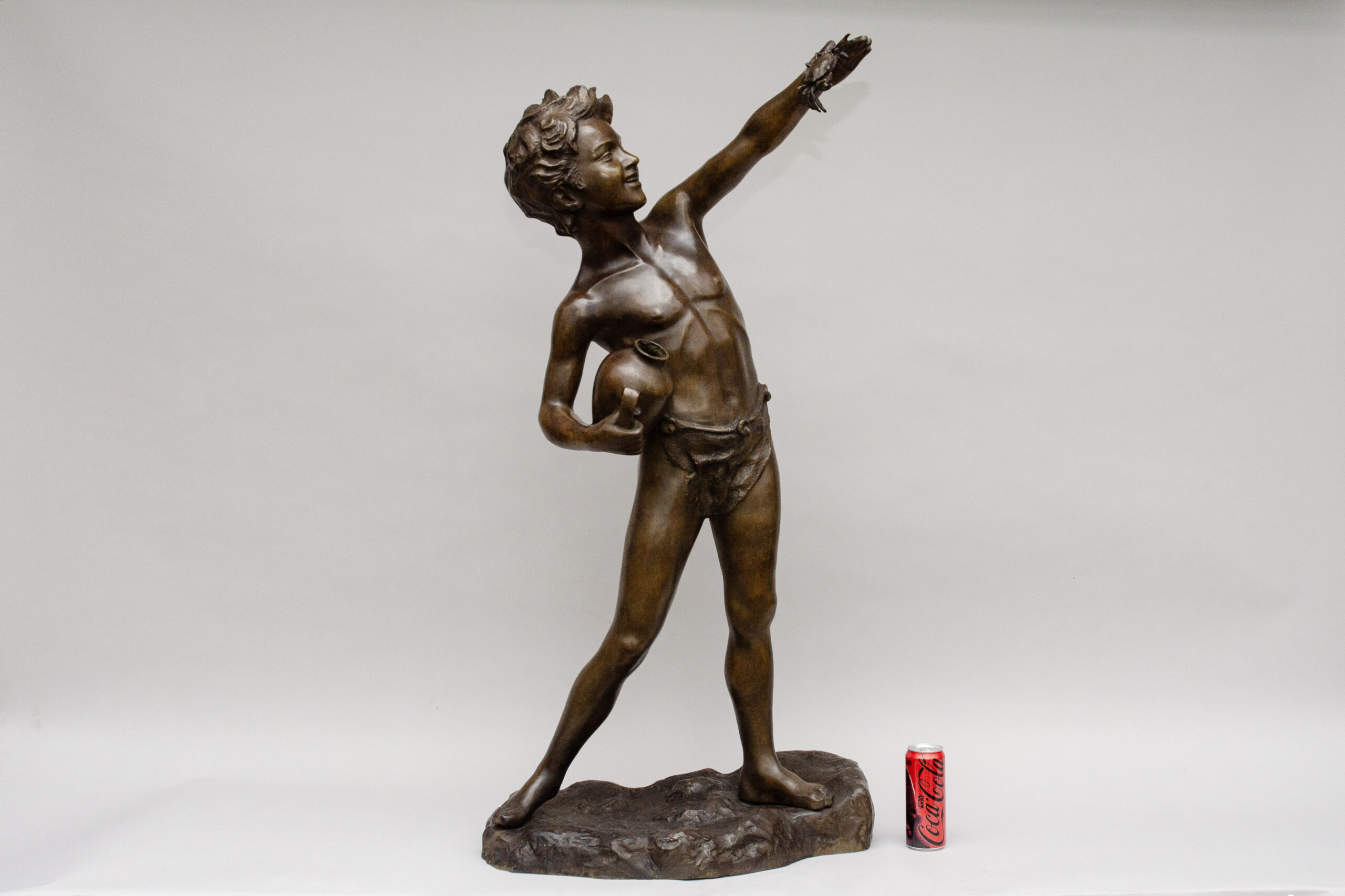
Contact usA striking large-scale bronze sculpture depicting a young Neapolitan fisherman, bare-chested, posed in a dynamic stance with a slight sway of the hips. With his right arm raised above his head, he delicately holds a crab he has just caught between his thumb and forefinger, whilst his left hand rests a terracotta amphora, presumably used for fishing, against his hip. His face, turned towards the sky and lit up with a mischievous smile, conveys all the spontaneity and joie de vivre characteristic of Neapolitan genre scenes. The statue rests on a naturalistic rocky base evoking a coastal rock, rendered with meticulous realism that contrasts with the young man’s smooth, muscular form. The brown patina, with lighter highlights on the raised areas, emphasises the lifelike rendering of the musculature and textures—the skin, the drape of the loincloth tied at the waist, and the rough surface of the rock.
Size: H 111 cm — base 60 x 37 cm
Italian school, late 19th–early 20th century
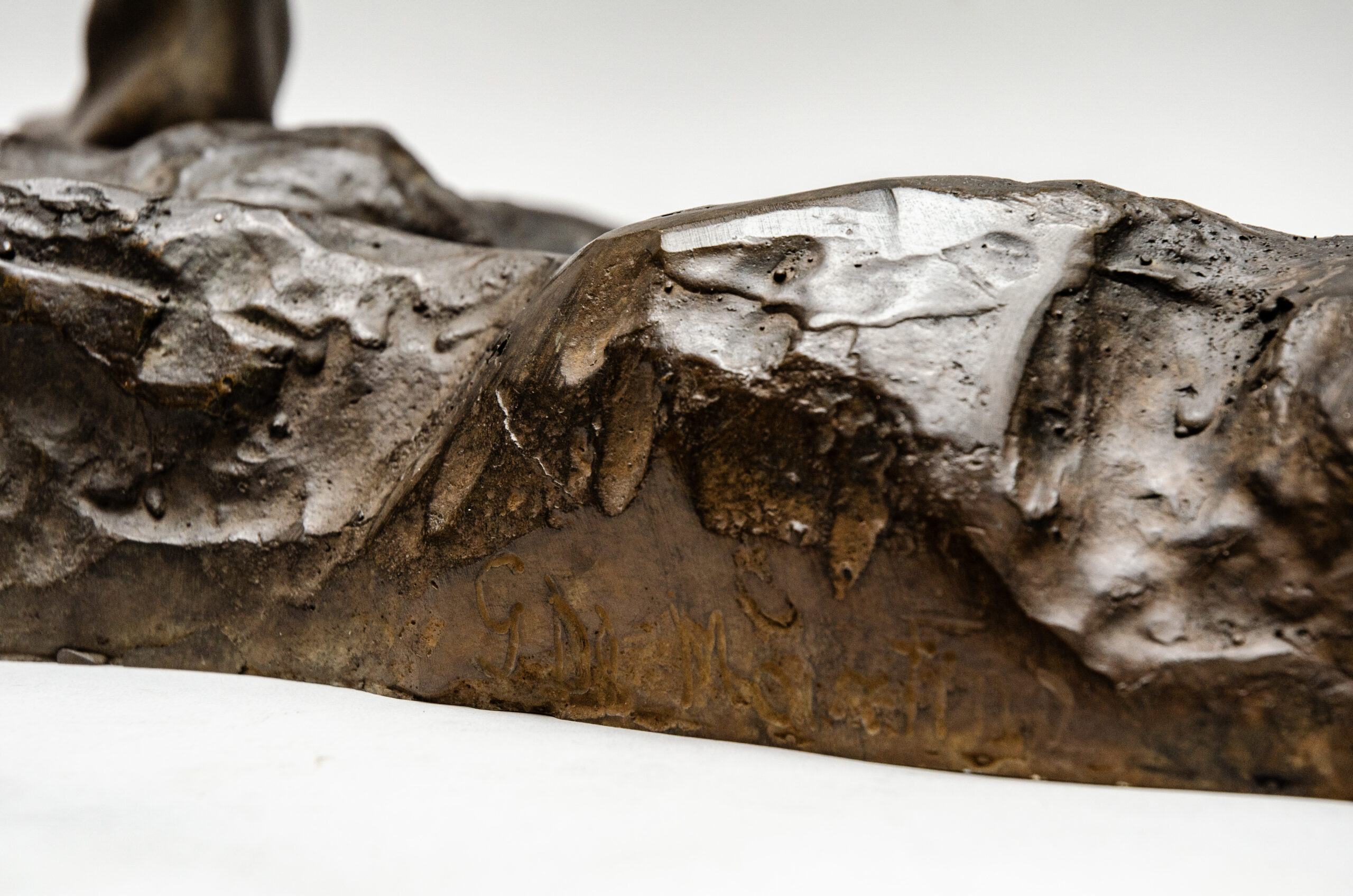
Lit: Giovanni De Martino was born in Naples in 1870 and died in the same city in 1935. He was one of the most representative sculptors of the Neapolitan bronze school of the late 19th and early 20th centuries. He specialised in depicting scenes from Neapolitan folk life – fishermen, young gypsies, ‘scugnizzi’ (street urchins) – rendered with a realism imbued with tenderness and picturesque charm, in the tradition of Italian Verismo.
Also active in Paris, where his works met with great success amongst an international clientele captivated by the southern charm of his compositions, De Martino particularly excelled at capturing the fleeting moment and natural movement—qualities perfectly illustrated by this large bronze sculpture of a crab fisherman. His bronzes, produced in several sizes, are now held in numerous private and institutional collections, and remain highly sought-after on the art market for the quality of their casting and the expressiveness of their subjects.