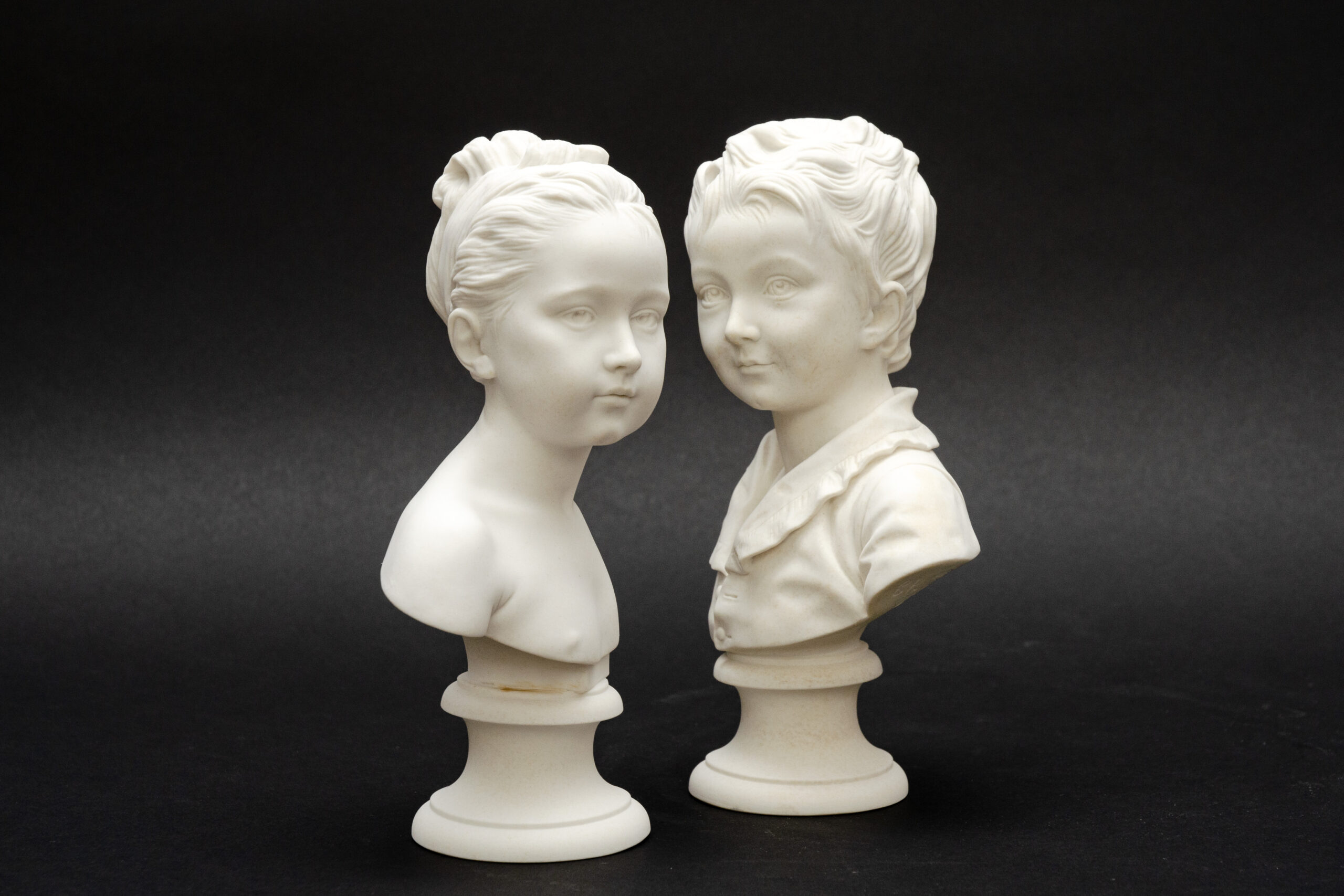
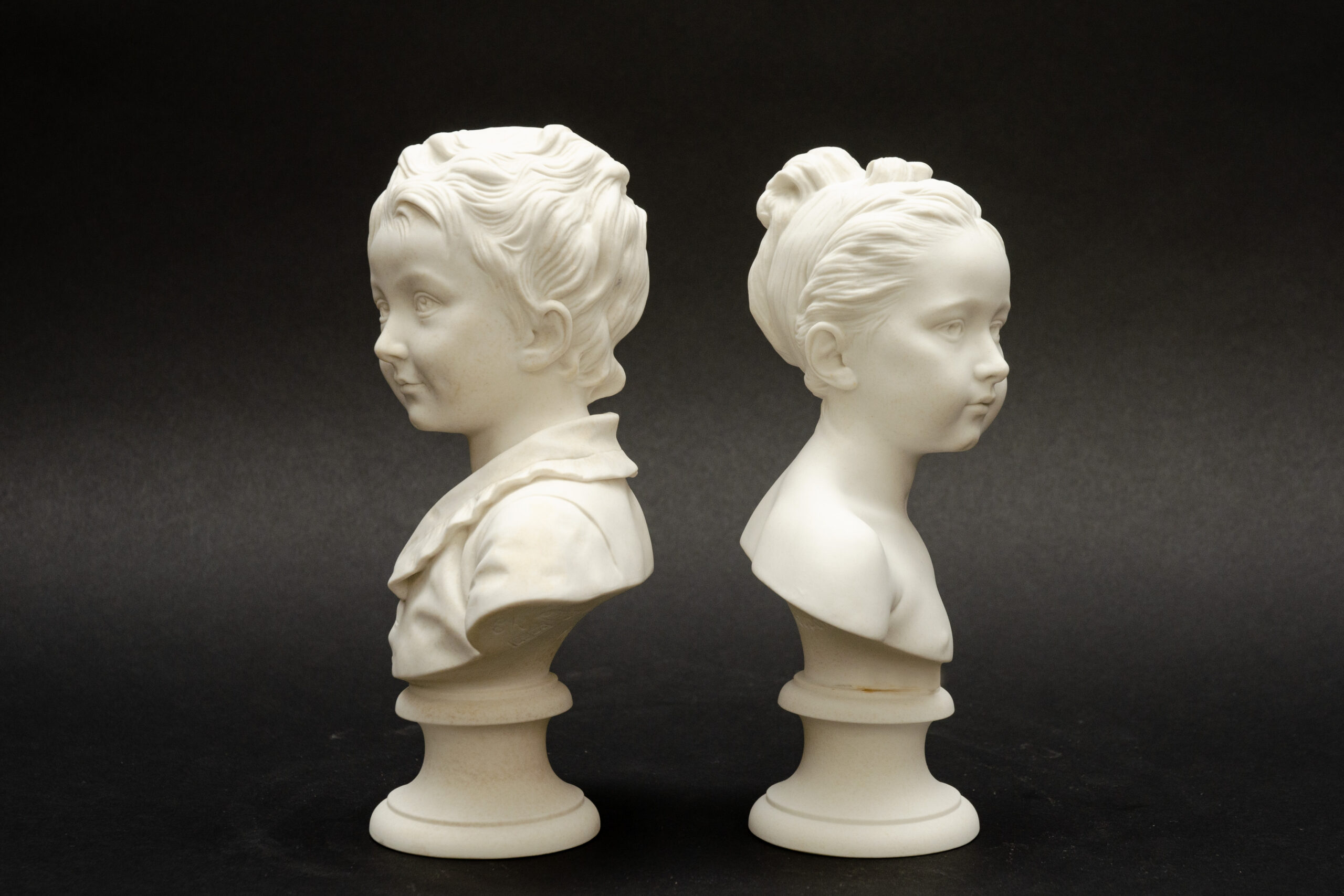
Pair of children’s busts, ‘Alexandre and Louise Brongniart’, after Houdon, Sèvres biscuit porcelain
Price on request
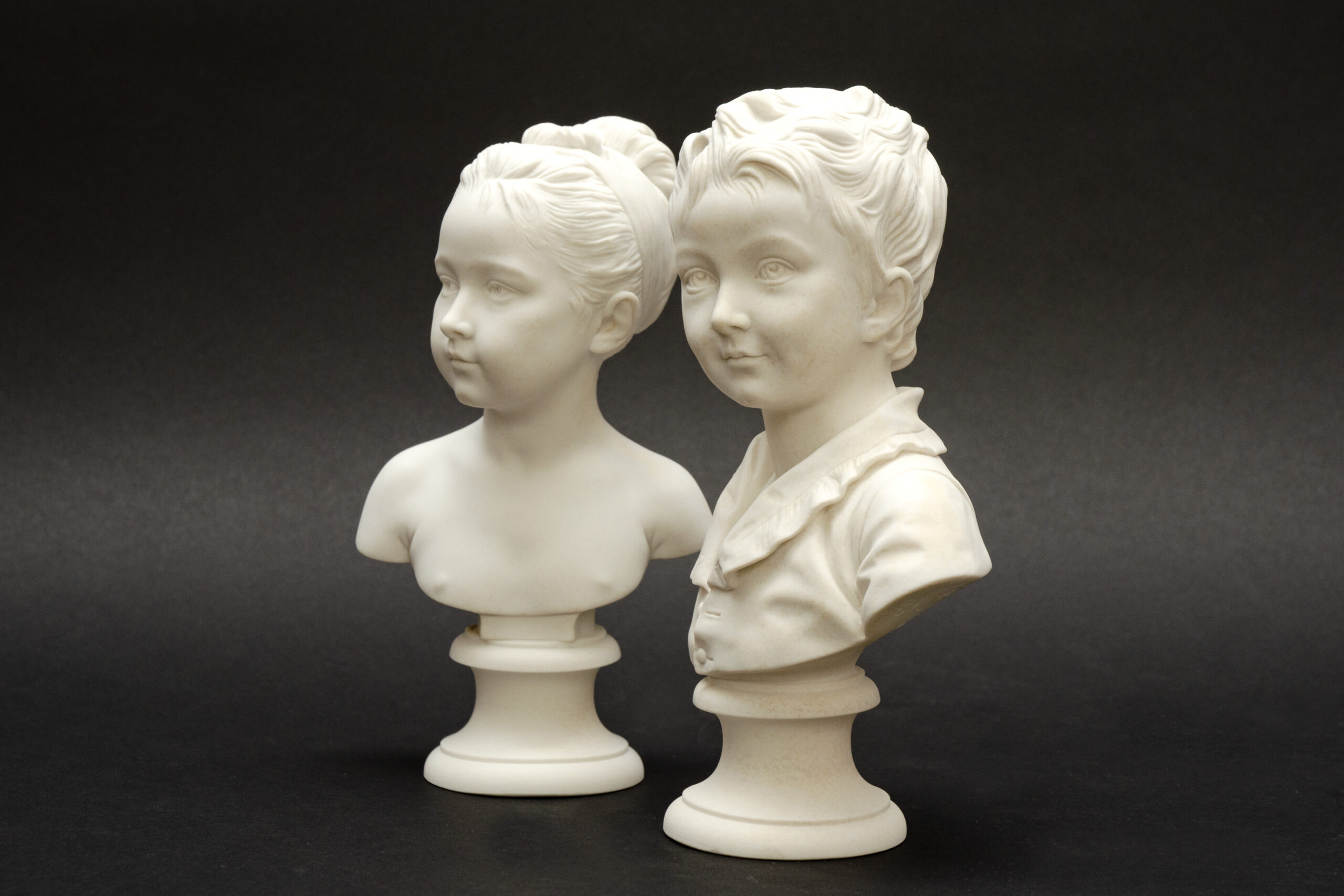
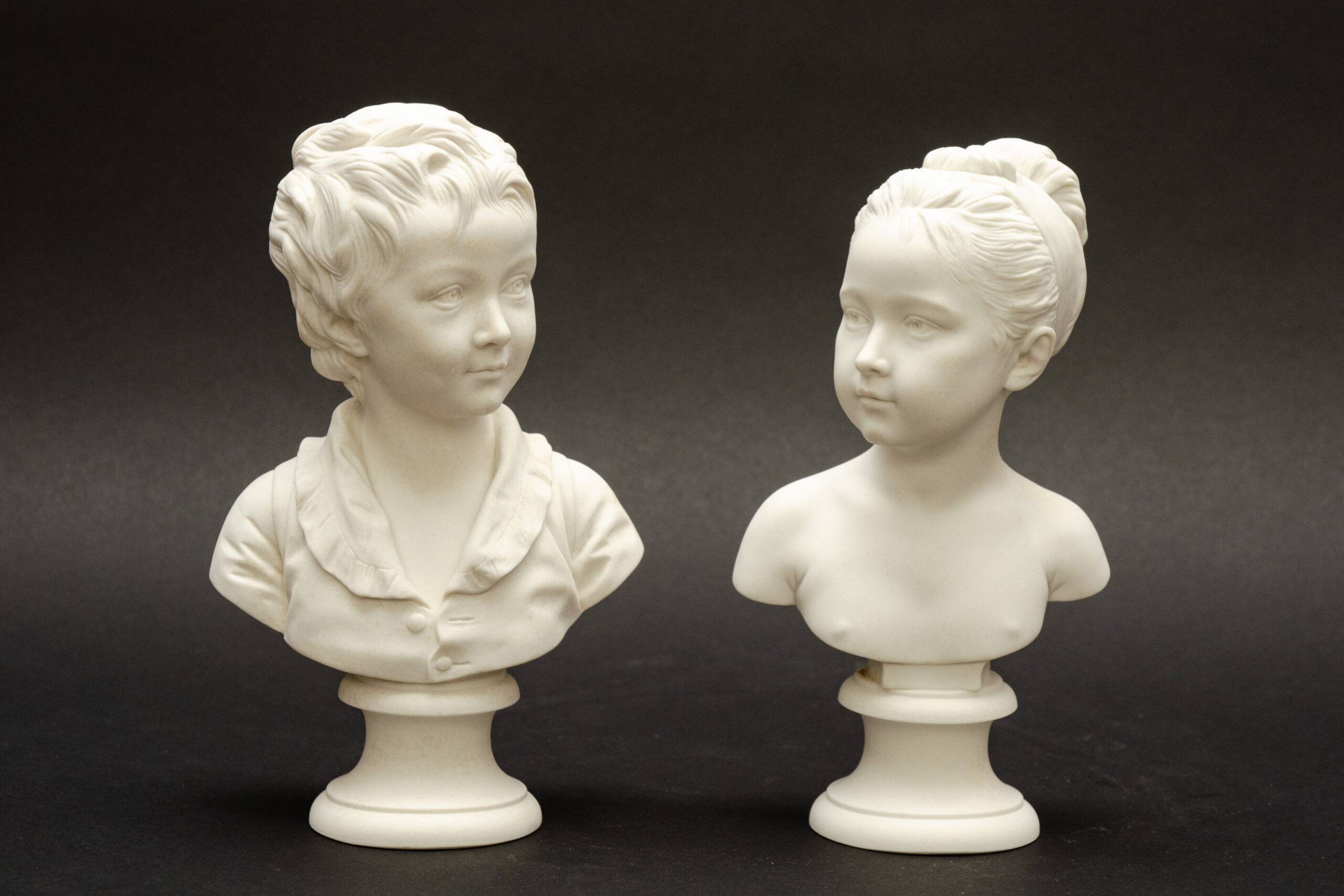
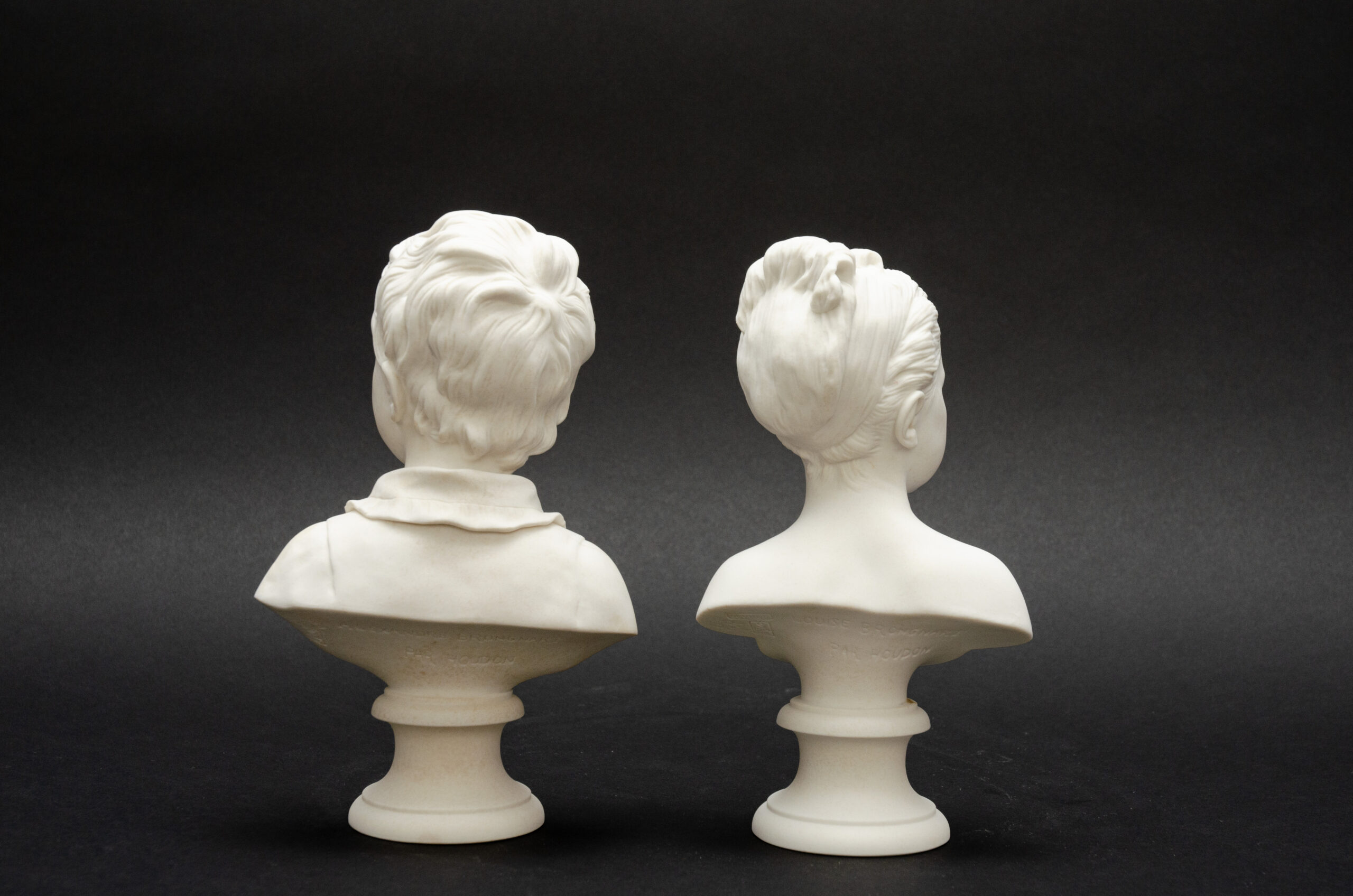
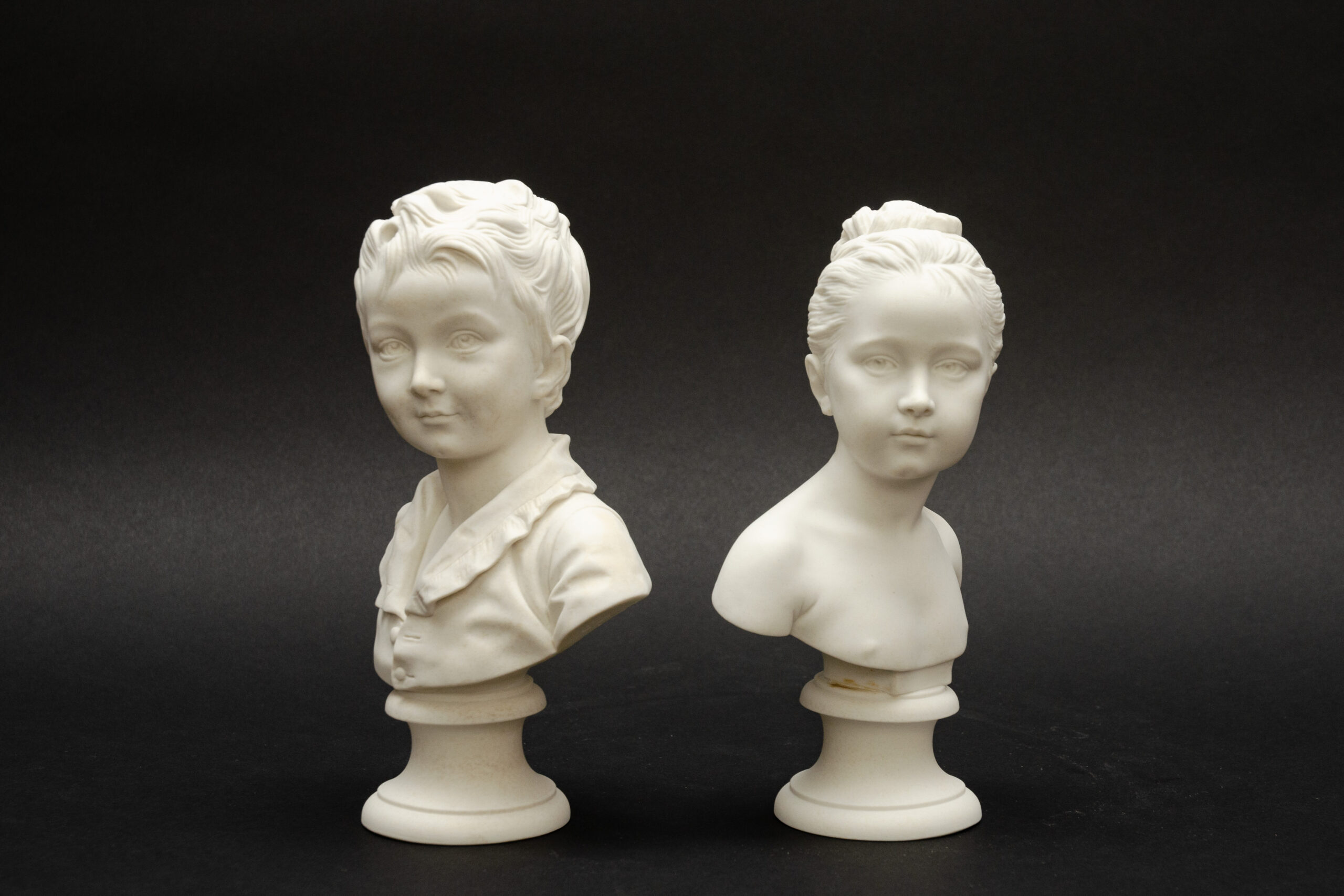
Contact usA charming pair of children’s busts in hard biscuit porcelain, modelled on Jean-Antoine Houdon’s famous 1777 sculptures. The boy, with tousled hair, wears a buttoned jacket with a wide collar. The girl, bare-chested, has her hair drawn up into a bun held in place by a ribbon. Their gazes meet, lending the pair a great deal of life. The material and modelling are exquisite: the unglazed biscuit porcelain has the softness of white marble. Each bust rests on a turned pedestal made from the same material.
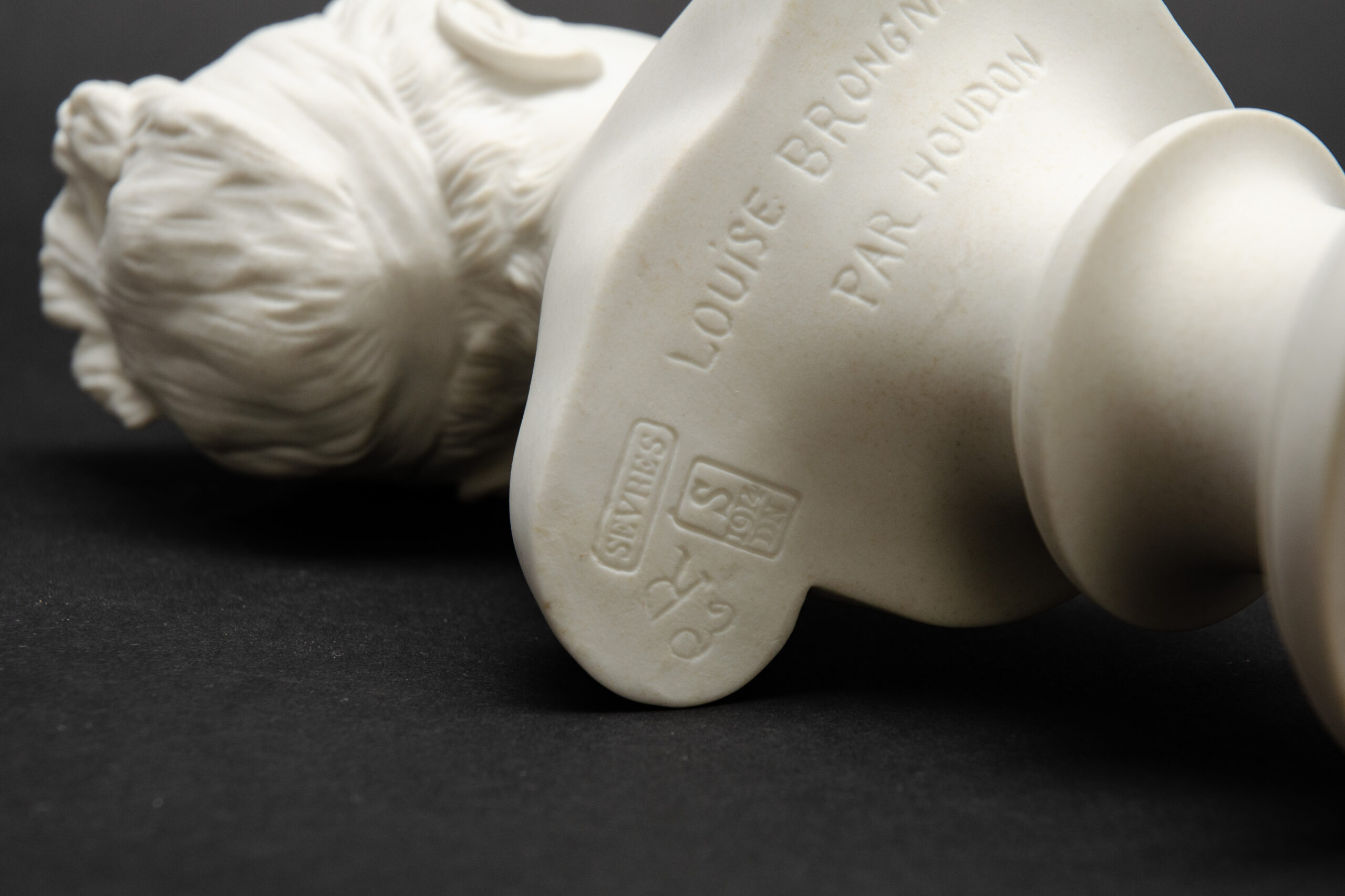
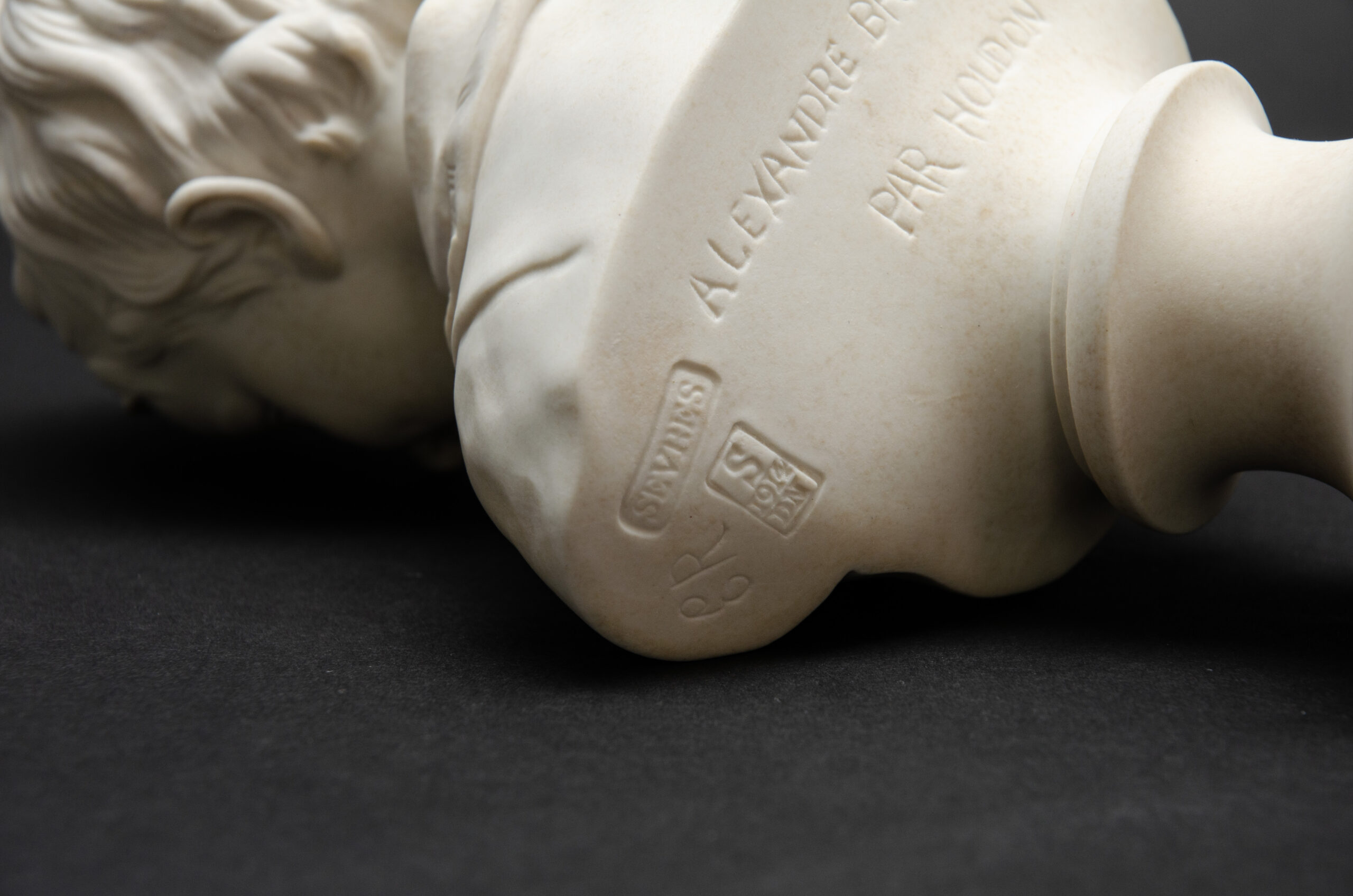
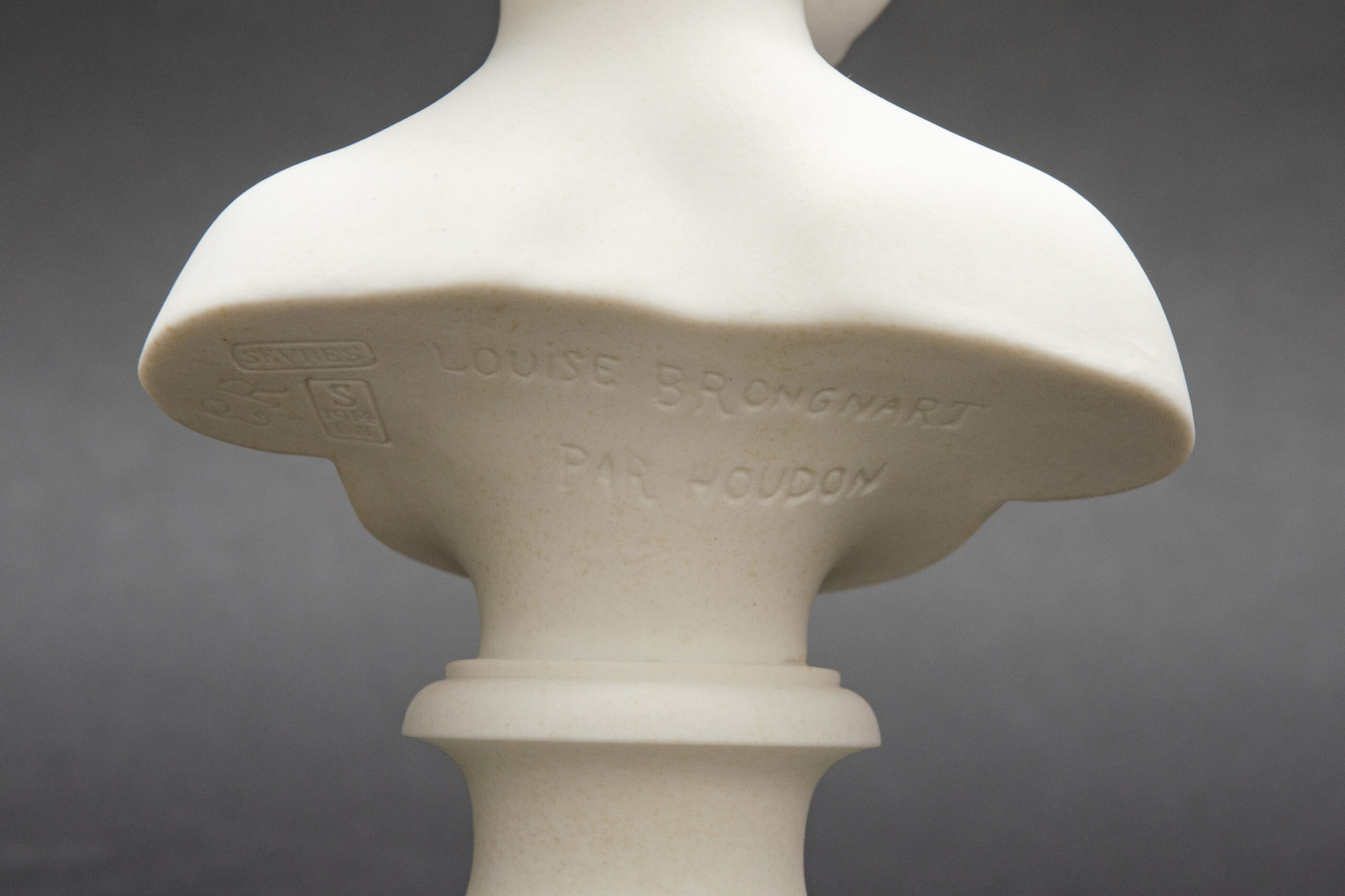
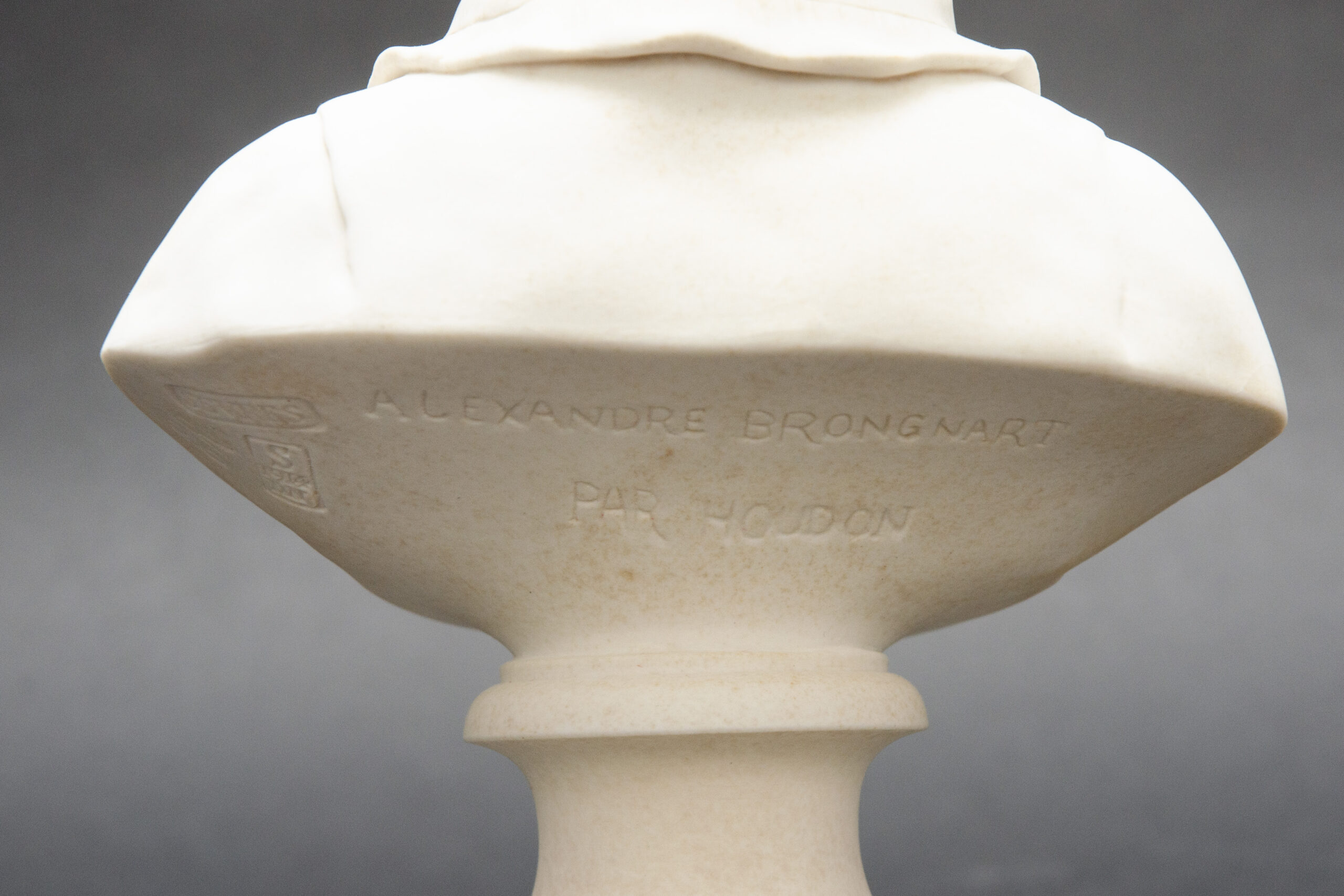
Engraved beneath the base: ‘ALEXANDRE BRONGNART PAR HOUDON’ and ‘LOUISE BRONGNART PAR HOUDON’, a ‘SÈVRES’ cartouche, the National Manufactory’s ‘S’ mark dated 1914, and a moulding or distributor’s mark.
Sizes: – Alexandre: H 21 cm – W 13 cm – pedestal Ø 6.5 cm / Louise: H 20 cm – W 11 cm – pedestal Ø 6.5 cm
Sèvres National Porcelain Manufactory, after Jean-Antoine Houdon (1741–1828), dated 1914.
Background: Jean-Antoine Houdon (1741–1828), born in Versailles in 1741 and died in Paris in 1828, was the greatest French portrait sculptor of the 18th century. Winner of the Prix de Rome in 1761, he lived in Rome from 1764 to 1768, where he created his *Saint Bruno* for the church of Santa Maria degli Angeli. Admitted to the Royal Academy in 1777, he became the portraitist of the Enlightenment. He sculpted Voltaire (including the famous *Seated Voltaire*, 1778), Diderot, Rousseau, Buffon, Gluck, Molière, Franklin and Jefferson. He travelled to the United States in 1785 to model Washington, whose statue is housed in the Capitol in Richmond (Virginia). His sensitivity to the inner lives of his subjects is particularly evident in his busts of children. His works have been widely reproduced, notably by the Sèvres Porcelain Manufactory, in biscuit porcelain.
Who are the Brongniart children?
The two children are Alexandre Brongniart (1770–1847) and his sister Louise Brongniart, born a few years apart. Houdon sculpted them in 1777, when they were around seven and five years old. These busts are among his most beloved portraits of children, thanks to their naturalness and their smiles. The correct surname is Brongniart: the engraved mark beneath the base, ‘BRONGNART’, is an abbreviated form of the name.
Alexandre went on to become one of the great scholars of his time. A mineralogist and geologist, he studied the geology of the Paris region with Cuvier (1808) and was elected to the Academy of Sciences. Above all, he was appointed director of the Sèvres Porcelain Manufactory in 1800 and remained in that post until his death in 1847. There, he modernised the techniques and the range of products, and published a *Treatise on the Ceramic Arts*. There is, therefore, a rather charming irony in the fact that Houdon’s model of a child was subsequently produced in biscuit porcelain by the manufactory he directed.
Their father, Alexandre-Théodore Brongniart (1739–1813), was a leading Parisian architect of the late Ancien Régime and the Napoleonic era. He built several private mansions (the Hôtel de Monaco, the Hôtel de Montesquiou), the Capuchin convent on the Chaussée-d’Antin (now the Lycée Condorcet), and drew up the plans for the Père-Lachaise Cemetery. His masterpiece is the Palais de la Bourse in Paris (the ‘Palais Brongniart’, begun in 1808), which was completed after his death. A close associate of Houdon, it was he who commissioned or received the busts of his children.