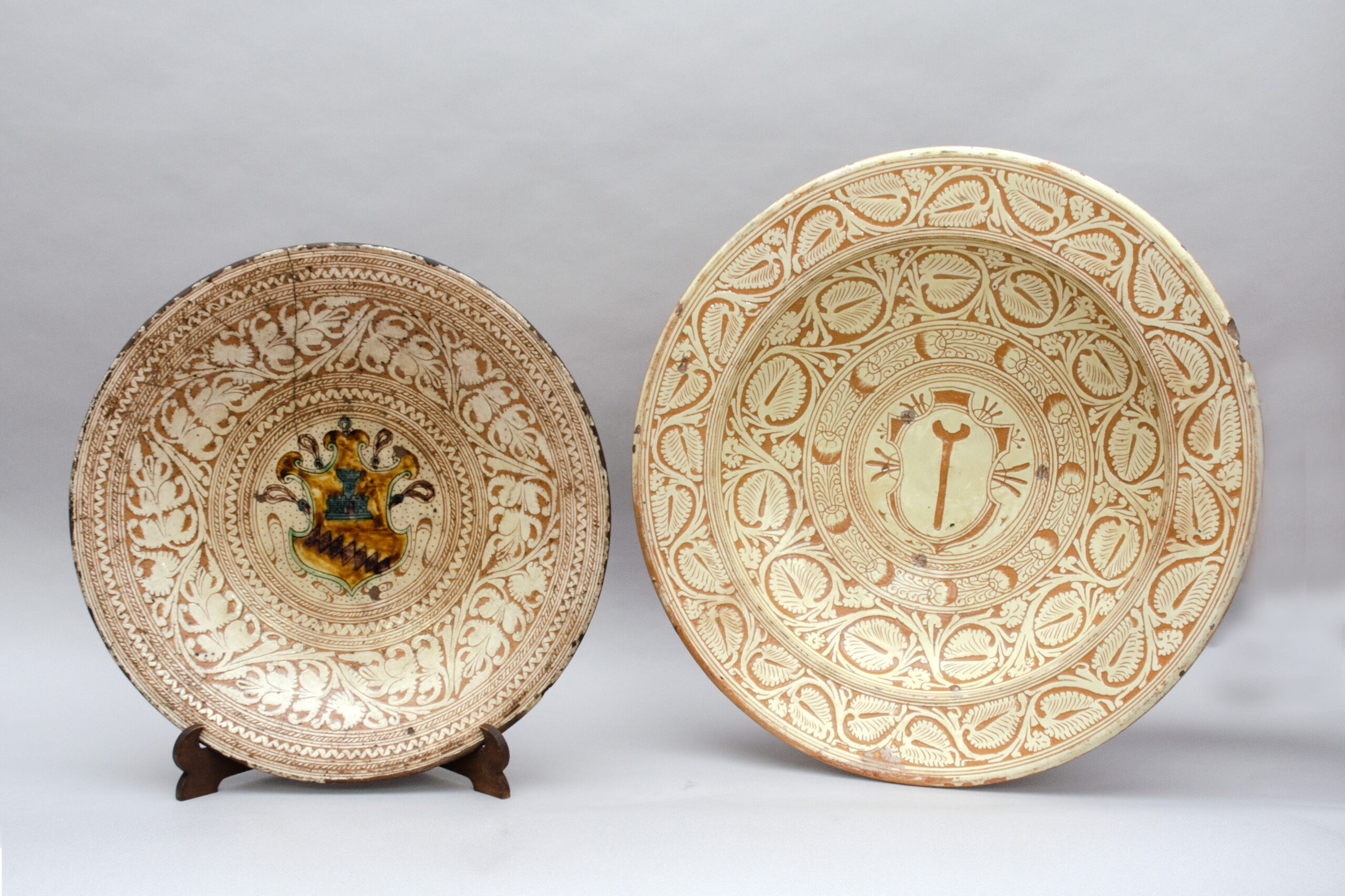
Large sgraffito dish bearing the coat of arms of the Bardi di Vernio, Castelfiorentino (Tuscany)
Price on request
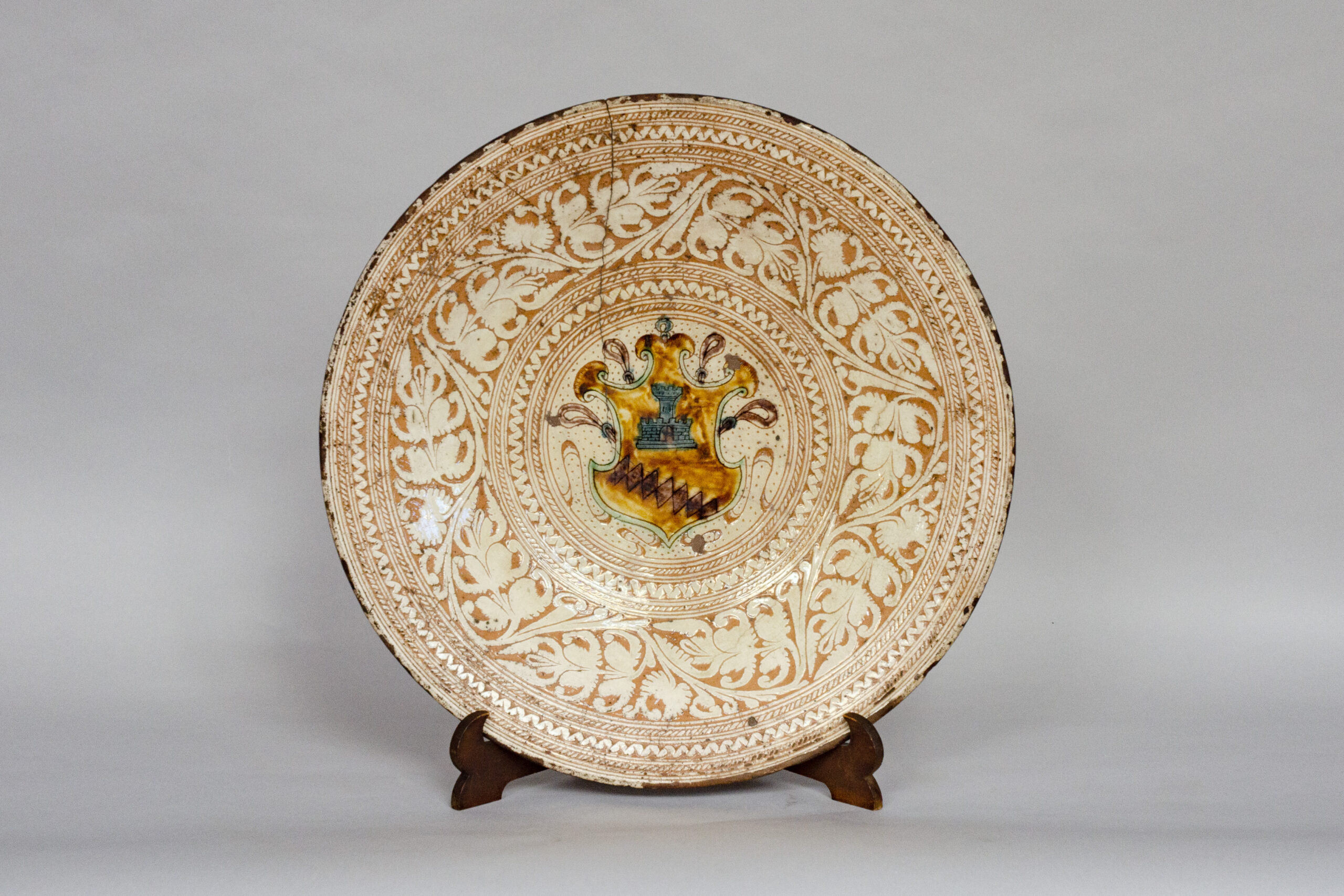
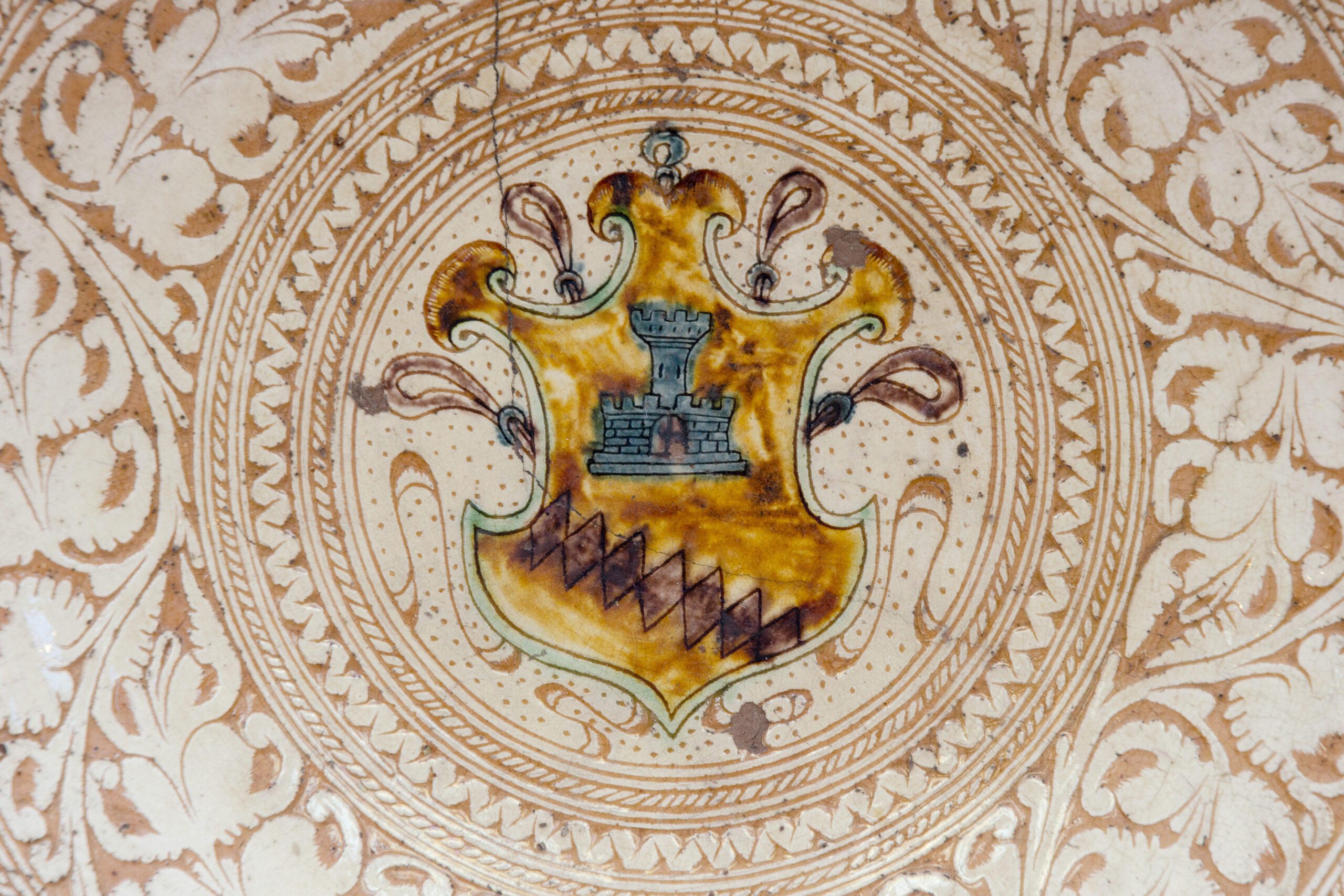
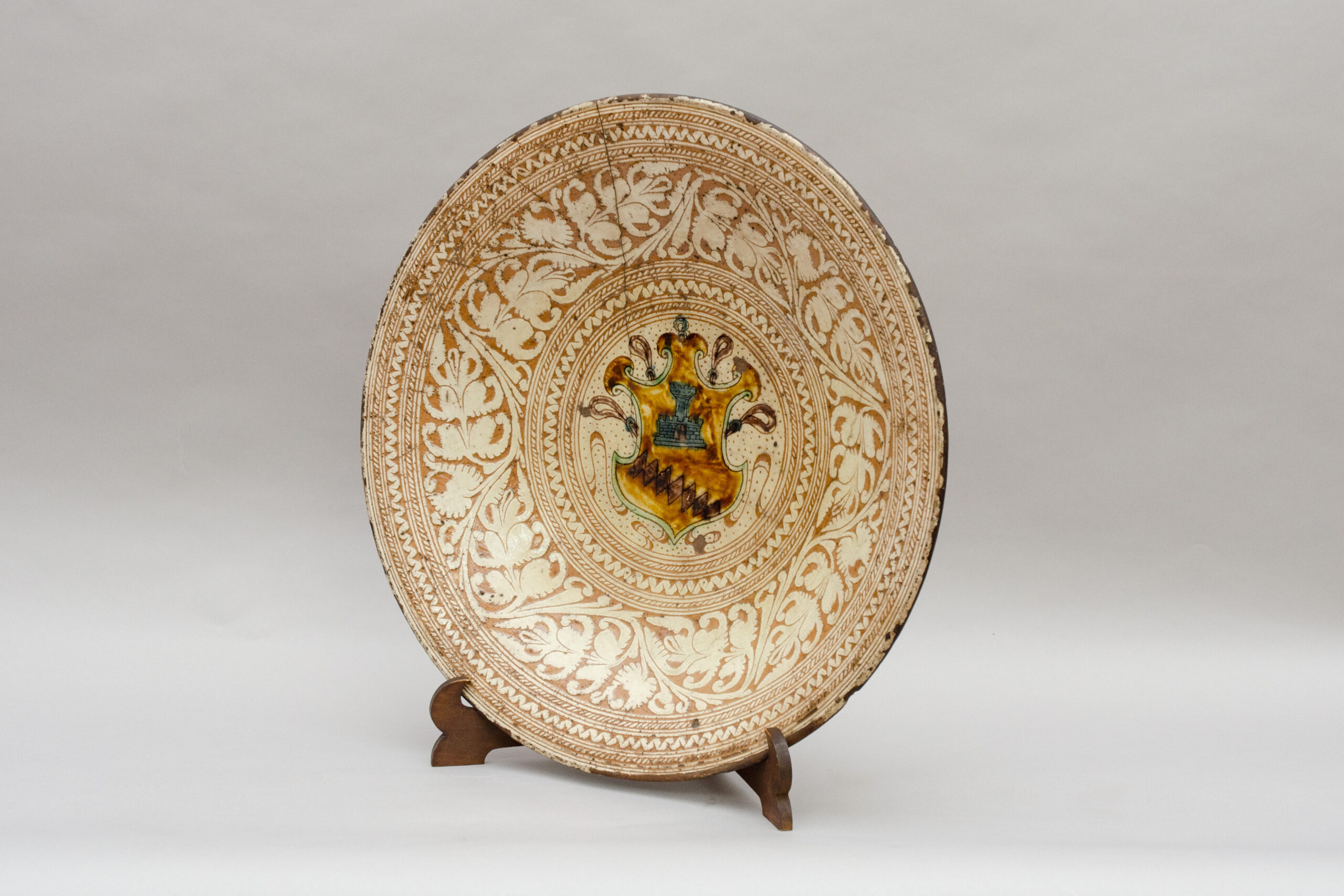
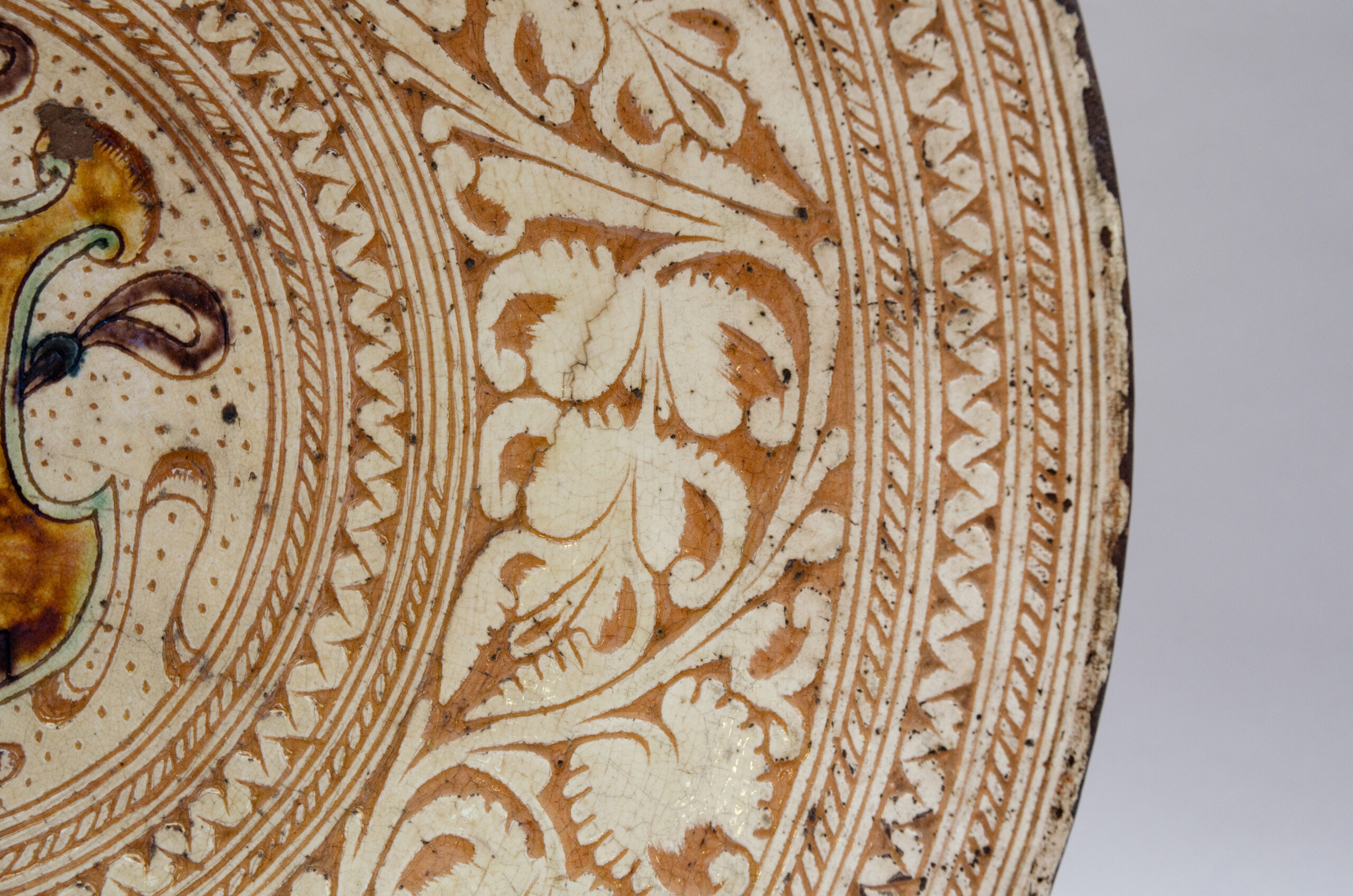
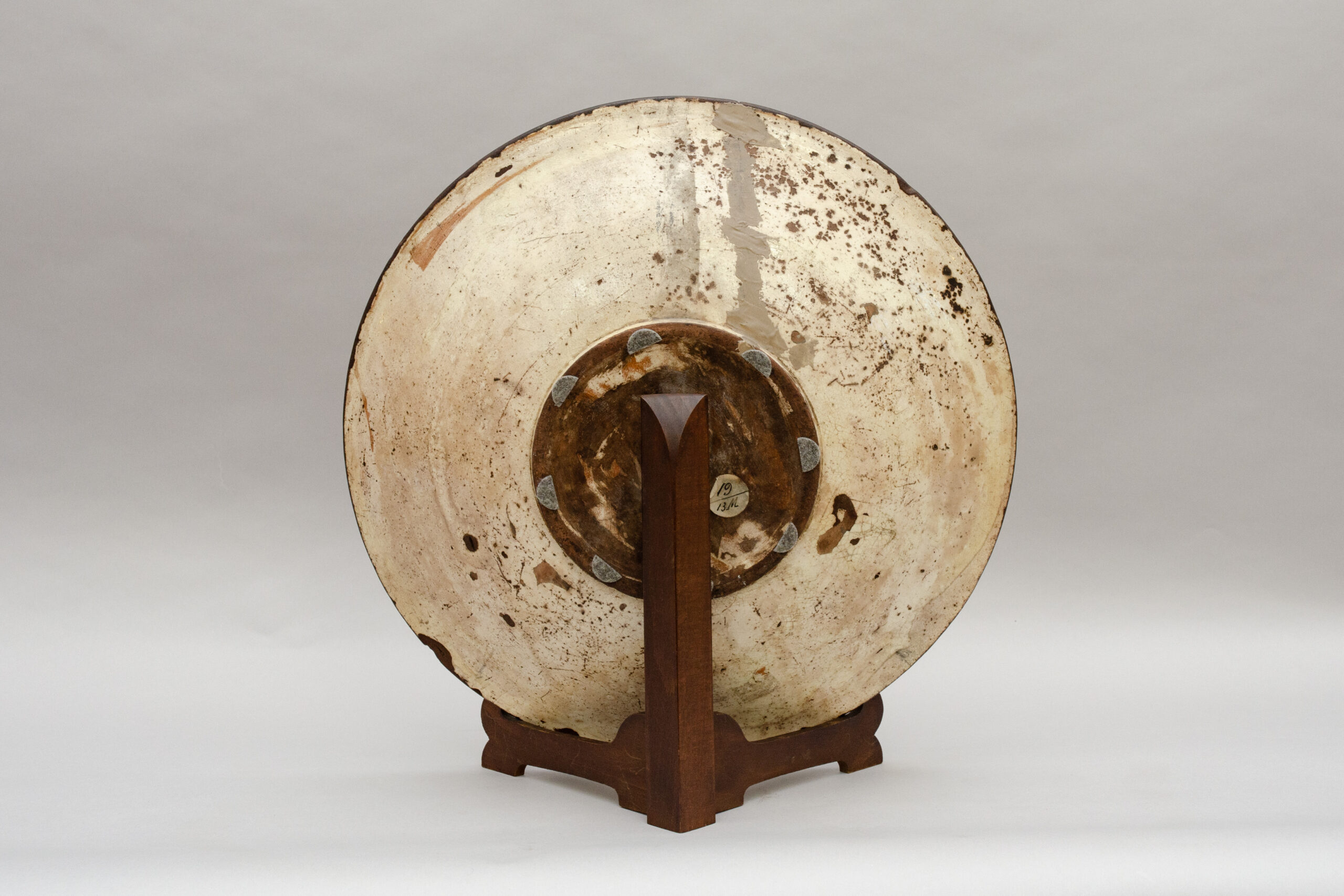
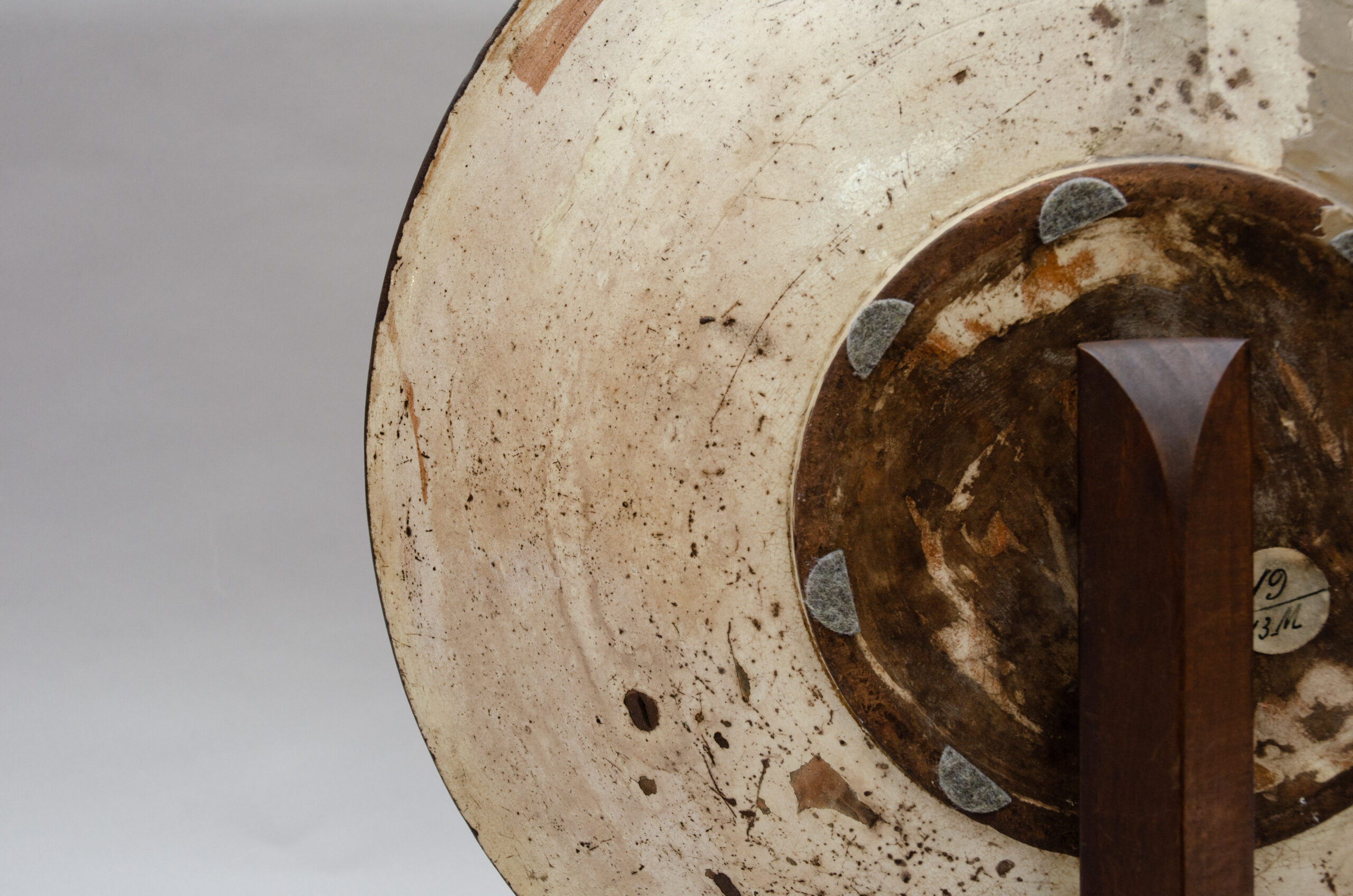
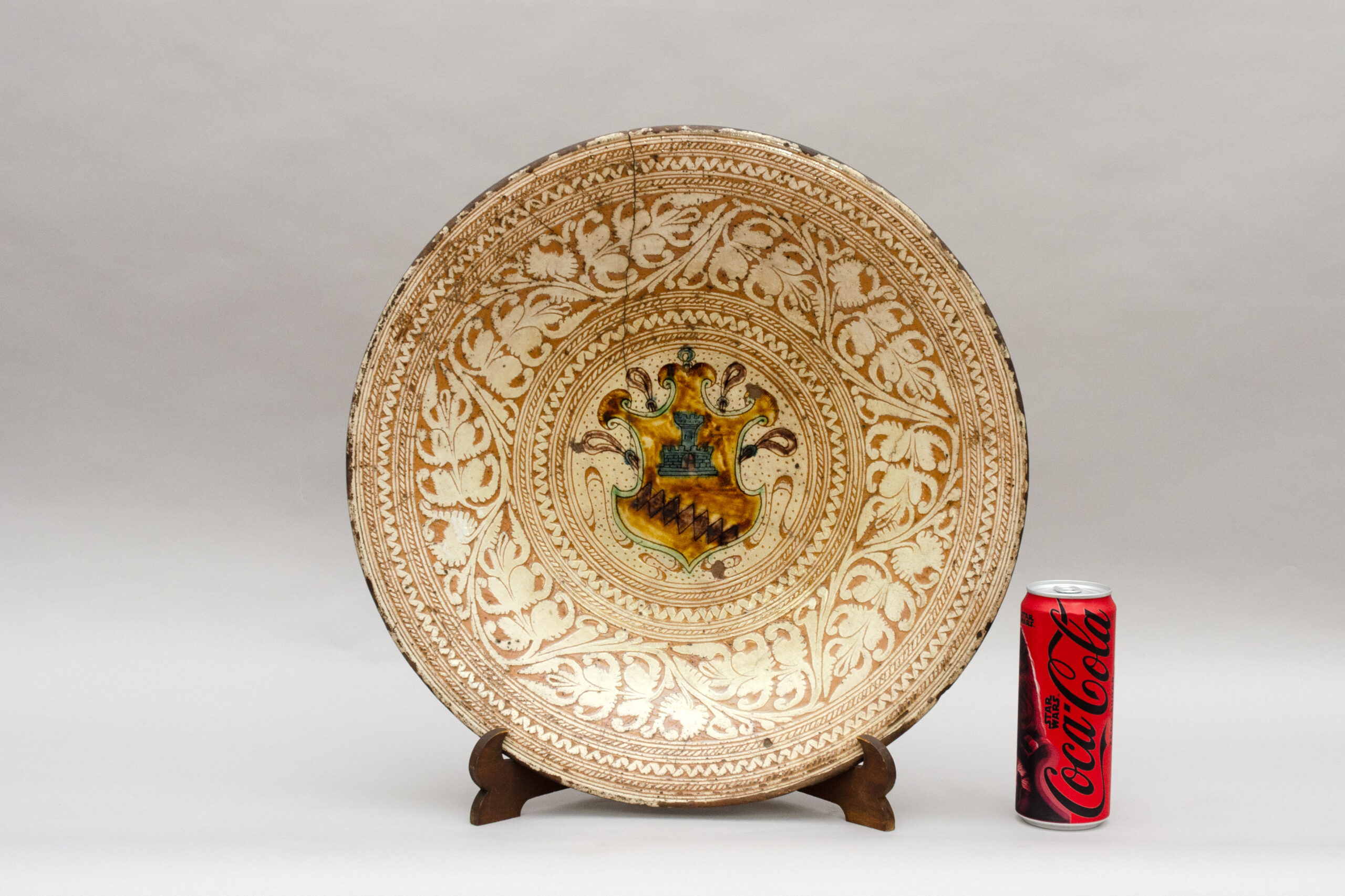
Contact usA large, deep dish with a wide rim, standing on a ring-shaped foot. The centre features a shield bearing the Bardi coat of arms, set within a scroll-decorated cartouche surmounted by a ring and adorned with feathers. It is surrounded by concentric bands of cord motifs, broken lines and dotted patterns. The rim is decorated with large acanthus leaves rendered in creamy white against an orange terracotta background. The leaves are rendered in a ‘crab claw’ pattern, a motif which excavations at Castelfiorentino have shown to be common on the rims of these dishes. The reverse is covered with a cream glaze, bearing an old inventory label. One crack and a few chips.
Size: diameter 41.5 cm, height 8 cm.
Castelfiorentino, 16th century.
Lit: This is terracotta covered with an engobe (a thin layer of white clay) and then decorated using the sgraffito technique with a recessed ground (fondo ribassato). The engobe is scraped away around the motif, which thus appears in relief against the red clay. This technique was the most elegant and the most expensive of the two practised in Castelfiorentino. The centre is highlighted with colours: yellow-ochre, green and brown. The piece is then covered with a transparent glaze. According to the process described by Anna Moore Valeri, the dish underwent two firings: the first after incising (the ‘biscotto’), then a second after glazing.
The coat of arms, featuring a shield with a tower (in blue-green) surmounting a diagonal band of lozenges (in brown) on a yellow background, corresponds to the emblem of the Bardi di Vernio: a count’s shield bearing lozenges arranged diagonally, representing the fortress of Vernio. The tower evokes the ‘rocca’ of Vernio, an estate acquired by the family in the 14th century.
The Bardi: A family of feudal origin, established in Florence since the 12th century, the Bardi, together with the Peruzzi, ran one of the largest banking houses in the West between 1250 and 1345. Their bankruptcy, traditionally attributed to unpaid loans to King Edward III of England, is now disputed by several historians. Their chapel at Santa Croce was decorated with frescoes by Giotto between 1317 and 1328. Following the crisis, the Bardi di Vernio branch turned to landownership: Piero Bardi acquired the lordship of Vernio in 1332, and in 1355 Emperor Charles IV granted them the title of imperial vicars. The family also included Contessina de’ Bardi (c. 1390–1473), wife of Cosimo de’ Medici, and Giovanni de’ Bardi (1534–1612), Count of Vernio, whose circle, the Camerata fiorentina, was a cradle of opera.
Bibliography: A. Moore Valeri, *Renaissance Ceramics of Castelfiorentino: Ingobbiata and Graffita in Tuscany*, Florence, 2004.